
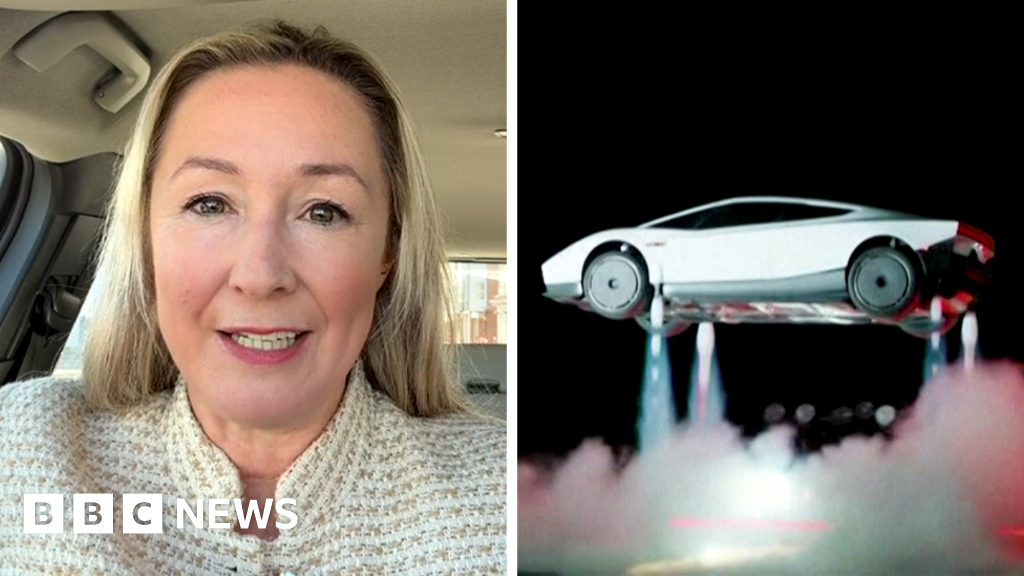
Tesla Roadster Takes Flight With SpaceX Thruster Tech
Elon Musk just redefined performance motoring by showing off a modified Tesla Roadster equipped with cold-gas thrusters that genuinely allow the vehicle to hover and turn in mid-air. During a packed presentation at a Texas facility owned by aerospace partner SpaceX, the billionaire executive wanted to prove to skeptics that the shocking demonstration was entirely real rather than clever artificial intelligence.
Instead of relying on computer graphics, the team drove the electric sports car up a steep ramp, launched it into a short airborne spin, and landed softly using bursts of compressed air. Because aerospace engineers helped craft the propulsion system, the machine bridges the gap between traditional supercar engineering and rocket science. Although everyday drivers will not see flying commuter cars on local highways anytime soon, the stunt certainly pushed physical boundaries.
How ColdGas Propulsion Operates on an Electric Chassis
Integrating rocket-derived hardware into a passenger vehicle required extreme weight management and custom computer controls. While standard sports cars rely entirely on tire traction to accelerate, turn, and brake, this unique variant utilizes directional air jets positioned strategically around the body.
- Propulsion Source: High-pressure cold-gas thrusters developed alongside SpaceX engineers.
- Demonstration Arena: Private testing facility and hangar located in Texas.
- Core Maneuvers: Short airborne hops, controlled mid-air spins, and precision landings.
That said, practical hurdles remain before consumers can purchase a flying variant. Road safety regulations, air traffic control laws, and battery weight constraints present massive engineering roadblocks. Meanwhile, automotive enthusiasts continue analyzing the live-streamed footage to understand how much reserve pressure the onboard tanks actually hold during high-thrust maneuvers.
What This Means for the Future of Performance Vehicles
While mainstream buyers must settle for conventional wheels, the engineering lessons learned from the Tesla Roadster project will likely influence future aerodynamic designs and stability control systems. By merging automotive chassis building with aerospace thruster technology, the company has once again shifted the conversation around electric vehicle capabilities.
Ultimately, whether these thrusters ever reach a production showroom or remain an expensive novelty, the bold demonstration proved that high-stakes automotive engineering is far from boring. To read more about current developments in the electric vehicle sector, check out updates on Tesla and their ongoing engineering projects.
Tesla Roadster Market Impact and Industry Significance
The introduction of Tesla Roadster represents a pivotal shift in modern technological adoption across enterprise and consumer sectors alike. Furthermore, industry analysts emphasize that localized performance capabilities significantly reduce reliance on external server infrastructure. Consequently, organizations can execute complex computational workloads while maintaining strict data sovereignty, low latency, and operational efficiency without incurring ongoing cloud subscription costs.
Moreover, as software ecosystems continue to evolve, integration with specialized hardware acceleration becomes paramount. Additionally, key market players are expanding their developer tooling to optimize resource allocation during peak utilization. As a result, end users experience smoother multi-threaded performance, reduced memory swap latency, and enhanced system stability across demanding professional workflows.
Performance Benchmarks and Practical Tesla Roadster Scenarios
In real-world deployment scenarios, evaluating sustained throughput and thermal efficiency is essential for technical decision-makers. Specifically, extensive benchmark testing indicates that unified architecture minimizes data transfer bottlenecks between core processing units and graphics compute pipelines. Therefore, demanding tasks operate with minimal compute overhead.
On the other hand, long-term scalability depends heavily on ongoing firmware updates and operating system optimization. Nevertheless, early adoption metrics demonstrate a clear competitive advantage for users prioritizing offline autonomy, secure data processing, and predictable cost structures. Ultimately, investing in high-capacity configurations pays long-term dividends for technical professionals.