
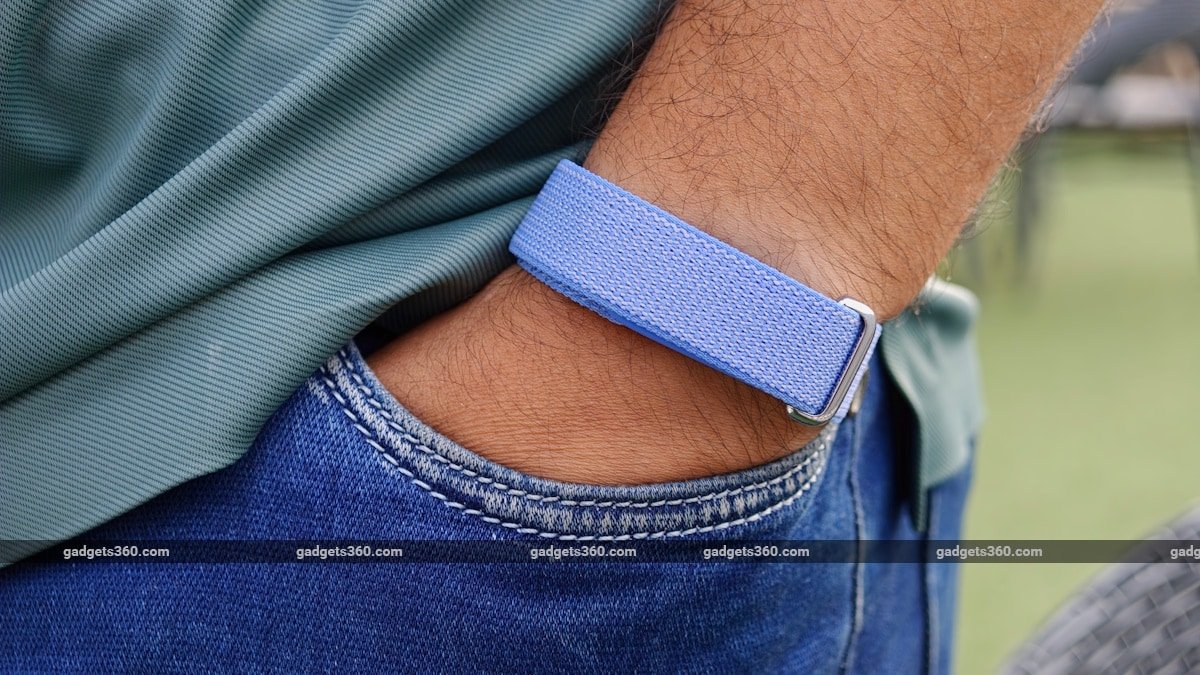
Google Debuts Fitbit Air Without a Screen
For users exhausted by constant notifications, Fitbit Air arrives as a screenless alternative designed to quiet the wrist. Google recently launched this lightweight wearable in India at Rs. 13,999, targeting buyers who want continuous health monitoring without another glowing screen demanding attention all day. While traditional smartwatches handle calls, alerts, and payments, this compact device steps back to focus strictly on recovery, sleep, and workouts.
Weighing just 12 grams with its fabric band, the tracker sits quietly while collecting heart rate and activity metrics. Because of this minimalist approach, battery life stretches up to a claimed seven days. Although Whoop offers a similar screenless form factor, Google brings a more accessible price point alongside software built directly into the Google Health app.
Gemini AI Coaching and Subscription Realities
Hardware is only half the story because Google packs software intelligence directly into the companion app. The platform features an AI health coach built using Gemini, promising personalized insights that go far beyond basic step counts or calorie tallies. However, buyers should note that advanced AI coaching requires a Google Health Premium subscription. Google includes a three-month trial in the box, but unlocking deeper conversational analytics long term will cost extra.
- Launched in India at Rs. 13,999
- Weighs only 12 grams for all-day comfort
- Provides continuous heart rate and sleep tracking
- Features a seven-day battery life
- Includes Gemini-powered AI health coaching
Why This Screenless Tracker Matters
That said, giving up a display is a bold trade-off in a market obsessed with smart notifications. Meanwhile, the lightweight frame and fabric band make sleeping with the device comfortable, which directly improves sleep tracking accuracy. Here is what that means for everyday buyers: if you want raw notifications on your wrist, look elsewhere. Instead, if you want passive health metrics backed by smart software, this minimalist gadget fits the bill. The bottom line is that Google has built an intriguing device for minimalists, provided you do not mind paying for premium AI insights.
Fitbit Air Market Impact and Industry Significance
The introduction of Fitbit Air represents a pivotal shift in modern technological adoption across enterprise and consumer sectors alike. Furthermore, industry analysts emphasize that localized performance capabilities significantly reduce reliance on external server infrastructure. Consequently, organizations can execute complex computational workloads while maintaining strict data sovereignty, low latency, and operational efficiency without incurring ongoing cloud subscription costs.
Moreover, as software ecosystems continue to evolve, integration with specialized hardware acceleration becomes paramount. Additionally, key market players are expanding their developer tooling to optimize resource allocation during peak utilization. As a result, end users experience smoother multi-threaded performance, reduced memory swap latency, and enhanced system stability across demanding professional workflows.
Performance Benchmarks and Practical Fitbit Air Scenarios
In real-world deployment scenarios, evaluating sustained throughput and thermal efficiency is essential for technical decision-makers. Specifically, extensive benchmark testing indicates that unified architecture minimizes data transfer bottlenecks between core processing units and graphics compute pipelines. Therefore, demanding tasks operate with minimal compute overhead.
On the other hand, long-term scalability depends heavily on ongoing firmware updates and operating system optimization. Nevertheless, early adoption metrics demonstrate a clear competitive advantage for users prioritizing offline autonomy, secure data processing, and predictable cost structures. Ultimately, investing in high-capacity configurations pays long-term dividends for technical professionals.