
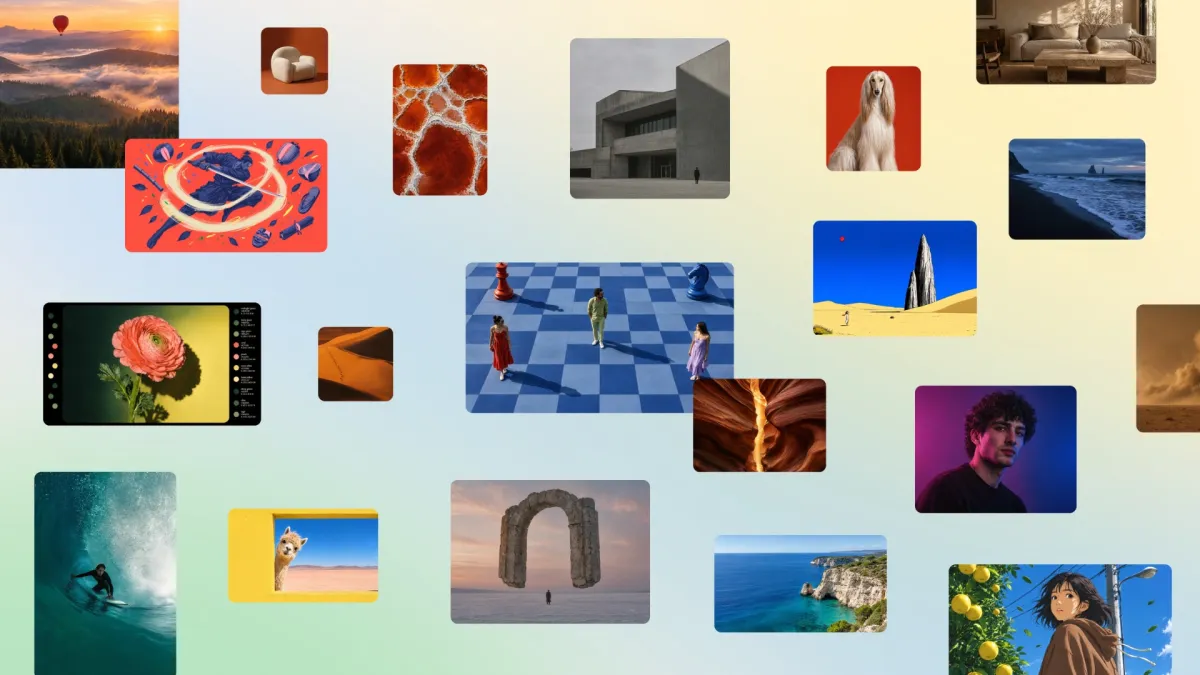
Canva Craft: Canva Debuts Craft Model to Rival Google and OpenAI
Design giant Canva has officially entered the competitive generative artificial intelligence race by launching Canva Craft, its very first proprietary image generation model. Developed entirely by the company's internal research team, this specialized tool arrives to challenge established powerhouses like Google, OpenAI, ByteDance, and Meta. Unlike conventional photography-based engines, this new software was trained specifically on professional layout typography, posters, menus, and presentations from the platform's extensive library.
Canva Craft: Two-Stage Architecture for Precision Design Control
While standard generators often produce unpredictable results, Canva Craft utilizes a unique two-stage processing pipeline to ensure professional accuracy. In the initial phase, the model interprets text prompts to map spatial relationships, scale, and visual hierarchy. During the second phase, it produces high-resolution visuals reaching up to 2K clarity across 30 different aspect ratios. Because of this structured approach, everyday users can execute precise visual edits without accidentally distorting surrounding elements.
- Generates images up to 2K resolution
- Supports 30 distinct platform aspect ratios
- Trained on human-designed graphic layouts
- Integrates directly with Canva Magic for layered designs
Expanding Availability Across APIs and Third-Party Chatbots
Accessibility remains a core pillar of this rollout. Creators can access Canva Craft directly inside the platform's Dream Lab tab, while developers can integrate the system via the official Canva API. Furthermore, the company plans to power external third-party chatbots like ChatGPT and Gemini through its Model Context Protocol. Following its 2024 acquisition of media generation platform Leonardo.ai, researchers from that team played a critical role in bringing this architecture to life.
What This Means for Platform Economics and Future Updates
By shifting to an in-house solution, Canva aims to reduce steep third-party API licensing expenditures while maintaining strict speed and output quality controls. Although the platform was previously on track to reach $4 billion in revenue last year, market analysts note that a recent growth forecast reduction for 2026 has adjusted its valuation from $42 billion down to $35 billion. Meanwhile, the company confirmed that two highly efficient variants, named Craftfast and Craft-ultrafast, are currently in development for a near-term release. Read more about the evolving landscape of creative tools at TechOneApp.