
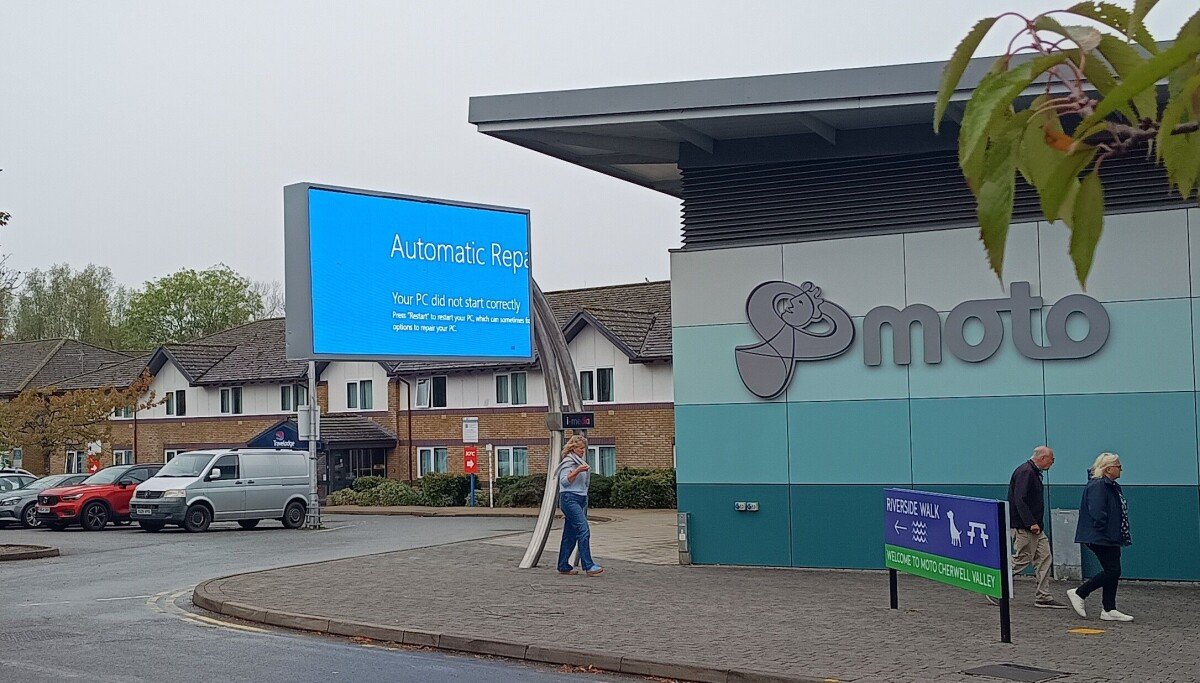
Windows Automatic Repair Halts UK Motorway Services
Drivers passing through the Cherwell Valley services recently encountered an unexpected sight: a large digital display stuck in a Windows Automatic Repair loop. Instead of providing travel updates or advertisements, the screen was frozen in a diagnostic cycle that has become a notorious symbol of PC instability. While Windows Automatic Repair is intended to recover systems after a crash, seeing it on a public motorway sign serves as a stark reminder of the fragility inherent in running desktop operating systems on roadside hardware.
Windows Automatic Repair: The Reality of Desktop OS in Public Spaces
This incident at the Moto services highlights the limitations of using standard consumer software for high-visibility infrastructure. When Windows Automatic Repair triggers on a kiosk or digital billboard, the screen effectively becomes useless until a technician can physically access the underlying machine. Unlike specialized embedded systems, which are designed for high availability, these displays often run on standard hardware configurations prone to driver conflicts or unexpected update reboots.
Why Digital Signage Struggles With Stability
- Driver Conflicts: Updates often break compatibility with specialized display adapters.
- Forced Reboots: Unscheduled background updates can trigger a recovery loop.
- Hardware Aging: Motorway environments introduce temperature fluctuations that stress standard PC components.
The reliance on Windows Automatic Repair suggests that the underlying computer is likely a standard x86-based PC, similar to those found in home offices or retail point-of-sale systems. While cost-effective, this approach ignores the harsh reality of 24/7 public operation. When an update fails or a power surge occurs, the system defaults to recovery mode rather than attempting a graceful restart, leaving the screen displaying the familiar blue diagnostic interface instead of the intended content.
What This Means for Digital Infrastructure
For the average commuter, the sight of a frozen screen is a minor annoyance. However, for the operators of these motorway services, it represents a significant maintenance hurdle. Accessing the hardware behind such a display often requires more than a simple remote command, especially if the device is mounted high above the ground. If the Windows Automatic Repair cycle cannot be bypassed via remote keyboard commands, a technician must physically visit the site, which is far from efficient.
As we look toward the future of smart infrastructure, this incident underscores the need for more robust, purpose-built operating systems that do not rely on the same diagnostic tools as a standard desktop. Until then, travelers may continue to see these signs taking an unplanned break. The irony of a motorway sign telling drivers to avoid tiredness while the sign itself is stuck in a recovery cycle is not lost on those who have spent years troubleshooting Windows error screens.
For full official background and direct documentation, read the source coverage on theregister Reporting.