
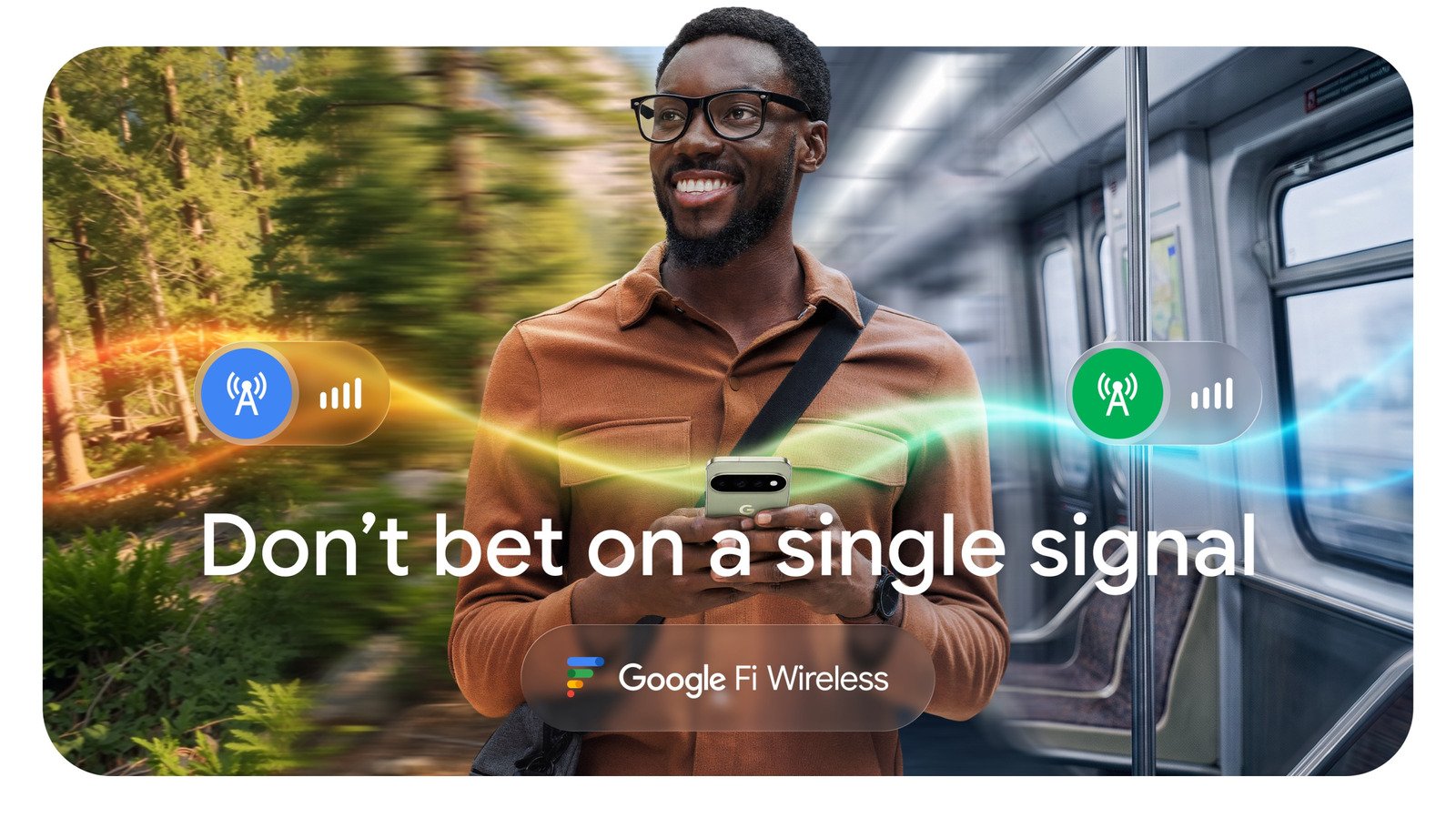
Mobile connectivity has long suffered from localized dead zones, network congestion, and carrier-specific coverage gaps. While standard mobile virtual network operators (MVNOs) rely strictly on a single host network, Google is refining its approach to mobile data resilience with the launch of the Google Fi Super Network. Designed to eliminate single-carrier dependence and manual roaming toggles, this updated architecture continuously monitors real-time network performance to transition devices between underlying cellular providers. As 5G network densification and high-bandwidth applications create localized signal degradation, the Google Fi Super Network addresses a persistent friction point in consumer wireless: maintaining uninterrupted bandwidth when a primary tower experiences capacity constraints. Rolling out initially to Pixel 9 users and select devices with compatible eSIM technology, this implementation represents a meaningful step forward in mobile software-defined networking.
Technical Specifications and Architectural Breakdown
To understand how the Google Fi Super Network functions, it is necessary to examine how modern baseband modems interact with embedded SIM (eSIM) profiles and system-level telemetry. In conventional cellular configurations, a device attaches to a specific Public Land Mobile Network (PLMN) and remains connected until signal degradation causes a complete drop or forces a manual search. Google’s design integrates a software-defined radio management layer into the operating system and modem firmware.
The core mechanism utilizes advanced multi-profile eUICC (Embedded Universal Integrated Circuit Card) management working alongside Dual SIM Dual Standby (DSDS) baseband routines. Rather than relying solely on raw RF signal metrics like Received Signal Received Power (RSRP), the background daemon continuously monitors packet loss, round-trip latency, and sector congestion. When connection quality degrades past defined operational thresholds, the system coordinates a soft handoff to an alternative host network.
- Dynamic Performance Telemetry: Evaluates live latency and packet error rates alongside traditional signal strength indicators to determine actual connection viability.
- Hardware-Level Profile Handoff: Utilizes low-level eSIM commands to register with alternate network cores without terminating active IP sockets or session states.
- Modem Pipeline Integration: Optimized for modern baseband processors—such as the Samsung Exynos 5400 in the Google Pixel 9 series—minimizing computational overhead and power consumption during signal monitoring.
- Multi-Profile Authentication: Securely maintains pre-authenticated cellular credentials across multiple underlying network backbones within the secure element.
Industry Landscape and Competitive Comparison
Google Fi initially gained attention by switching between T-Mobile, Sprint, and U.S. Cellular networks. Following the T-Mobile and Sprint merger, the service largely consolidated around T-Mobile’s infrastructure. The launch of this enhanced network framework marks a return to multi-carrier redundancy, backed by more sophisticated switching protocols than early iterations offered.
Unlike traditional roaming—which typically activates only after total signal loss and often results in throttled data speeds—Google’s model manages active network profiles with native priority access. The table below details how this technical approach compares with standard market alternatives:
| Feature / Parameter | Google Fi Super Network | Standard MVNO Model | Traditional Carrier Roaming |
|---|---|---|---|
| Network Infrastructure | Multi-host dynamic profile switching | Single host carrier backbone | Primary network plus third-party partners |
| Handoff Trigger | Real-time latency, throughput, and RSRP metrics | No auto-switch (single host connection) | Loss of primary network signal |
| User Experience | Automated background handoffs | Manual switching or static coverage | Automated, often with noticeable delay |
| Data Speed Priority | Full 5G bandwidth on active host profile | Deprioritized during network congestion | Frequently throttled to 3G/2G rates |
| Hardware Requirements | Pixel 9+ with eUICC multi-profile support | Standard SIM or single-profile eSIM | Standard SIM or eSIM |
Practical Consumer & Enterprise Takeaways
For mobile users and enterprise IT departments, the availability of multi-network switching delivers distinct practical benefits, alongside specific hardware requirements that dictate adoption timelines.
- Hardware Eligibility Boundaries: The technical requirements of the background switching protocol necessitate modern modem hardware. Support is centered on the Pixel 9 family and future flagships, meaning legacy hardware will not benefit from secondary network handoffs.
- Enterprise Operational Uptime: Field workers and mobile teams gain heightened connection stability in coverage-fringe areas. Enterprise applications, cloud connections, and VoIP calls can sustain continuity during localized outages on any single provider.
- Cost Structure Continuity: Google incorporates this capability into standard pricing structures without separate network add-on fees, avoiding the cost of maintaining multiple individual carrier subscriptions.
- Optimized Power Management: By executing telemetry evaluations inside modem-level firmware rather than application-layer software, battery consumption remains stable during continuous background monitoring.
Frequently Asked Questions
Does the Google Fi Super Network require multiple paid plans?
No. Multi-network switching is integrated into existing Google Fi plan structures. Authentication and routing across underlying network profiles are managed automatically under a single billing account.
Will older Pixel models or iPhones support dynamic switching?
While older devices remain supported on Google Fi’s single-network model, full access to the upgraded switching architecture requires baseband modems and firmware present in the Pixel 9 series and newer devices.
Does switching networks cause dropped calls or interrupted streams?
The handoff process uses low-latency session persistence designed to transition active data sockets smoothly, reducing drops during Voice over LTE (VoLTE) calls or video streaming.
Will signal monitoring drain phone battery faster?
Power draw is minimized because telemetry tracking runs on specialized, low-power core instructions within modern baseband chips rather than constantly waking the main processor application cores.
The Bottom Line
The introduction of the Google Fi Super Network provides a technical solution to localized coverage gaps and congestion. By combining real-time performance telemetry with hardware-level profile switching on the Pixel 9 series, Google delivers true carrier redundancy without administrative overhead or additional subscriber fees. For users operating in variable RF environments, this architecture represents a clear advancement in mobile network reliability.