
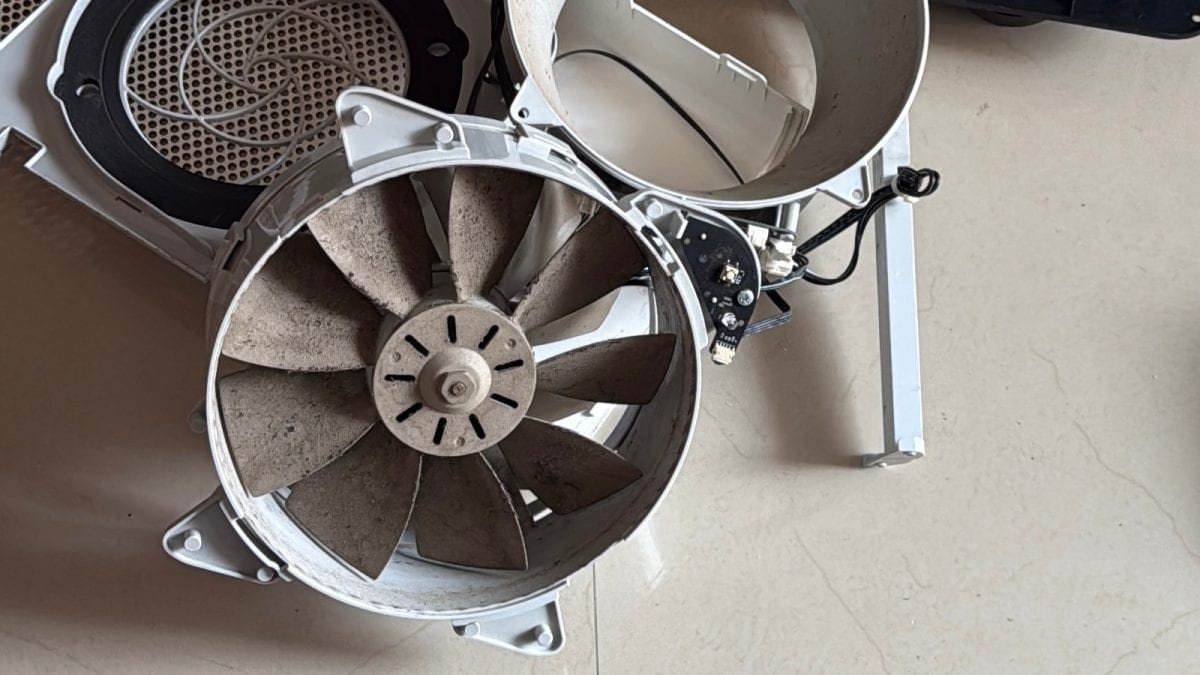
Air purifier design flaws challenge routine maintenance
For millions of urban residents, the air purifier has become an essential home appliance, particularly during spikes in pollution. Manufacturers market these devices as simple, user-friendly solutions for healthier living. However, a significant design oversight is emerging: while swapping a HEPA filter is straightforward, cleaning the internal fan and air channels is often nearly impossible for the average consumer.
The hidden dust trap inside every air purifier
Most affordable units utilize a vertical, fan-based architecture. A powerful motor pulls stagnant room air through a series of filters before circulating it back into the living space. Over months of continuous operation, this process inevitably coats the internal fan blades and housing with dust, grime, and environmental contaminants. Because these components are typically tucked deep within the device chassis, owners rarely access them, leaving the machine to circulate air over accumulated pollutants.
Why a new filter cannot fix a dirty fan
Consumers often assume that installing a fresh HEPA filter provides a ‘factory clean’ experience. Unfortunately, this is a misconception. According to environmental health guidelines, a clean filter cannot sanitize the internal path through which air travels. If the fan blades are coated in dust, the device is essentially blowing air through a contaminated chamber. This creates a scenario where the air purifier might be working harder while delivering air that has interacted with months of trapped debris.
- Filter replacement is only one part of total system hygiene.
- Internal fans often collect grime similar to kitchen exhaust fans.
- Most consumer-grade models lack easy access for internal deep cleaning.
- Dirty fan blades can potentially impede airflow and increase motor strain.
What this means for the modern home
The current maintenance model for an air purifier is fundamentally incomplete. Buyers are instructed to swap consumables but are given no clear pathway to service the mechanical heart of the machine. This exposes a design weakness in budget-friendly hardware, where portability and aesthetics take precedence over long-term mechanical cleanliness. In fact, many users find that the air purifier housing is sealed with proprietary screws or clips that discourage disassembly.
As we rely more on the air purifier for daily health, manufacturers must prioritize modular designs that allow users to safely clean internal components. Until such designs become standard, consumers should remain aware that the air quality provided by an air purifier is only as good as the cleanliness of the path it travels. If you notice a drop in performance or an unusual odor, it may be time to look past the filter and inspect the internal fan assembly for signs of heavy dust accumulation.