
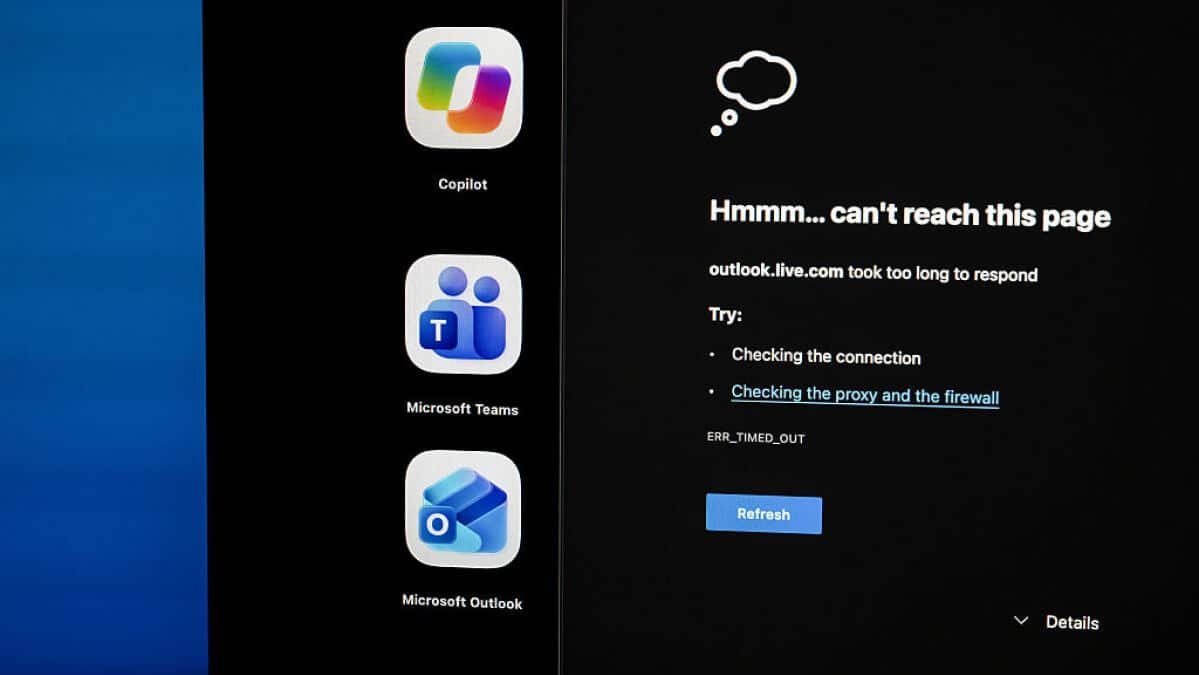
The recent, widespread Microsoft 365 outage has served as a sobering reminder of the fragility inherent in our modern digital infrastructure. As enterprise operations ground to a halt, the event sparked an immediate, industry-wide conversation regarding the adequacy of existing service-level agreements (SLAs) in an era where cloud dependency is absolute. For the modern enterprise, downtime is no longer a mere inconvenience; it represents a tangible erosion of shareholder value and operational continuity. As the dust settles, IT leadership teams are shifting their focus from crisis mitigation to the fine print of their contracts, questioning whether the current compensation models offered by hyperscalers like Microsoft are fit for purpose in a post-pandemic, cloud-native economy.
Technical Specifications and Architectural Breakdown
To understand why the Microsoft 365 outage proved so disruptive, one must look at the underlying architecture that powers the suite. Microsoft 365 relies on a highly distributed, multi-tenant cloud environment hosted across Microsoft’s global Azure regions. The platform utilizes a complex web of microservices, global load balancers, and distributed databases that synchronize user identity, mailbox data, and real-time collaboration states across thousands of servers.
The core of the outage did not stem from a lack of server capacity, but rather from a failure in the orchestration layer—the “glue” that allows these disparate services to communicate. When a configuration change or a software update triggers a failure in this layer, the cascading effect is immediate. Because Microsoft 365 services are tightly coupled—where Teams relies on SharePoint for file storage and Exchange for calendar integration—a failure in one component often triggers a domino effect across the entire ecosystem. Benchmarks for uptime are calculated on a per-service basis, meaning that while the platform might boast 99.9 percent availability, that metric is measured against individual services rather than the aggregate experience of the user. For an enterprise, this means that even if 99 percent of the platform is technically “up,” the 1 percent that is down may be the exact component required to facilitate a critical business workflow.
Industry Landscape and Competitive Comparison
The enterprise productivity market is dominated by a few key players, each of which maintains similar SLA structures. However, the nuances in how these providers handle downtime and compensation vary significantly. Organizations often assume that moving to a competitor will insulate them from such risks, but the reality is that all major cloud productivity suites are subject to the same architectural limitations of massive, centralized cloud infrastructure.
| Provider | Standard SLA Guarantee | Compensation Model | Primary Recovery Mechanism |
|---|---|---|---|
| Microsoft 365 | 99.9% | Service Credits (Prorated) | Admin-initiated claim |
| Google Workspace | 99.9% | Service Credits (Tiered) | Automatic calculation |
| Zoho Workplace | 99.9% | Service Credits | Support ticket request |
While Google Workspace offers a similar uptime percentage, their approach to compensation is slightly more automated than Microsoft’s manual, claim-based system. However, the industry standard remains firmly anchored in “service credits” rather than direct financial reimbursement. This creates a structural imbalance: the customer loses thousands of dollars in productivity, while the vendor provides a nominal discount on a future invoice. This disparity is fueling a growing demand for insurance-backed SLAs or more robust, automated compensation frameworks that reflect the actual economic impact of downtime.
Practical Consumer & Enterprise Takeaways
For IT managers, the takeaway is clear: do not rely on the vendor’s SLA as a safety net. Instead, focus on architectural resilience. First, move away from the assumption that the cloud is inherently “always on.” Implement multi-cloud or hybrid strategies where critical workflows are not dependent on a single vendor’s identity provider or storage backend. If your business relies on Outlook for scheduling, ensure that your disaster recovery plans include offline-capable alternatives.
Second, audit your contract terms. Many enterprise agreements are signed without specific negotiations regarding the “service credit” process. Large organizations should push for broader definitions of downtime that include “degraded performance,” not just total service failure. Finally, document everything. During the recent Microsoft 365 outage, the burden of proof rested entirely on the customer to demonstrate that their specific users were impacted. Maintain detailed logs of service interruptions and user reports to ensure that if you do file a claim, you have the data necessary to satisfy the provider’s rigorous verification requirements.
Frequently Asked Questions
Is there an automatic refund process for an outage? No. Microsoft does not provide automatic refunds. Enterprise customers must manually file a claim through the Microsoft 365 admin center within a specific window of time following the incident. Failure to file within the contractual timeframe renders the claim void.
How are service credits calculated? Credits are based on “user minutes” of downtime. If a specific service falls below the 99.9 percent threshold, the credit is calculated as a percentage of the monthly service fee, prorated based on the duration of the outage. It is rarely a significant amount relative to the total cost of lost business productivity.
Can an enterprise sue for damages beyond service credits? Most Microsoft 365 enterprise agreements contain robust limitation-of-liability clauses. These clauses typically restrict the vendor’s financial responsibility to the value of the service credits, effectively shielding them from claims related to lost revenue, reputational damage, or third-party liabilities resulting from the outage.
The Bottom Line
The Microsoft 365 outage is a structural reality of the modern enterprise. While the technical teams at Microsoft work to prevent such occurrences, the nature of global, hyperscale computing ensures that systemic failures will remain a periodic risk. The current compensation model, based on prorated service credits, is largely insufficient for the modern enterprise, functioning more as a gesture of goodwill than a true insurance policy. Moving forward, businesses must treat cloud downtime as an operational risk to be managed through internal redundancy and business continuity planning, rather than relying on the vendor to cover the financial consequences of a service failure.