
Technical Specifications and Architectural Breakdown
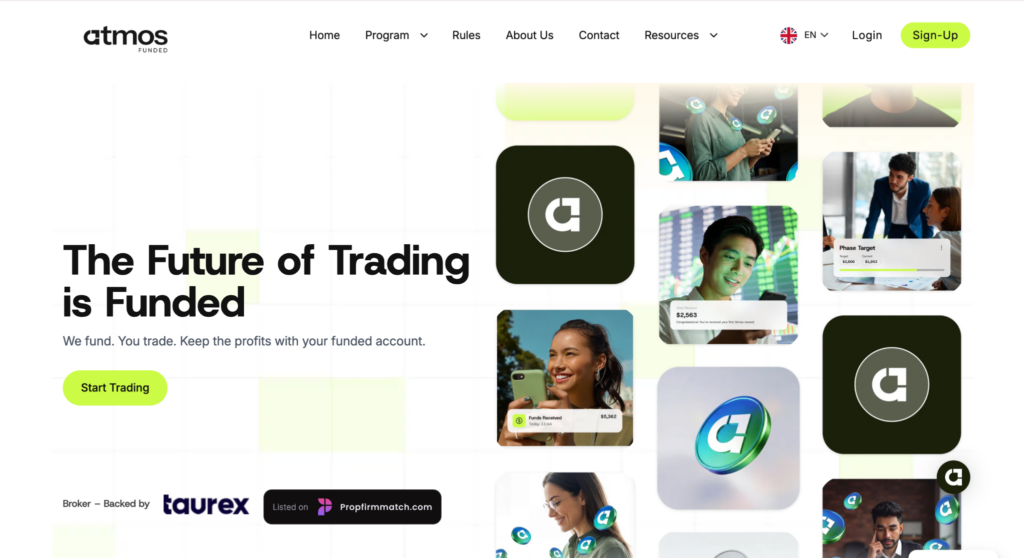
At the core of the Atmos Funded infrastructure lies a sophisticated integration with the MetaTrader 5 (MT5) ecosystem. Unlike legacy platforms that often suffer from latency issues or fragmented data feeds, the architecture supporting Atmos Funded is built upon the robust liquidity pools provided by its parent entity, Taurex. This relationship is critical; it ensures that the pricing data fed into the simulated accounts mirrors real-time interbank and exchange-based price movements with high fidelity.
The engineering behind the platform focuses on three primary components: the execution engine, the risk management interface, and the performance analytics dashboard. The execution engine is optimized for low-latency order routing, ensuring that simulated trades are processed with the same speed and slippage profiles as those found in live forex environments. This is essential for traders who utilize high-frequency strategies or scalping techniques, where millisecond differences in execution can determine the viability of a strategy.
Furthermore, the risk management protocols are hardcoded into the account parameters. These include automated drawdown limits—both daily and cumulative—that prevent the trader from exceeding predefined risk thresholds. This “guardrail” approach serves a dual purpose: it protects the capital provider’s simulated environment and enforces disciplined risk management habits on the trader. By utilizing MT5, the platform also grants users access to advanced charting tools, automated trading via Expert Advisors (EAs), and deep historical data, providing a professional-grade environment that far exceeds the capabilities of standard retail broker portals.
Industry Landscape and Competitive Comparison
The proprietary trading firm sector has seen a surge in providers, each attempting to capture the growing demographic of retail traders seeking leverage without the burden of personal capital loss. However, the market is not monolithic. Firms such as E8 Markets and others have established their own niches, often prioritizing different aspects of the user experience, such as scaling plans or specific asset class availability.
For the Indian market, the choice often comes down to a balance between the initial financial outlay and the long-term sustainability of the scaling model. Atmos Funded distinguishes itself by lowering the entry threshold significantly, making it an attractive starting point for traders who are testing their strategies before committing to larger capital allocations.
| Feature | Atmos Funded | E8 Markets | Traditional Brokerage |
|---|---|---|---|
| Entry Price | From £5 | From $33 | Variable (Deposit-based) |
| Primary Platform | MetaTrader 5 | Various | Proprietary/MT4/MT5 |
| Capital Risk | Simulated/None | Simulated/None | Personal Capital |
| Regulatory Context | Forex Broker-backed | Independent Firm | FEMA-regulated |
Practical Consumer & Enterprise Takeaways
For the individual trader, the primary utility of Atmos Funded is the elimination of personal financial exposure. Operating under the umbrella of a regulated broker like Taurex provides a layer of institutional credibility that standalone prop firms often lack. However, participants must remain cognizant that this is a performance-based model. Success is contingent upon adhering to strict drawdown constraints, which can be unforgiving for those prone to emotional trading or over-leveraging.
From a cost-benefit perspective, the low entry fee serves as an excellent “stress test” for a trading strategy. Traders should view the initial fee as a subscription to a professional testing environment rather than a speculative investment. Before engaging with the platform, traders should audit their own performance metrics—specifically their win-loss ratio and maximum drawdown over a six-month period. If a strategy cannot survive within the parameters set by Atmos Funded, it is unlikely to succeed in a live market environment regardless of the capital source. Consequently, the platform functions best as a validation tool for one’s trading methodology.
Frequently Asked Questions
How does Atmos Funded operate within the regulatory framework of India?
Because Atmos Funded utilizes simulated accounts, traders are not technically engaging in direct foreign exchange transactions with their own capital. This structure helps mitigate the complexities associated with the Foreign Exchange Management Act (FEMA), as there is no transfer of personal funds into foreign forex markets, which is the primary concern for Indian retail traders.
What happens if a trader violates the risk management rules?
The platform employs automated monitoring. If a trader hits the daily or total maximum drawdown limit, the account is typically suspended or terminated. This is a standard industry practice designed to preserve the integrity of the simulated capital pool and enforce strict risk management compliance among participants.
Is the profit share model sustainable for the trader?
The sustainability of the profit share model depends entirely on the trader’s ability to remain within the risk parameters while generating consistent returns. Unlike a standard brokerage account where you keep 100% of your profits but bear 100% of the losses, Atmos Funded requires the trader to trade more conservatively to maintain access to the capital, essentially trading a percentage of profit for a reduction in personal risk.
The Bottom Line
Atmos Funded offers a pragmatic bridge for traders who possess the technical skill to navigate financial markets but lack the capital to do so effectively. By leveraging the infrastructure of a global broker, the firm provides a stable, professional, and low-cost environment that stands in stark contrast to the high-risk, high-barrier nature of traditional retail forex. While it is not a shortcut to wealth, it is an efficient mechanism for talent verification. For the disciplined trader, it represents a viable alternative to the personal financial risks inherent in traditional market participation.