
Technical Specifications and Architectural Breakdown
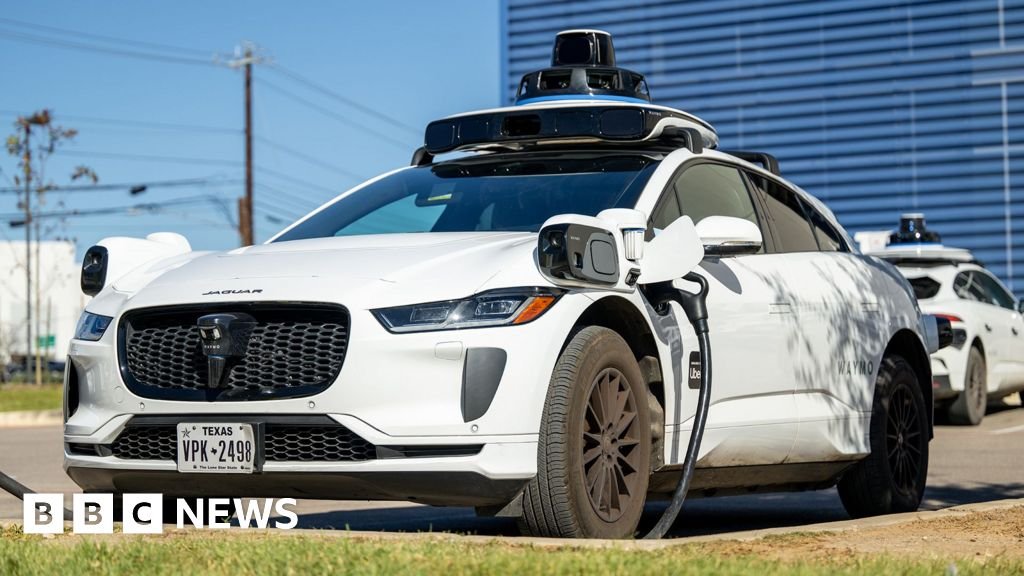
Operating an autonomous system at freeway speeds—typically defined as sustained velocities exceeding 55 mph—requires an exponential increase in computational throughput and sensor range compared to urban navigation. Waymo’s current fleet utilizes a sophisticated sensor fusion architecture, primarily relying on a combination of long-range LiDAR, high-resolution radar, and 360-degree camera arrays. The core challenge lies in the “perception-to-action” latency, which must be minimized to milliseconds when dealing with high-velocity lane changes and sudden traffic flow shifts.
The vehicle’s software stack, often referred to as the “driver,” processes terabytes of data per hour to build a dynamic map of its surroundings. On freeways, this involves complex object classification—distinguishing between a stationary construction cone, a debris field, and a law enforcement vehicle performing a traffic break. The recent incidents involving Waymo vehicles entering restricted construction zones on US Route 101 highlight a failure in semantic segmentation. The system struggled to interpret non-standardized lane markings and human-directed traffic signals, which are common in road work zones but rarely encountered in static training simulations. Benchmarking these systems requires not just miles driven, but “disengagement events” per thousand miles, a metric where highway performance has lagged behind the controlled, lower-speed environments of suburban neighborhoods.
Industry Landscape and Competitive Comparison
The regulatory crackdown on Waymo is not an isolated event but a reflection of the broader skepticism facing Level 4 and Level 5 autonomous systems. While Waymo has consistently argued that its safety metrics—citing a 95% reduction in serious injury crashes compared to human drivers—justify its expansion, regulators are increasingly focused on “edge cases.” These are the rare, unpredictable scenarios where the algorithm fails to mirror human intuition. Other players in the space, such as Zoox and the now-defunct Cruise, have faced similar scrutiny, suggesting that the industry-wide push for rapid scaling may have outpaced the maturity of the underlying software.
| Feature | Waymo (Current) | Zoox (Robotaxi) | Cruise (Legacy) |
|---|---|---|---|
| Freeway Capability | Suspended | Limited/Testing | Suspended |
| Sensor Suite | LiDAR/Radar/Camera | LiDAR/Radar/Camera | LiDAR/Radar/Camera |
| Primary Use Case | Urban Ride-hailing | Urban/Campus | Urban Ride-hailing |
| Regulatory Status | Restricted | Permitted (Testing) | Under Review |
Practical Consumer & Enterprise Takeaways
For the average consumer, this suspension serves as a reminder that the “driverless taxi” experience is still an experimental service. Those relying on these platforms for daily commuting should maintain a diversified transportation strategy. For enterprise partners, particularly those in logistics or corporate transit, the regulatory volatility surrounding autonomous highway operations suggests that full fleet automation remains a mid-to-long-term goal rather than an immediate operational reality. Organizations looking to integrate autonomous technology should prioritize “geofenced” urban solutions where the variables are more predictable, rather than betting on highway-capable autonomy in the near term.
Cost-benefit analyses for fleet managers must now account for the “regulatory risk premium.” If a service can be grounded overnight due to a software classification error, the operational continuity of a business model built on that service is compromised. Until there is a standardized federal framework for autonomous highway operation—moving beyond the current patchwork of state-level mandates—enterprises should treat highway-capable autonomous systems as a secondary, rather than primary, asset.
Frequently Asked Questions
Why did the California DMV specifically target freeway operations?
The DMV intervened because high-speed environments amplify the consequences of software errors. Unlike city streets, where speeds are lower and collisions are often minor, freeway incidents involving autonomous vehicles—such as failing to yield to emergency vehicles or misinterpreting construction zones—pose a high risk of multi-vehicle pileups and fatalities.
Does this suspension impact the safety of Waymo vehicles on city streets?
There is no evidence to suggest that the suspension of freeway operations impacts the safety of Waymo vehicles in urban environments. The operational design domains (ODDs) for city driving are distinct from those of freeways, and the company continues to operate in dense urban centers where its sensor suites are optimized for lower-speed, high-frequency object detection.
When can we expect autonomous taxis to return to US freeways?
A return to freeway operations is contingent upon Waymo demonstrating significant improvements in edge-case handling, particularly regarding construction zone navigation and interaction with emergency responders. This will likely require additional years of simulation training and a renewed, transparent dialogue with federal and state regulators regarding safety protocols.
The Bottom Line
The suspension of Waymo’s freeway operations marks a necessary pivot point for the autonomous vehicle industry. It underscores the reality that artificial intelligence, while capable of outperforming humans in routine tasks, still lacks the nuanced situational awareness required for the chaotic environment of high-speed transit. The industry has reached a plateau where “more miles” is no longer the metric that matters; the new standard is “systemic reliability in the face of the unexpected.” For the driverless taxi to become a permanent fixture of our infrastructure, manufacturers must shift their focus from aggressive expansion to the rigorous, transparent engineering of safety-critical edge cases. Until the software can reliably interpret the human complexity of a highway construction zone, the driverless taxi will remain a city-bound convenience rather than a transformative highway solution.