
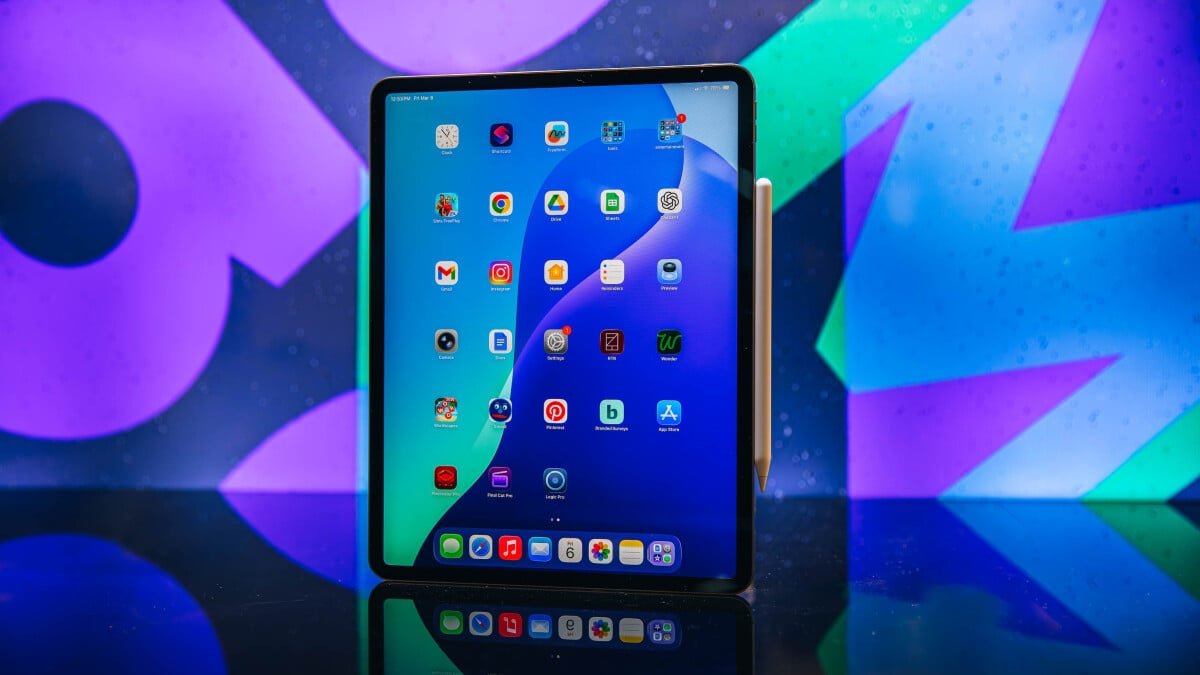
Technical Specifications and Architectural Breakdown
At the center of the 2026 hardware revision is a fundamental shift in memory architecture. Apple has moved to a baseline of 12GB of unified memory across its mid-to-high-tier offerings, a change necessitated by the resource-heavy demands of iPadOS 27. The integration of the M4 silicon into the iPad Air represents the most significant architectural departure in recent history. By migrating the M4 to the Air, Apple has effectively collapsed the performance hierarchy that once separated its portable tablets from its professional-grade machines.
The M4 architecture utilizes a second-generation 3nm process, which emphasizes thermal efficiency while providing substantial headroom for neural engine tasks. In benchmark testing, the current iPad Air demonstrates a 40% increase in multi-core performance compared to its predecessor, largely due to the expanded memory bandwidth. This allows for the simultaneous execution of complex creative suites—such as professional-grade video editing, 3D modeling, and real-time generative AI rendering—without the paging issues that plagued earlier generations. Furthermore, the transition to high-speed LPDDR5X memory ensures that data throughput remains fluid, even when the device is tasked with managing multiple high-resolution assets in a professional workflow.
The refinement of iPadOS 27 complements this hardware shift. The operating system now features aggressive memory management protocols designed to leverage the increased RAM, enabling background processes to remain active for longer periods. This is a critical development for enterprise users who rely on the tablet for multitasking, as it effectively eliminates the need to constantly reload applications during a high-intensity workflow.
Industry Landscape and Competitive Comparison
The market environment in 2026 is defined by a tightening of supply chains, which has forced a price correction across the industry. While competitors have opted to maintain lower price points by utilizing older, less efficient chipsets, Apple has chosen to double down on performance, effectively positioning the iPad as a premium computing tool rather than a consumption device. This strategy creates a widening gap between the iPad and the broader tablet market, where many manufacturers are struggling to balance the cost of modern AI-capable components with consumer price sensitivity.
The following table illustrates the current positioning of the primary models within the ecosystem, highlighting the trade-offs between form factor and computational capability.
| Model | Primary Use Case | Key Advantage | Relative Cost |
|---|---|---|---|
| iPad Mini (A17 Pro) | Mobile productivity | Portability and raw per-watt efficiency | Mid-Range |
| iPad Air (M4) | Professional creative work | Desktop-class performance in a thin chassis | Premium |
| iPad Pro (M4 Pro) | High-end enterprise/development | Advanced display tech and I/O throughput | Ultra-Premium |
Practical Consumer & Enterprise Takeaways
For the average user, the 2026 lineup presents a difficult calculus. The traditional “entry-level” iPad has become an outlier, as the gap between it and the iPad Air has narrowed in price but widened in capability. Students and casual users should carefully consider whether the M4 architecture is a requirement for their specific needs. If the primary use case is media consumption, document annotation, or basic web browsing, the investment in the M4-powered Air may provide diminishing returns.
Conversely, for creative professionals and enterprise users, the 12GB RAM standard is a significant milestone. It marks the point where the tablet ceases to be a secondary device and becomes a viable primary machine. Organizations should view this as an opportunity to consolidate hardware stacks; the cost of an iPad Air paired with a keyboard folio is now competitive with entry-level laptops while offering superior display fidelity and mobility. However, buyers must be aware that the increased cost of entry is unlikely to subside in the near term, as the memory supply fluctuations remain a persistent factor in manufacturing overheads.
Frequently Asked Questions
Is the 12GB RAM upgrade necessary for non-professional users?
For most users, 12GB of RAM is currently overkill. While it improves the longevity of the device by ensuring it can handle future updates to iPadOS, the immediate benefits are largely restricted to users who perform heavy multitasking or utilize professional creative software that requires large memory buffers.
How does the iPad Mini (A17 Pro) compare to the iPad Air (M4) for gaming and media?
The iPad Mini remains the superior choice for handheld gaming and travel due to its form factor. While the A17 Pro lacks the raw multi-core power of the M4, it is highly optimized for mobile gaming and thermal management in a compact chassis. The Air is better suited for stationary productivity where display size and peripheral support are more critical.
Should I upgrade from an M2-based iPad to the 2026 M4 models?
Unless you are encountering performance bottlenecks in your current professional workflow or require specific new features in iPadOS 27 that demand the M4’s neural engine, there is little functional necessity to upgrade. The M2 remains highly capable for most standard tasks.
The Bottom Line
The 2026 Apple iPad lineup is a testament to the company’s commitment to high-performance computing, even at the cost of broader accessibility. By standardizing memory and pushing the M4 silicon down into the Air, Apple has created a robust, albeit expensive, hardware ecosystem. For the professional, the value proposition is clear: these devices offer unprecedented power-to-weight ratios that justify their premium pricing. For the casual user, however, the barrier to entry has risen, necessitating a more cautious approach to hardware acquisition. In this climate, the best strategy is to align one’s purchase strictly with current professional requirements rather than future-proofing for hypothetical needs that may never materialize.