
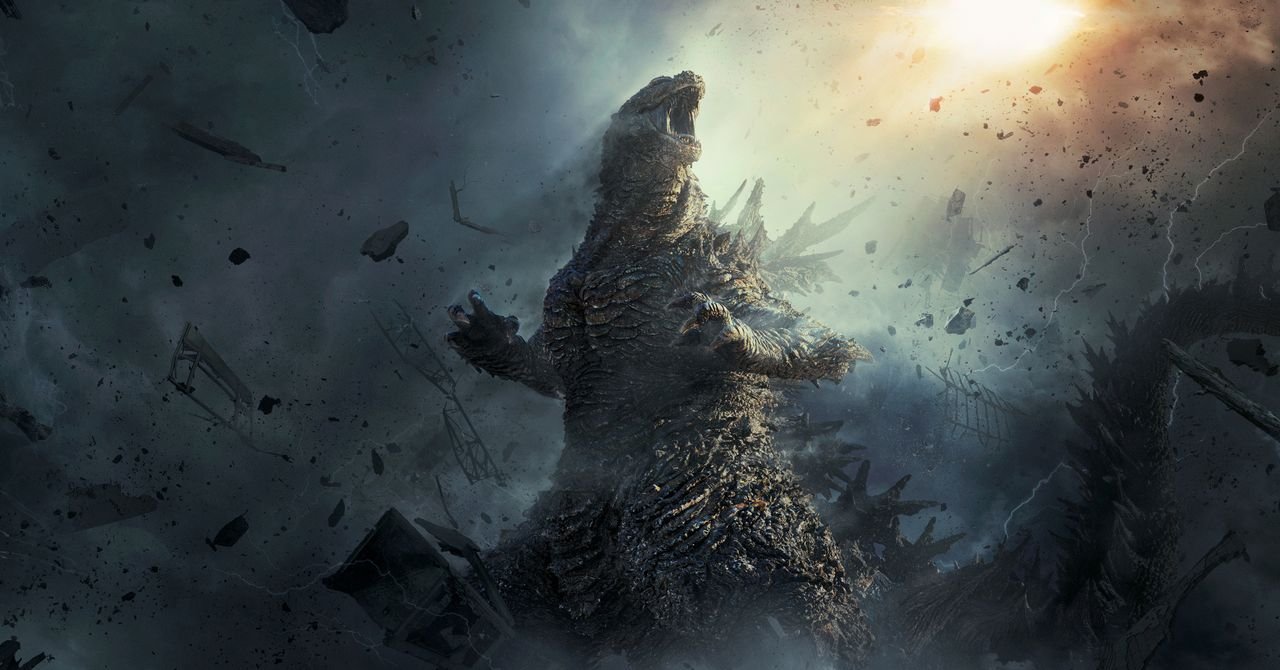
Godzilla Minus Zero Sound Design Captures Real-World Terror
The upcoming Godzilla Minus Zero production team took an unconventional approach to crafting authentic monster vocalizations. Sound designer Natsuko Inoue and her crew transported massive speakers to the top of an outdoor dam, projecting kaiju roars into the open air to capture natural reverb and echo. This technique brought unexpected consequences for unsuspecting bystanders enjoying peaceful afternoons nearby.
Hisafumi Takeuchi, who collaborated on audio for the film, described the scene during a New York Comic Con panel. Families picnicking and pedestrians strolling along the dam suddenly found themselves immersed in earth-shaking creature screams. The most dramatic reaction came from a dog walker whose pet began barking frantically at the invisible beast, creating a surreal moment where fiction momentarily invaded reality.
Godzilla Minus Zero: Analog Foley Techniques Bring Mythical Beasts to Life
Beyond the dam recordings, Inoue’s team employed traditional foley artistry to construct the film’s soundscape. For King Ghidorah’s three-headed dragon wings, they manipulated a rubber fisherman’s suit, layering those textures with recordings of accordion-like air ducts. This hands-on methodology demonstrates how tactile experimentation continues to outperform purely digital synthesis for creature audio.
The decision to record in genuine environments stemmed from initial skepticism about whether the dam concept would translate effectively. Inoue recalled the moment confidence solidified across the crew when the first test roar reverberated across the water. Capturing authentic acoustic reflections proved essential for grounding imaginary entities in physical space, making their on-screen presence viscerally believable.
Visual Effects Prodigy Continues Award-Winning Legacy
Oscar-winning visual effects artist Tatsuji Nojima returns to helm the digital spectacle after his breakthrough work on the predecessor. Seth Green, introducing the NYCC panel, dubbed Nojima “the first Gen Z Oscar-winner” for his contributions to the 2023 film that grossed $114 million globally. Nojima’s journey from teenage hobbyist to industry leader began when director Takashi Yamazaki discovered his crude wave animation and challenged him to develop photorealistic ocean surfaces.
That test shot—water cascading over rocks indistinguishable from actual footage—convinced Yamazaki to entrust the entire VFX pipeline to the young animator. The director’s instinct proved prescient as Nojima’s work helped establish a new benchmark for kaiju cinema, blending practical destruction with seamless digital integration.
Sequel Escalates Aerial Combat and Monster Confrontations
Following Godzilla Minus Zero‘s post-World War II narrative foundation, the new trailer reveals expanded scope featuring aerial dogfights alongside the titular clash between Godzilla and Ghidorah. Yamazaki directs again, maintaining continuity with the creative team that delivered the previous installment’s harrowing blend of historical trauma and spectacular destruction.
The production’s commitment to practical sound capture—even at the expense of local tranquility—exemplifies a philosophy where technical authenticity serves emotional impact. By forcing real-world physics to interact with imagined creatures, the filmmakers bridge the gap between fantasy and tactile experience, ensuring audiences feel every footfall and roar as if the monsters truly walked among us.
For more insights into creature sound design methodologies, explore FilmSound.org or review Academy Award-winning VFX breakdowns from recent ceremonies.
Godzilla Minus Zero Market Impact and Industry Significance
The introduction of Godzilla Minus Zero represents a pivotal shift in modern technological adoption across enterprise and consumer sectors alike. Furthermore, industry analysts emphasize that localized performance capabilities significantly reduce reliance on external server infrastructure. Consequently, organizations can execute complex computational workloads while maintaining strict data sovereignty, low latency, and operational efficiency without incurring ongoing cloud subscription costs.
Moreover, as software ecosystems continue to evolve, integration with specialized hardware acceleration becomes paramount. Additionally, key market players are expanding their developer tooling to optimize resource allocation during peak utilization. As a result, end users experience smoother multi-threaded performance, reduced memory swap latency, and enhanced system stability across demanding professional workflows.
Performance Benchmarks and Practical Godzilla Minus Zero Scenarios
In real-world deployment scenarios, evaluating sustained throughput and thermal efficiency is essential for technical decision-makers. Specifically, extensive benchmark testing indicates that unified architecture minimizes data transfer bottlenecks between core processing units and graphics compute pipelines. Therefore, demanding tasks operate with minimal compute overhead.
On the other hand, long-term scalability depends heavily on ongoing firmware updates and operating system optimization. Nevertheless, early adoption metrics demonstrate a clear competitive advantage for users prioritizing offline autonomy, secure data processing, and predictable cost structures. Ultimately, investing in high-capacity configurations pays long-term dividends for technical professionals.
Ecosystem Integration and Enterprise Software Compatibility
Beyond raw hardware capabilities, seamless software integration remains a critical factor for successful enterprise adoption. Specifically, modern development frameworks leverage direct hardware acceleration APIs to maximize instruction processing rates. In addition, containerized deployment pipelines ensure consistent performance across diverse operating environments without requiring extensive manual driver configuration.
Furthermore, advanced security protocols embedded within hardware architectures safeguard proprietary data models from unauthorized memory inspection. Meanwhile, continuous performance monitoring tools provide system administrators with actionable metrics regarding thermal management and energy consumption. Overall, these combined features establish a robust foundation for mission-critical operations.