
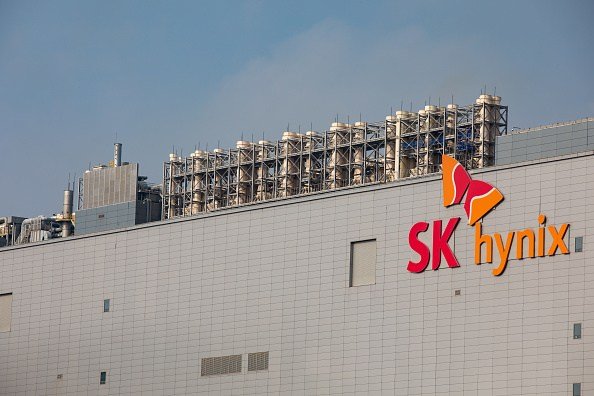
SK Hynix Navigates Complex US-China Trade Landscape
SK Hynix is currently maneuvering through an increasingly intricate geopolitical environment to maintain its global manufacturing footprint. The company’s flash memory subsidiary, Solidigm, is actively seeking authorization from the United States government to export essential chipmaking equipment to its production facility in Dalian, China. This diplomatic effort serves as a critical condition for the firm’s broader strategy to establish a sophisticated NAND flash memory factory within American borders. Industry analysts suggest that upstate New York remains a leading candidate for this proposed domestic facility.
Furthermore, the global semiconductor market is grappling with a severe supply shortage fueled by the rapid expansion of AI data centers. Because NAND flash chips are foundational components for solid-state storage, high-speed RAM, and complex AI infrastructure, their market value is surging. Research firm TrendForce estimates that prices for these chips may climb by up to 20% in the final quarter of the year. Consequently, securing a stable equipment pipeline is vital for the company.
Expanding the SK Hynix Global Production Footprint
The strategic importance of the Dalian facility cannot be overstated. Reports indicate that Solidigm intends to utilize vacant space within the Dalian plant to scale up its NAND chip manufacturing capabilities. However, SK Hynix clarified that it is not currently seeking to expand capacity at the Mod B facility, which reached completion in 2023. Instead, the company emphasizes that all equipment installation processes are conducted in strict coordination with U.S. regulatory authorities.
Moreover, the regulatory landscape has tightened significantly since October 2022, when Washington introduced comprehensive restrictions on high-end chip exports to China to address national security concerns. By September 2025, the administration had revoked previous exemptions, though temporary annual licenses have since been granted to major players. SK Hynix continues to operate under these specific licenses, ensuring that its international operations remain compliant while it explores domestic growth opportunities.
Strategic Growth for the SK Hynix Brand
In addition to its manufacturing goals, the company is preparing for significant financial milestones. Solidigm is reportedly eyeing a 2027 initial public offering, a move that could potentially generate $10 billion and result in a valuation reaching $100 billion. Commerce Secretary Howard Lutnick has expressed a clear desire for firms like SK Hynix and Samsung to anchor their manufacturing operations in the U.S. to fortify the domestic supply chain. Ultimately, the success of these negotiations will determine the future of SK Hynix in the competitive global memory market.
Sk Hynix Market Impact and Industry Significance
The introduction of Sk Hynix represents a pivotal shift in modern technological adoption across enterprise and consumer sectors alike. Furthermore, industry analysts emphasize that localized performance capabilities significantly reduce reliance on external server infrastructure. Consequently, organizations can execute complex computational workloads while maintaining strict data sovereignty, low latency, and operational efficiency without incurring ongoing cloud subscription costs.
Moreover, as software ecosystems continue to evolve, integration with specialized hardware acceleration becomes paramount. Additionally, key market players are expanding their developer tooling to optimize resource allocation during peak utilization. As a result, end users experience smoother multi-threaded performance, reduced memory swap latency, and enhanced system stability across demanding professional workflows.
Performance Benchmarks and Practical Sk Hynix Scenarios
In real-world deployment scenarios, evaluating sustained throughput and thermal efficiency is essential for technical decision-makers. Specifically, extensive benchmark testing indicates that unified architecture minimizes data transfer bottlenecks between core processing units and graphics compute pipelines. Therefore, demanding tasks operate with minimal compute overhead.
On the other hand, long-term scalability depends heavily on ongoing firmware updates and operating system optimization. Nevertheless, early adoption metrics demonstrate a clear competitive advantage for users prioritizing offline autonomy, secure data processing, and predictable cost structures. Ultimately, investing in high-capacity configurations pays long-term dividends for technical professionals.