
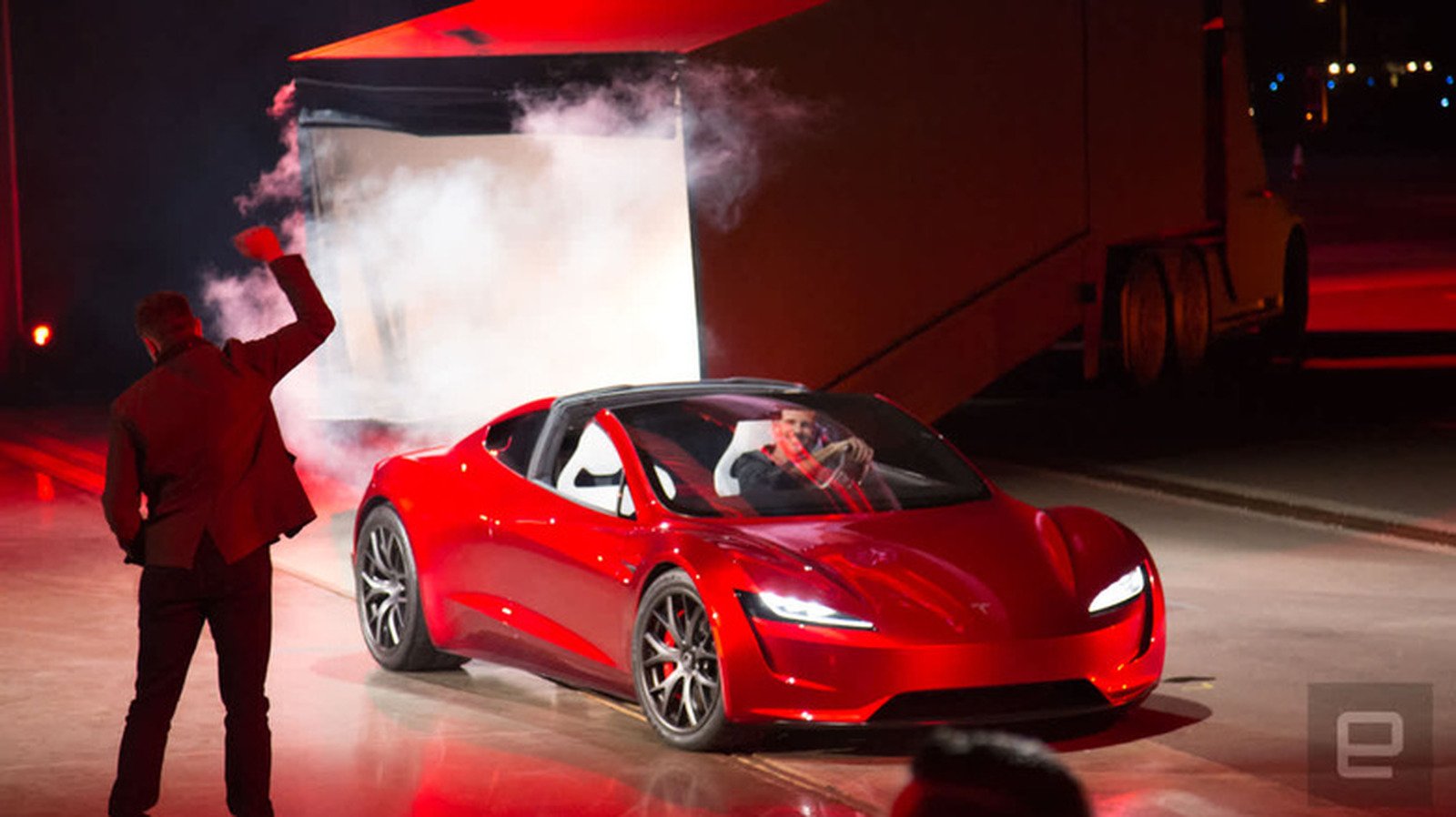
Tesla Unveils New Tesla Roadster After Years of Delays
The long-awaited New Tesla Roadster is finally set for its grand debut tonight. After nearly nine years of silence and repeated postponements, enthusiasts are eager to see if the company can deliver on its ambitious promises. Elon Musk has teased that this event will be a significant moment for the automotive industry. Specifically, the reveal is scheduled for 8:55 PM ET, provided the company meets its latest deadline.
Furthermore, Musk has built substantial hype on social media platforms, suggesting the New Tesla Roadster might be the most impressive product demo in the history of the firm. He even described the upcoming presentation as a potential ‘banger.’ Such bold claims naturally increase the pressure on Tesla to provide a vehicle that exceeds the expectations set during the initial 2017 reveal.
Performance Expectations for the New Tesla Roadster
When the car was first teased, Tesla promised a 620-mile range and a blistering zero to 60 mph time of just 1.9 seconds. However, those specs are now nearly a decade old. Industry analysts are curious if the production version of the New Tesla Roadster will surpass these original benchmarks. Given the rapid advancement in battery technology, many expect significant improvements in both power output and efficiency.
In addition to raw speed, there is intense speculation regarding the car’s physical capabilities. Recent teasers on the official company website strongly imply the inclusion of cold-gas thrusters. Some reports have even suggested the vehicle might possess flight capabilities, a concept that sounds more like science fiction than standard car engineering. Ultimately, the industry watches closely to see how the New Tesla Roadster integrates these unconventional features into a functional, road-legal design.
The Road to the New Tesla Roadster Launch
The journey to this evening has been anything but smooth. Since the initial announcement in 2017, the New Tesla Roadster has faced numerous setbacks that pushed back its release date by several years. Consequently, the public has become accustomed to hearing about delays rather than seeing the finished product. Nevertheless, the excitement remains palpable as fans prepare for the live presentation.
As we approach the launch time, the company has invited fans to participate in a liveblog starting at 4 PM ET. This interactive approach allows the community to discuss their hopes and concerns regarding the vehicle. Whether the car truly features thrusters or simply sets a new standard for electric speed, the event promises to be a spectacle. Check out the latest Tesla updates here.
New Tesla Roadster Market Impact and Industry Significance
The introduction of New Tesla Roadster represents a pivotal shift in modern technological adoption across enterprise and consumer sectors alike. Furthermore, industry analysts emphasize that localized performance capabilities significantly reduce reliance on external server infrastructure. Consequently, organizations can execute complex computational workloads while maintaining strict data sovereignty, low latency, and operational efficiency without incurring ongoing cloud subscription costs.
Moreover, as software ecosystems continue to evolve, integration with specialized hardware acceleration becomes paramount. Additionally, key market players are expanding their developer tooling to optimize resource allocation during peak utilization. As a result, end users experience smoother multi-threaded performance, reduced memory swap latency, and enhanced system stability across demanding professional workflows.
Performance Benchmarks and Practical New Tesla Roadster Scenarios
In real-world deployment scenarios, evaluating sustained throughput and thermal efficiency is essential for technical decision-makers. Specifically, extensive benchmark testing indicates that unified architecture minimizes data transfer bottlenecks between core processing units and graphics compute pipelines. Therefore, demanding tasks operate with minimal compute overhead.
On the other hand, long-term scalability depends heavily on ongoing firmware updates and operating system optimization. Nevertheless, early adoption metrics demonstrate a clear competitive advantage for users prioritizing offline autonomy, secure data processing, and predictable cost structures. Ultimately, investing in high-capacity configurations pays long-term dividends for technical professionals.