
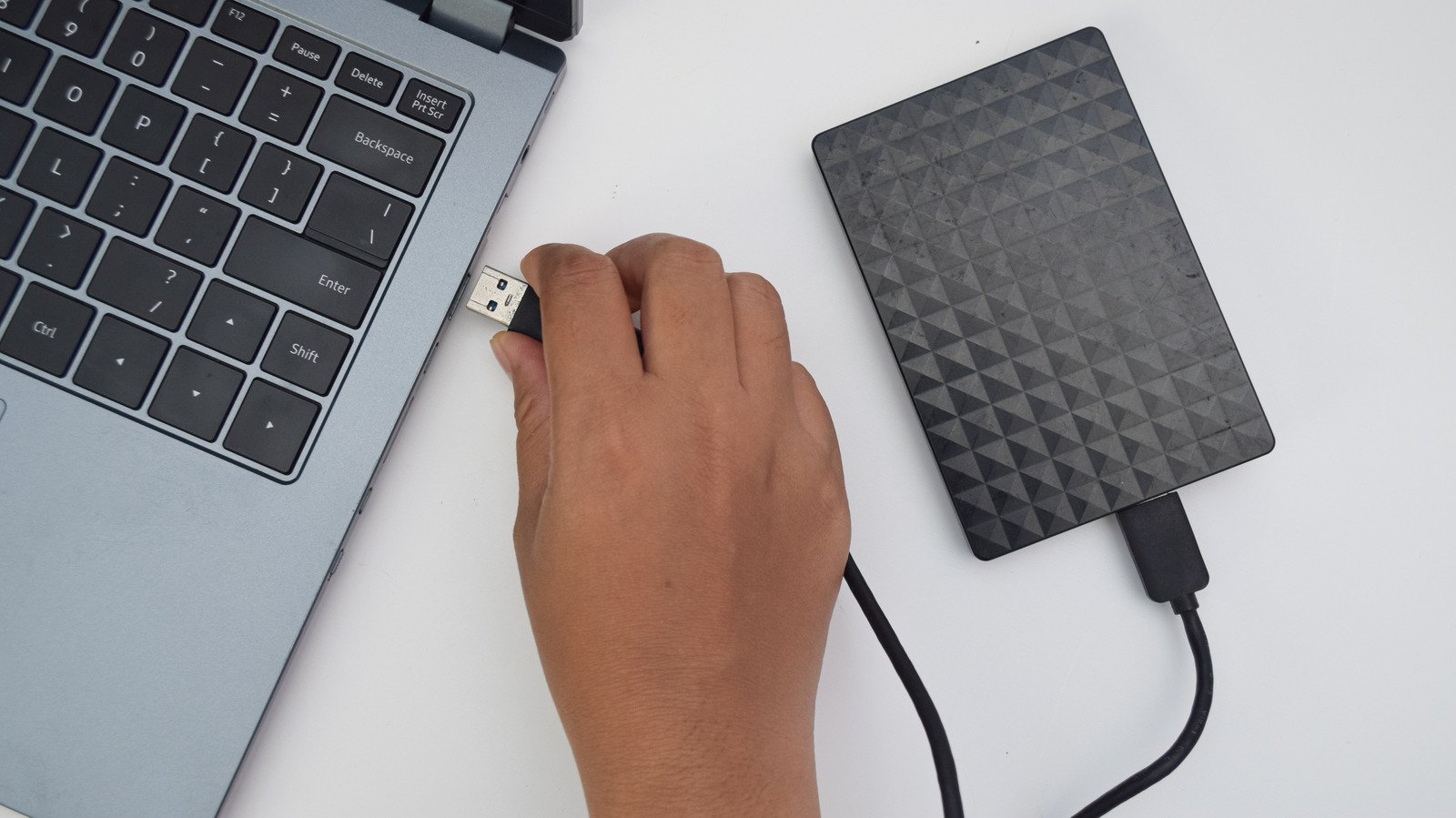
It’s Important Avoid: Experts Warn Against Plugging in Damaged Hard Drives
Resist the immediate urge to test that damaged hard drive after an accidental drop. On the surface, a typical external storage unit might look completely sturdy. However, beneath that protective plastic or metal enclosure are sensitive moving parts working closely together to store your files. Because components operate just nanometers apart, even a minor fall closes that vital gap. While your files might still be intact right after the impact, plugging the device back in immediately dramatically increases your chances of permanent data loss.
It’s Important Avoid: How Spinning Platters Turn Minor Drops Into Disasters
Mechanical drives rely on disks spinning at rapid speeds like 5,400 or 7,200 RPM. When you power on a unit with misaligned read/write heads, the mechanism forces those tiny components directly across the sensitive platters. This abrasive friction instantly scratches the magnetic surface, turning a recoverable accident into total data destruction. Furthermore, microscopic debris generated during the initial scratch can easily bounce around, contaminating other tracks and making professional recovery much more difficult for technicians.
Key Risks of Connecting Impacted Storage
- Rapid scratching of internal magnetic storage platters
- Contamination from flying microscopic debris inside the enclosure
- Complete destruction of readable sectors during high-speed spinning
- Complicated and expensive recovery for data specialists
It’s Important Avoid: What to Do When Your Storage Takes a Fall
If your portable storage takes a serious hit while running, treat it as broken immediately. Unplug the USB cable right away and keep it disconnected. Never shake, tap, freeze, or open up the enclosure yourself. Instead, consult an established data recovery lab if the contents matter to you. As industry experts often note, safe handling beats guesswork every single time.
It’s Important Avoid: Why Professional Evaluation Matters Most
The only true way to assess a damaged hard drive is inside a cleanroom environment where specialists can swap donor parts safely. Although waiting for professional help tests your patience, safeguarding your irreplaceable photos and documents makes the cautious approach entirely worth it in the end.
”
},
{
“siteName”: “TechDrogo”,
“siteUrl”: “https://techdrogo.com”,
“title”: “Why Plugging in a Damaged Hard Drive Destroys Data”,
”
“focusKeyword”: “damaged hard drive”,
“metaDesc”: “Learn why connecting a damaged hard drive to your computer causes permanent file loss and how to handle storage safely.”,
“category”: “Hardware & Gaming”,
“tags”: ,
Why Plugging in a Damaged Hard Drive Destroys Data
Dropping your portable storage enclosure can feel like slow motion, but the real danger begins when you plug in that damaged hard drive to check if it still works. Unlike solid-state drives, traditional mechanical units feature fragile glass or metal platters and microscopic read/write heads. After a physical impact, those internal parts sit dangerously close together. Powering the device on forces the system into motion, transforming a minor bump into an irreversible hardware catastrophe.
The Physics Behind High-Speed Platter Destruction
In terms of It’s Important Avoid, Traditional storage hardware relies on disks spinning at thousands of revolutions per minute. When you connect an impacted device, misaligned heads scrape across the magnetic surface instantly. Because rotation happens so fast, debris from the initial scratch flies around the sealed chamber, causing secondary collisions across adjacent tracks. According to hardware repair guides, this cascade effect ruins your chances of a simple home fix.
Critical Steps After an Accidental Drop
- Immediately unplug the USB cable if it is connected
- Refrain from shaking, tapping, or freezing the enclosure
- Avoid opening the casing outside of a cleanroom
- Seek professional data recovery services for valuable files
Protecting Your Files Through Smart Inaction
When dealing with a damaged hard drive, doing nothing is often the smartest choice you can make. Resist the urge to download sketchy diagnostic software or restart your computer to force recognition. Each second the motor spins up worsens the physical scratches on the platters. Technicians need clean, unblemished surfaces to swap donor components and extract your lost memories bit by bit.
The Final Verdict on Hardware Safety
Ultimately, a damaged hard drive requires professional diagnostic tools rather than blind optimism. Recognizing the physical fragility of mechanical storage prevents you from accidentally turning a fixable glitch into permanent digital ruin. Protect your precious archives by keeping the power switch off until experts can take a look.
”
}
]
For full official background and direct documentation, read the source coverage on engadget Reporting.