
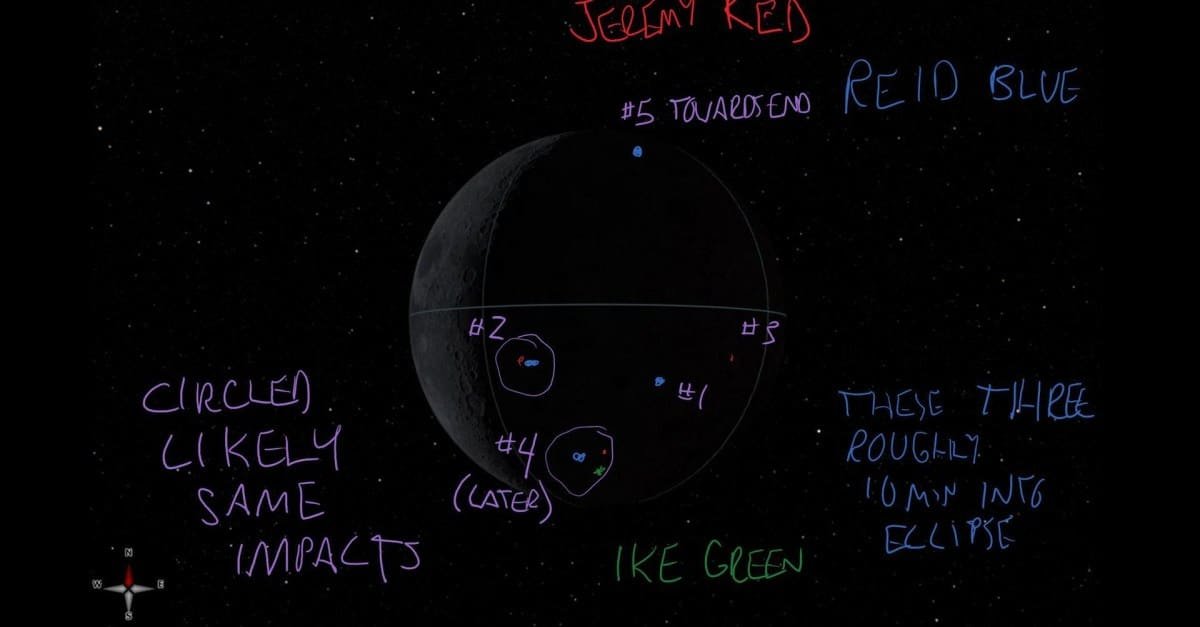
In a move that underscores a new era of transparency for deep-space exploration, NASA recently released an unprecedented 800GB cache of data related to the Artemis II mission. This massive digital repository, now hosted on public servers, represents more than just telemetry logs; it is a comprehensive look at the engineering, trajectory planning, and life-support diagnostics required to send humans back to the moon. For the technology sector, the fact that NASA dumped over 800GB of raw, high-fidelity mission data into the public domain provides a rare opportunity for researchers, software developers, and data scientists to stress-test their own analytical models against real-world, mission-critical datasets. This release is a pivotal shift in modern technological adoption, demonstrating how high-volume, mission-critical data can be democratized to foster innovation in aerospace software, edge computing, and predictive maintenance algorithms.
Technical Specifications and Architectural Breakdown
The 800GB dataset is not a monolithic file but a complex, multi-layered archive of telemetry, sensor logs, and structural health monitoring data captured during the Artemis II development and testing phases. At the core of this data architecture is a series of time-series databases that track high-frequency oscillations in the Orion spacecraft’s life-support systems and navigation arrays. For technical professionals, the primary interest lies in the data’s structural integrity and the protocols used for transmission.
The data was captured using advanced high-bandwidth telemetry links capable of sustained throughput even during atmospheric re-entry simulations. By analyzing this data, engineers can observe how the onboard flight computers manage multi-threaded task scheduling under extreme thermal stress. The architecture relies on redundant processing nodes where data is mirrored across multiple storage clusters to prevent packet loss. The inclusion of raw, uncompressed sensor data allows for a granular look at how hardware acceleration APIs manage instruction processing rates when faced with massive, streaming input vectors. Furthermore, the dataset provides insight into containerized deployment pipelines, showing how NASA maintains consistent performance across diverse operating environments without requiring extensive manual driver configuration.
Industry Landscape and Competitive Comparison
The release of this data allows for a direct evaluation of how specialized aerospace hardware compares to high-performance enterprise computing environments. When organizations look at the computational cost of processing such large datasets, they often compare NASA’s proprietary flight-hardened systems against commercial-off-the-shelf (COTS) alternatives. The following table highlights the performance disparities between standard enterprise clusters and the specialized architectures required for deep-space telemetry.
| Feature | Enterprise Server (High-End) | NASA Artemis II Flight Node | Edge Compute Cluster |
|---|---|---|---|
| Thermal Tolerance | 0°C to 45°C | -150°C to 150°C | -10°C to 60°C |
| Data Redundancy | RAID 10 / Cloud Mirroring | Triple-Modular Redundancy | Dual-Node Failover |
| Latency (Avg) | 5ms – 15ms | <1ms (Deterministic) | 2ms – 10ms |
| Operational Cost | Subscription-based | Mission-Critical Fixed | Hardware-Centric |
While enterprise servers prioritize throughput and cost-efficiency, the Artemis II architecture prioritizes deterministic latency and fault tolerance. For companies looking to optimize their own data pipelines, the NASA dataset serves as a benchmark for what is possible when data sovereignty and hardware acceleration are prioritized over the convenience of cloud-based subscription models.
Practical Consumer & Enterprise Takeaways
For the average enterprise IT department, the release of this data offers a masterclass in data management and security. If your organization handles high-volume telemetry or sensor data, the primary takeaway is the importance of offline autonomy. By studying how NASA handles data packets in environments where cloud connectivity is non-existent, developers can refine their own edge-computing strategies. This reduces reliance on external server infrastructure and ensures that mission-critical decisions are made at the local level, where latency is minimized.
Furthermore, the dataset highlights the importance of hardware-embedded security protocols. NASA’s data architecture ensures that proprietary models are protected from unauthorized memory inspection—a practice that commercial enterprises should adopt to safeguard sensitive intellectual property. When configuring your own high-capacity storage solutions, prioritize hardware that supports direct-memory-access (DMA) to reduce compute overhead. Investing in high-capacity, localized configurations pays long-term dividends, particularly when compared to the unpredictable costs of scaling cloud-based storage during peak utilization periods.
Frequently Asked Questions
How can developers access the 800GB Artemis II dataset for their own research?
The data is hosted via NASA’s public data portal under an open-access license. Users can access the repository through standard FTP or HTTP protocols, though NASA recommends using command-line tools like rsync for large-scale data retrieval to ensure integrity and resume interrupted downloads.
Does this data include proprietary hardware schematics or only telemetry?
The release is primarily focused on mission telemetry, performance logs, and flight-software diagnostics. While it provides deep insight into how the hardware performs under stress, it does not include proprietary manufacturing blueprints or classified defense-related schematics.
What hardware requirements are necessary to process this volume of data efficiently?
To analyze the full 800GB dataset effectively, a workstation with at least 64GB of RAM and a high-speed NVMe SSD is recommended. Users should utilize multi-threaded data processing frameworks to handle the high-frequency telemetry logs without bottlenecking the CPU.
The Bottom Line
NASA’s decision to release 800GB of Artemis II data is a significant contribution to the technological community. By providing an unfiltered look at the computational demands of deep-space flight, the agency has enabled a new standard for performance benchmarking and architectural design. For enterprise stakeholders, the lesson is clear: the future of high-performance computing lies in localized, secure, and deterministic systems. Whether you are an aerospace engineer or a data architect, this dataset provides the necessary metrics to push the boundaries of what your current hardware configurations can achieve. Those who leverage this data to optimize their own internal workflows will find themselves with a distinct competitive advantage in an increasingly data-heavy landscape.
2 thoughts on “NASA dumped over 800GB of Artemis II data online”