
Technical Specifications and Architectural Breakdown
The engineering profile of the American Heritage stands in stark contrast to the standard commercial vessels that share the Mississippi River. Designed to evoke the golden age of riverboat travel, the American Heritage utilizes a shallow-draft, paddlewheel-driven architecture. While this design is optimized for navigating the specific geography of inland waterways, it necessitates a hull construction that prioritizes weight distribution and historical silhouette over the robust, double-hulled steel structures required of modern tankers and deep-sea cruise liners.
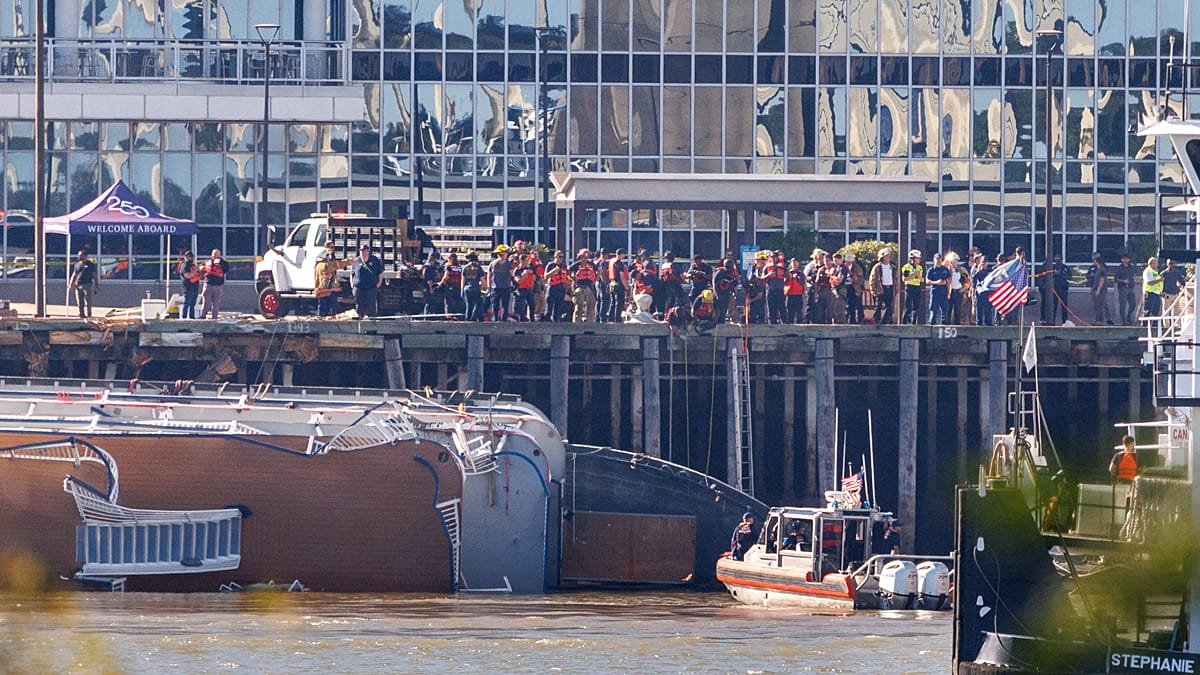
A primary point of failure in this incident appears to be the lack of compartmentalized bulkhead systems. In modern naval architecture, vessels are designed with a series of watertight compartments; if one section is breached, the flooding is contained, allowing the ship to maintain buoyancy. The American Heritage, however, features a more open, integrated interior layout to accommodate passenger amenities and the mechanical requirements of the paddlewheel system. When the tanker impacted the vessel, the resulting breach in the lower decks allowed for rapid water ingress, causing the ship to list at a dangerous angle. Furthermore, the early arrival of the vessel at the dock suggests a potential failure in the integration of proximity warning systems. Advanced docking guidance protocols are designed to synchronize vessel movement with the heavy commercial traffic of the Port of New Orleans; the fact that this collision occurred despite these protocols suggests a systemic gap in how legacy-style vessels interact with real-time sensor data and automated traffic management systems.
Industry Landscape and Competitive Comparison
The maritime industry is currently divided between heritage vessels, which serve as floating museums, and modern, high-tech cruise ships that leverage sophisticated collision mitigation software and reinforced hulls. The following table illustrates the disparity in safety standards between these vessel classes.
| Feature | American Heritage (Legacy) | Modern River Liner | Commercial Tanker |
|---|---|---|---|
| Hull Construction | Lightweight/Single-Hull | Reinforced Steel/Double-Hull | High-Impact Double-Hull |
| Bulkhead Systems | Limited/Open Layout | Fully Compartmentalized | Redundant/Automated |
| Collision Mitigation | Manual/Visual Reliance | Active Radar/Sonar Integration | AI-Assisted Traffic Management |
The comparison reveals a significant safety deficit. While modern river liners have adopted the safety benchmarks of the blue-water cruise industry—including advanced sonar and automated collision avoidance—the American Heritage operates within a framework that relies heavily on human observation and legacy navigation techniques. This creates a dangerous friction point when these vessels must cross paths with massive, automated tankers that operate on rigid, data-driven schedules. The industry must now determine whether the aesthetic value of these vessels is worth the engineering risks they pose to passengers in an increasingly crowded waterway.
Practical Consumer & Enterprise Takeaways
For operators of heritage-style vessels, the path forward is clear: substantial retrofitting is no longer optional. The incident involving the American Heritage highlights an urgent need for the integration of secondary collision mitigation systems. Operators should prioritize the installation of modern sensor arrays that provide 360-degree situational awareness, effectively “digitizing” the environment around the vessel to compensate for the limitations of legacy navigation decks.
From a consumer perspective, travelers should be aware of the safety certifications of the vessels they choose. While regulators will likely mandate stricter safety audits in the wake of this crash, potential passengers should inquire about a vessel’s hull integrity and the presence of automated bulkhead closures. Enterprise-level investment must shift toward “smart” maritime infrastructure, where docking guidance systems are not merely advisory but are integrated into the ship’s propulsion and steering controls to prevent human error during high-traffic maneuvers.
Frequently Asked Questions
Why did the American Heritage not have modern collision-resistant hull architecture?
The vessel was designed to replicate the aesthetic and mechanical function of classic paddlewheelers. Incorporating the heavy, double-hulled steel required for modern collision resistance would have significantly increased the vessel’s draft and weight, fundamentally altering its ability to navigate the shallow river routes it was built to traverse.
Could the collision have been prevented by modern sensor technology?
It is highly probable. Had the vessel been equipped with an integrated automated identification system (AIS) linked to a proximity-alert network, the bridge would have received an earlier warning regarding the tanker’s trajectory, providing critical seconds to adjust positioning or initiate emergency maneuvers.
What are the likely regulatory consequences for the cruise industry?
Expect an immediate push for the mandatory installation of collision-avoidance software on all passenger-carrying vessels, regardless of their historical design. Furthermore, the Port of New Orleans will likely revise its docking protocols, potentially restricting the movement of legacy vessels during peak commercial traffic hours.
The Bottom Line
The collision of the American Heritage is a sobering event that exposes the fragility of balancing heritage tourism with the realities of modern industrial logistics. While the vessel’s design is a triumph of aesthetics, the incident proves that structural redundancy cannot be sacrificed for the sake of nostalgia. For the maritime industry, the lesson is unequivocal: technology must be the foundation upon which passenger safety is built, regardless of the era a vessel is intended to represent. Moving forward, the survival of the river cruise sector will depend on its ability to marry historical charm with the uncompromising safety standards of the twenty-first century.