
Technical Specifications and Architectural Breakdown
To understand the current regulatory pressure, one must first grasp the sheer scale of modern US data centers. A contemporary hyperscale facility is not merely a warehouse for servers; it is a high-density industrial plant. These facilities typically operate at a power density of 15 to 30 kilowatts (kW) per rack, with high-performance computing (HPC) clusters for AI training pushing those demands toward 100 kW per rack. This necessitates advanced cooling architectures, moving away from traditional air-cooled computer room air conditioning (CRAC) units toward direct-to-chip liquid cooling and immersion cooling protocols.
The primary components include high-voltage substations capable of stepping down transmission-level power, redundant uninterruptible power supplies (UPS) utilizing lithium-ion or lead-acid battery arrays, and massive diesel or hydrogen-powered backup generation systems. The architectural footprint is equally demanding, often requiring hundreds of acres of land to accommodate the facility itself, the required buffer zones for noise mitigation, and the electrical switchgear. The strain on regional grids is exacerbated by the “always-on” nature of these facilities, which operate with a power usage effectiveness (PUE) ratio—a measure of how efficiently a data center uses energy—that, while improving, still represents a significant, constant load on local utility providers.
Industry Landscape and Competitive Comparison
The industry is currently navigating a transition from traditional enterprise-owned facilities to massive colocation and hyperscale environments. This shift is driven by the necessity of proximity to high-speed fiber backbones and, crucially, access to reliable, low-cost electricity. However, the competitive landscape is fracturing under the weight of the aforementioned Ratepayer Protection Act and the proposed GRID Act. Companies are now forced to weigh the benefits of domestic reliability against the potential tax penalties of offshore development.
| Feature | Legacy Enterprise Center | Modern Hyperscale Facility | Off-Grid AI Cluster |
|---|---|---|---|
| Power Density | 5-10 kW/rack | 20-50 kW/rack | 50-100+ kW/rack |
| Cooling Method | Air/CRAC | Liquid-to-Chip | Immersion/Closed-Loop |
| Grid Dependency | High | High | Low (Independent) |
| Primary Constraint | Floor Space | Electricity Supply | Capital Expenditure |
As the table illustrates, the move toward off-grid AI clusters represents a fundamental change in engineering philosophy. By decoupling from the public grid, firms can avoid the regulatory hurdles of the Ratepayer Protection Act, though this comes at a significant cost in initial capital expenditure and operational complexity.
Practical Consumer & Enterprise Takeaways
For enterprise stakeholders and investors, the current climate necessitates a fundamental reassessment of infrastructure strategy. The primary takeaway is that the “cheapest power” model is no longer the sole metric for success. Companies must now account for “political risk premiums” when selecting sites for new builds. If a project is slated for a region with high public opposition or a fragile grid, the long-term operational costs—driven by potential grid-upgrade mandates or legislative taxes—may outweigh the initial savings on land or utility rates.
Furthermore, procurement teams should prioritize facilities that demonstrate a clear path to grid independence or those that have already invested in onsite renewable generation and storage. The cost-benefit trade-off is shifting: paying a premium for a site with existing heavy-duty electrical infrastructure and local community support is now a more sound financial strategy than pursuing lower-cost, greenfield projects in contentious jurisdictions. For the consumer, this will likely manifest as a stabilization in cloud service pricing, as the industry passes on the costs of these more robust, localized energy solutions.
Frequently Asked Questions
How does the Ratepayer Protection Act impact current data center operational costs? The Act shifts the financial burden of grid upgrades, such as new transmission lines or substation expansions, from the utility company (and by extension, the public) to the data center operator. This can add tens of millions of dollars to the upfront capital expenditure of a new facility.
What are the technical challenges of moving US data centers to off-grid power? The primary challenge is maintaining the “five-nines” (99.999%) reliability required for enterprise-grade uptime. Off-grid systems require complex microgrid management, massive onsite battery storage, and redundant, fuel-stable generation sources, which are significantly more difficult to manage than a standard grid connection.
Why is there a sudden surge in public opposition to these facilities? The opposition is largely driven by the perception that data centers consume vast amounts of local resources—specifically electricity and water—while providing minimal local employment or economic benefit after the initial construction phase. Residents are increasingly concerned about rising utility rates and the aesthetic impact of industrial expansion in rural or suburban areas.
The Bottom Line
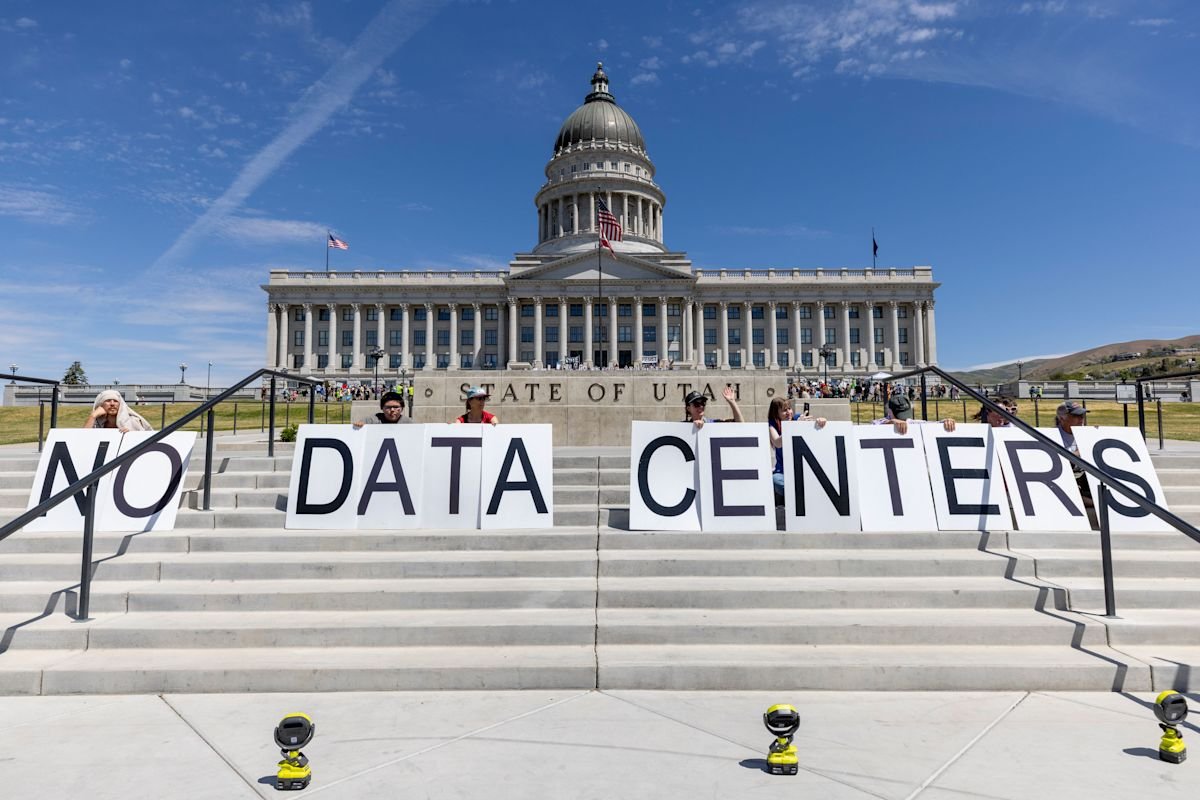
The intersection of national policy, energy scarcity, and local activism has fundamentally altered the trajectory of the data center industry. President Trump’s threat of taxation on overseas expansion, paired with domestic legislative efforts like the Ratepayer Protection Act, signals that the era of unfettered, low-cost growth is over. The tech sector must now pivot toward a model of infrastructure development that prioritizes grid stability, community integration, and long-term regulatory compliance. While this transition will undoubtedly increase the cost of digital infrastructure, it is a necessary evolution to ensure that the nation’s computing capacity remains sustainable in an increasingly resource-constrained environment.