
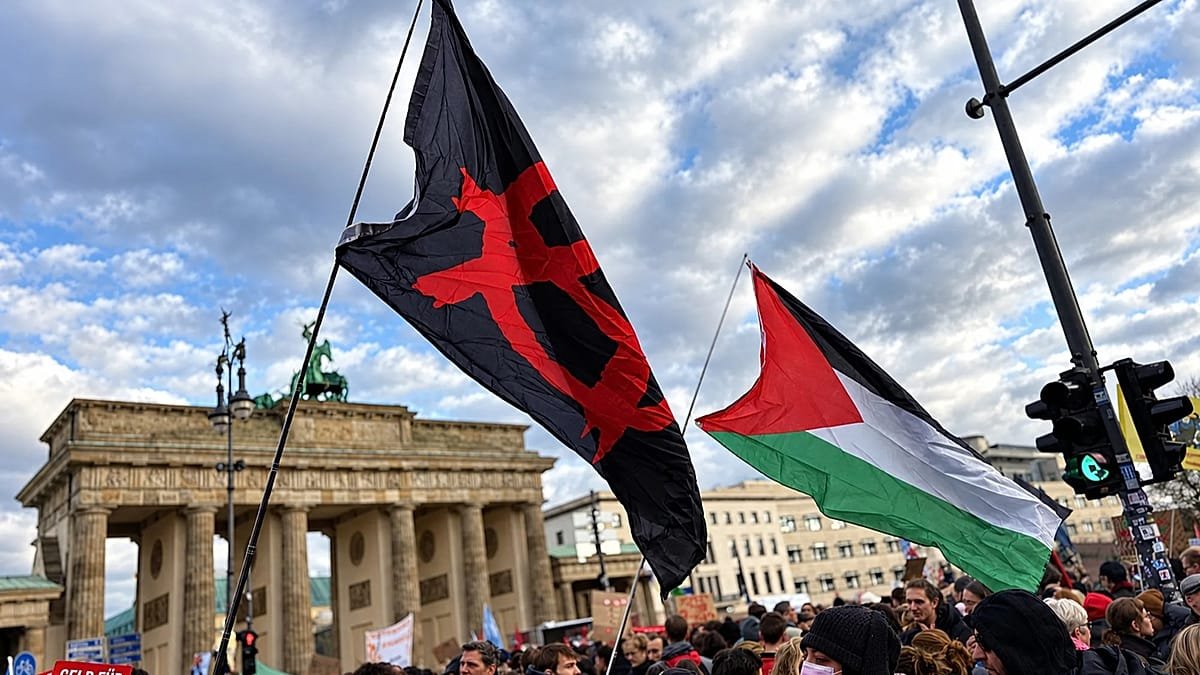
Thousands Converge at Brandenburg Gate for Berlin Youth Rally
An estimated 5,000 to 11,000 demonstrators descended upon the Brandenburg Gate for a massive berlin youth rally organized by the initiative Gen Z regelt. Instead of focusing on tech gadgets or digital platforms, the public gathering centered entirely on shifting government budgets away from military rearmament and toward crumbling schools, climate protection, and affordable housing.
Organizers launched the demonstration at 2 p.m., drawing a diverse crowd of teenagers, university students, and young workers. Many participants wore red or black Palestinian kufiyas, drawing a direct line between domestic social cuts and international arms manufacturing. Meanwhile, nearby luxury boutiques along Unter den Linden and Friedrichstraße hastily erected wooden barricades as a precaution against potential unrest.
Berlin Youth Rally: The Core Demands Behind the Student and Activist Movement
Speakers at the event emphasized that younger generations feel ignored by mainstream political parties. While lawmakers approve historic defense spending increases, public classrooms suffer from decaying infrastructure and outdated technology.
- Demanding zero compulsory military service across Europe
- Calling for increased funding for public schools and climate action
- Protesting the local production of weapons used in foreign conflicts
- Urging immediate relief for rising living costs and rent prices
Although organizers promised a peaceful afternoon, the heavy presence of political factions, including far-left groups and pro-Palestine activists waving anarchist banners, kept local law enforcement on high alert throughout the day.
Comparing Modern Youth Activism to Past European Protests
In terms of Berlin Youth Rally, This demonstration mirrors a broader wave of youth-led political mobilization sweeping across European capitals this year. Unlike traditional labor strikes, modern student movements leverage decentralized social media campaigns to coordinate rapidly across borders.
While historical protests often targeted specific legislative bills, today’s activists connect economic hardship directly to geopolitical conflicts and military industrial complexes. According to Euronews reports, participants insisted that German manufacturing plants share moral responsibility for weapons deployed in conflict zones.
What This Means for Future Policy and Political Engagement
The friction between government rearmament priorities and public sector underfunding highlights a growing generational divide. As politicians face mounting pressure from grassroots movements, upcoming parliamentary debates will likely see fierce battles over public spending allocations.
For young citizens participating in the berlin youth rally, the message remains clear: funding social safety nets must take precedence over military expansion. Whether these street-level protests successfully alter state budgets remains uncertain, but the political momentum among Gen Z voters is undeniable.