
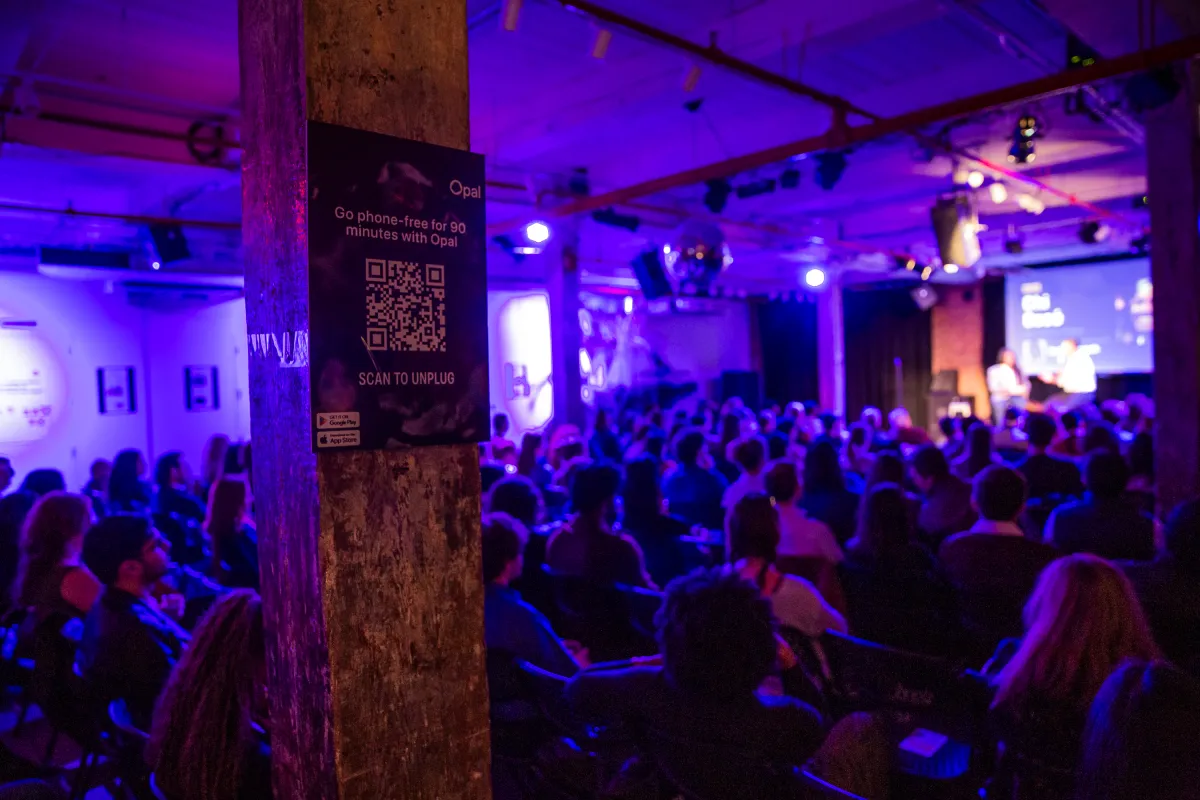
For decades, the physical architecture of the internet was a background concern, relegated to windowless industrial parks and remote desert outposts. Today, that invisibility has vanished. As the global race for artificial intelligence supremacy accelerates, the infrastructure required to power it—the modern data center—has become a lightning rod for political and environmental friction. Last Thursday in Brooklyn, a town hall hosted by Newsreel served as a stark microcosm of this national tension. What began as a routine industry mixer quickly devolved into a heated referendum on the cost of progress, signaling that the era of frictionless expansion for server farms is effectively over.
The numbers behind this shift are sobering. According to recent data from Data Center Watch, nearly $200 billion in proposed infrastructure projects faced delays or outright cancellation in the first half of 2026. From the rolling hills of Virginia, the global epicenter of server capacity, to the dense urban corridors of New York, local communities are no longer willing to accept the promise of “economic growth” at the expense of their local power grids and water tables. As we approach the November 3 midterm elections, the expansion of the digital backbone has officially become a ballot-box issue.
Technical Specifications and Architectural Breakdown
To understand the backlash, one must first understand the sheer scale of modern AI-ready infrastructure. A contemporary hyperscale data center is not merely a collection of servers; it is a specialized industrial facility engineered for extreme thermal management and power density. The shift toward high-performance computing (HPC) for large language models (LLMs) has necessitated a move from traditional air-cooled racks to direct-to-chip liquid cooling systems.
A standard high-density rack today consumes upwards of 50 to 100 kilowatts (kW) of power, a massive leap from the 10-15 kW racks common just five years ago. This density is driven by the deployment of specialized hardware, primarily NVIDIA-class GPUs and custom TPU (Tensor Processing Unit) silicon, which require constant, high-speed data throughput via 400G and 800G optical interconnects. The underlying protocols, such as InfiniBand and RoCE (RDMA over Converged Ethernet), ensure that thousands of chips can function as a single, massive computer. However, this performance comes with a physical tax: the cooling infrastructure required to prevent thermal throttling involves massive evaporative cooling towers that consume millions of gallons of water annually, directly competing with local municipal resources.
Industry Landscape and Competitive Comparison
The industry is currently caught between two competing pressures: the insatiable demand for AI inference and the tightening regulatory environment. Developers are now being forced to pivot from “build anywhere” strategies to more sustainable, grid-conscious siting. The following table highlights the evolution of facility design and its impact on the local environment.
| Feature | Legacy Enterprise Data Center | Modern AI Hyperscale Facility | Next-Gen Sustainable Facility |
|---|---|---|---|
| Cooling Method | CRAC (Air-cooled) | Direct-to-Chip Liquid Cooling | Immersion & Waste-Heat Recovery |
| Power Density | 5-10 kW per rack | 50-100 kW per rack | 100+ kW (Dynamic Load) |
| Water Usage | Minimal (Closed-loop) | High (Evaporative) | Near-Zero (Closed-loop/Dry) |
| Grid Impact | Low (Predictable) | High (Spiky/Constant) | Integrated Microgrid/BESS |
Practical Consumer & Enterprise Takeaways
For enterprise stakeholders and tech investors, the message is clear: the “move fast and break things” approach to infrastructure development is no longer viable in high-density urban environments. Organizations planning new capacity must account for long-term community relations as a core business cost. Securing a permit now requires more than just a site plan; it requires a transparent energy-usage agreement and, increasingly, a commitment to off-grid power generation or heat-reuse initiatives that benefit the surrounding neighborhood.
For the average citizen, the rise of these facilities means that energy prices and grid stability are now directly tied to the growth of local tech hubs. Consumers should look for companies that prioritize “circular” computing—those that invest in local grid upgrades rather than merely drawing from existing capacity. If a data center is proposed in your district, demand to see the facility’s Power Usage Effectiveness (PUE) and Water Usage Effectiveness (WUE) metrics, as these are the primary indicators of a facility’s efficiency and its potential burden on local resources.
Frequently Asked Questions
Why are data centers suddenly causing such intense political pushback?
The primary driver is the massive spike in electricity demand. AI training requires constant, high-intensity computing that puts a strain on aging electrical grids. When local residents see their own energy bills rise or experience grid instability, they naturally object to the massive energy consumption of nearby server farms.
How do data centers impact local water supplies?
Most large-scale data centers use evaporative cooling systems to maintain the optimal temperature for server hardware. This process consumes millions of gallons of water, which can deplete local aquifers or compete with municipal water supplies in regions already facing drought or scarcity.
Are there technological solutions to these sustainability concerns?
Yes, but they are expensive. Technologies like liquid immersion cooling and waste-heat recovery (where heat generated by servers is piped to warm nearby homes or businesses) can significantly lower a facility’s footprint. However, these require significant upfront capital expenditure compared to traditional air-cooled setups.
The Bottom Line
The friction observed in Brooklyn is not an isolated incident; it is the opening act of a broader societal negotiation regarding the physical cost of the artificial intelligence revolution. While the tech industry views these facilities as the essential engines of future prosperity, local communities view them as resource-intensive neighbors that provide little tangible benefit to the average resident. For the industry to continue its trajectory, it must move beyond defensive posturing. Future growth will not be determined by compute power alone, but by the ability of developers to integrate these massive facilities into the fabric of the communities they inhabit. Without a genuine commitment to transparency and sustainable engineering, the “data center” will remain a political liability rather than a technological asset.