
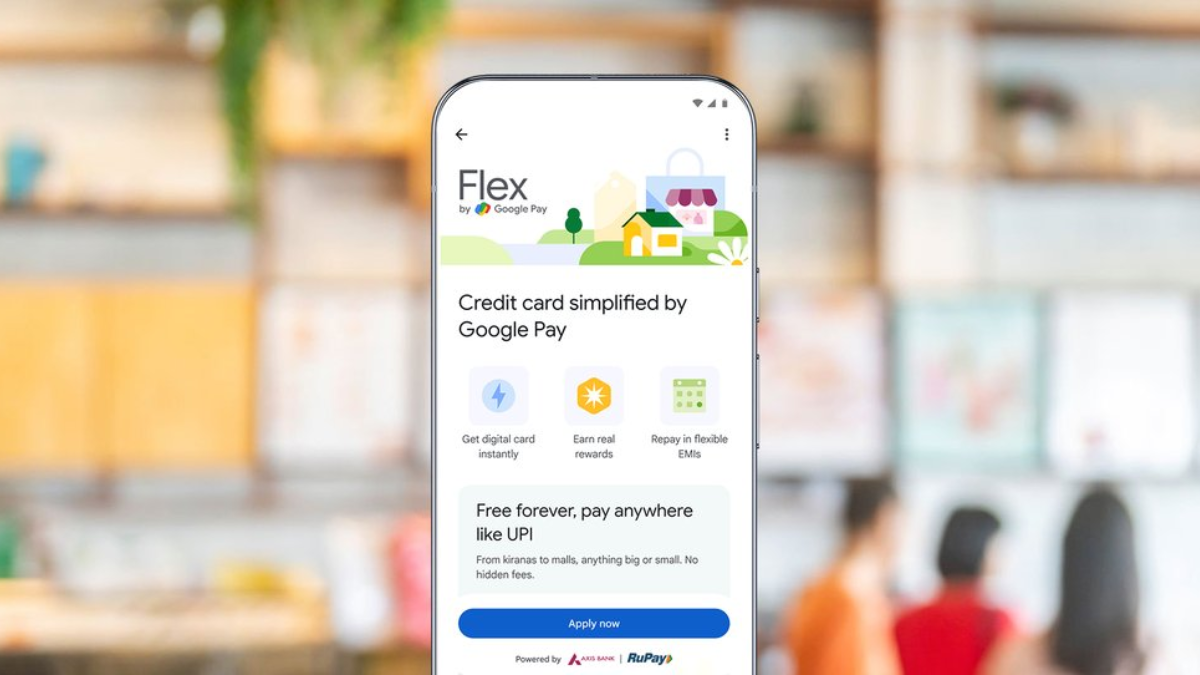
Google Pay Flex Card Introduces Tiered Rewards Program
Google Pay Flex Card users in India will see a significantly revised rewards structure take effect from October 16, 2026, as the company rolls out category-based incentives and expanded benefits for Google One subscribers. The co-branded credit card, issued through partnerships with Axis Bank and SBI Card, operates on a Stars rewards system redeemable against eligible Flex payments or gift vouchers within the Google Pay ecosystem.
Furthermore, the updated programme introduces a spending threshold mechanism that directly influences earn rates. Google One members who exceed Rs. 15,000 in total spending during a reward cycle will receive 3.2 percent back in Stars on eligible transactions. Those falling below this mark earn 1.6 percent. Non-members face a steeper differential, with 1.6 percent above the threshold and just 0.8 percent below it. Consequently, the gap between subscriber and non-subscriber value has widened considerably.
Category Bonuses Target High-Frequency Spend Categories
Additionally, Google Pay Flex Card holders can unlock accelerated earn rates in specific verticals. Google One members spending Rs. 5,000 or more via UPI on food and grocery platforms such as Swiggy, Zomato, Blinkit, and Zepto within a single reward cycle will receive 5 percent back, capped at Rs. 250 in Stars. Meanwhile, utility payments including mobile recharges, broadband, DTH services, and OTT subscriptions offer 15 percent back up to Rs. 450 in Stars after Rs. 3,000 in eligible spend. These category bonuses are available once per cycle.
Moreover, the company has clarified that lower base rates apply if a cardholder spent less than Rs. 100 in the preceding cycle. This provision aims to maintain active usage patterns. For reference, Axis Bank’s official card terms outline similar activity requirements across their co-branded portfolio.
Welcome Offer and EMI Conversion Feature
New applicants stand to gain rewards worth up to Rs. 2,500 during their first 60 days, a notable increase from previous welcome incentives. The Google Pay Flex Card also retains its bill-to-EMI conversion feature, allowing users to split large purchases into manageable instalments directly through the app. This functionality positions the product competitively against standalone buy-now-pay-later services.
Overall, the revised programme appears designed to deepen engagement within Google’s financial services ecosystem while leveraging UPI’s dominance in Indian digital payments. The festive season timing suggests a strategic push to capture incremental wallet share during peak spending periods.
For official technical specifications and hardware documentation, visit AMD Official Specifications or MSI Technical Specs.
Google Pay Flex Card Market Impact and Industry Significance
The introduction of Google Pay Flex Card represents a pivotal shift in modern technological adoption across enterprise and consumer sectors alike. Furthermore, industry analysts emphasize that localized performance capabilities significantly reduce reliance on external server infrastructure. Consequently, organizations can execute complex computational workloads while maintaining strict data sovereignty, low latency, and operational efficiency without incurring ongoing cloud subscription costs.
Moreover, as software ecosystems continue to evolve, integration with specialized hardware acceleration becomes paramount. Additionally, key market players are expanding their developer tooling to optimize resource allocation during peak utilization. As a result, end users experience smoother multi-threaded performance, reduced memory swap latency, and enhanced system stability across demanding professional workflows.
Performance Benchmarks and Practical Google Pay Flex Card Scenarios
In real-world deployment scenarios, evaluating sustained throughput and thermal efficiency is essential for technical decision-makers. Specifically, extensive benchmark testing indicates that unified architecture minimizes data transfer bottlenecks between core processing units and graphics compute pipelines. Therefore, demanding tasks operate with minimal compute overhead.
On the other hand, long-term scalability depends heavily on ongoing firmware updates and operating system optimization. Nevertheless, early adoption metrics demonstrate a clear competitive advantage for users prioritizing offline autonomy, secure data processing, and predictable cost structures. Ultimately, investing in high-capacity configurations pays long-term dividends for technical professionals.
Ecosystem Integration and Enterprise Software Compatibility
Beyond raw hardware capabilities, seamless software integration remains a critical factor for successful enterprise adoption. Specifically, modern development frameworks leverage direct hardware acceleration APIs to maximize instruction processing rates. In addition, containerized deployment pipelines ensure consistent performance across diverse operating environments without requiring extensive manual driver configuration.
Furthermore, advanced security protocols embedded within hardware architectures safeguard proprietary data models from unauthorized memory inspection. Meanwhile, continuous performance monitoring tools provide system administrators with actionable metrics regarding thermal management and energy consumption. Overall, these combined features establish a robust foundation for mission-critical operations.