
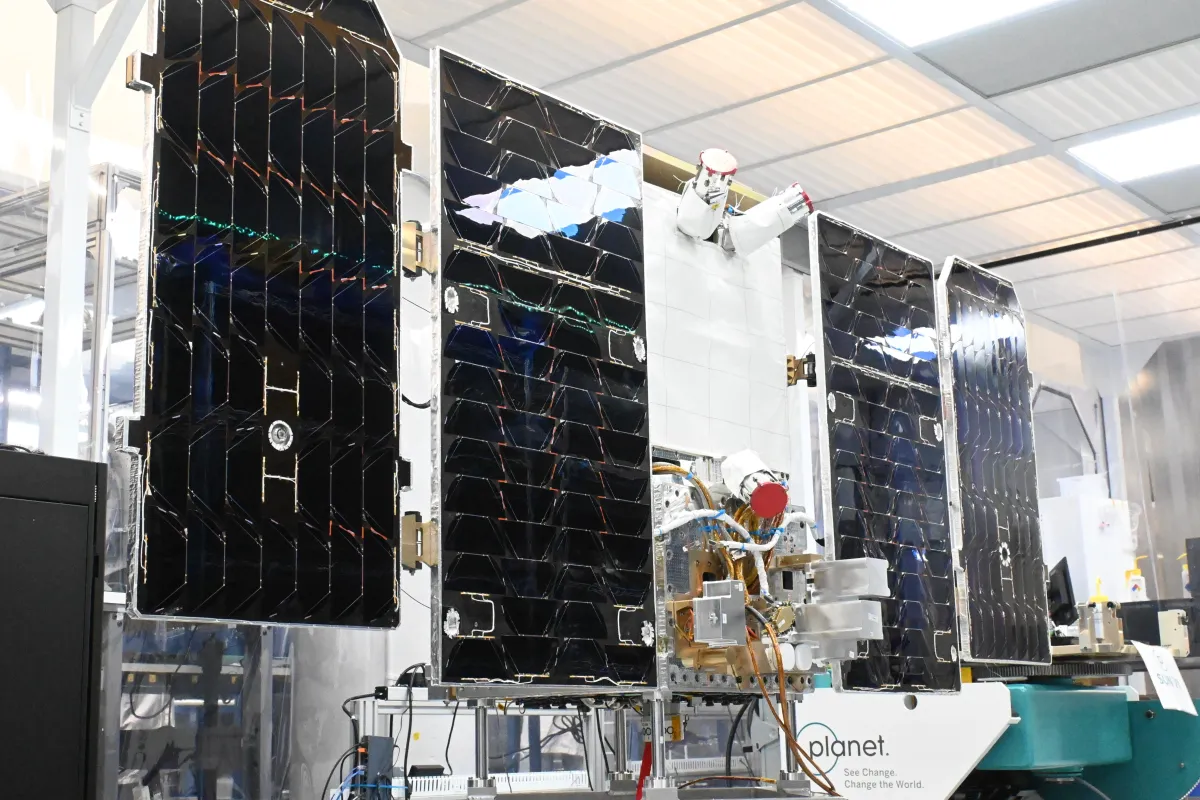
Google Space Data Center Prototype Goes Live in Orbit
Google recently launched a unique space data center aboard a SpaceX Falcon 9 rocket, marking a major milestone for orbital computing. This experimental satellite carries four specialized Google Tensor Processing Units and generates up to one kilowatt of electricity. Although power limitations mean engineers can only run a single TPU for twenty minutes at a time, the hardware is already communicating smoothly with ground stations.
Instead of merely sitting idle in low Earth orbit, the spacecraft was immediately put to work. Ground control uploaded Google DeepMind’s Gemma 4 model and issued a simple prompt asking for a haiku about being in orbit. The AI successfully generated a three-line poem about starlight feeding its core before engineers moved on to rigorous system diagnostics and thermal stress evaluations.
Space Data Center: How Radiation Affects Orbit Processing Chips
Running advanced processors beyond the Earth’s atmosphere exposes silicon to harsh cosmic radiation. While Google has tested its TPUs extensively inside particle accelerators on the ground, engineers must now observe how real-world radiation alters performance. High-energy particles often cause bit flips that corrupt stored memory without tripping conventional monitoring tools. Because of this, the ongoing test campaign focuses heavily on measuring data integrity under actual thermal stress and orbital radiation.
- Carries four custom Google Tensor Processing Units
- Generates up to 1 kW of solar power in low orbit
- Runs Google DeepMind Gemma 4 for initial inference testing
- Prepares for a multi-satellite expansion planned for 2027
In terms of Space Data Center, Ground simulations previously suggested that inference workloads would suffer minimal disruption from radiation compared to full model training. However, obtaining empirical data from this mission remains vital before scaling up the project. If these initial hardware tests succeed, Alphabet and its partners plan to launch two more advanced satellites equipped with high-speed inter-satellite optical links.
The Bottom Line on Orbital AI Infrastructure
While companies like Starcloud and Cowboy Space also explore individual orbital inference setups, Google is taking a different path by designing coherent distributed workloads. Because Alphabet maintains a major financial stake in SpaceX, future deployments will rely heavily on the continued success of heavy-lift rockets like Starship. As industry reports highlight, managing thermal constraints and laser links will define the future of any space data center network over the coming decade.