
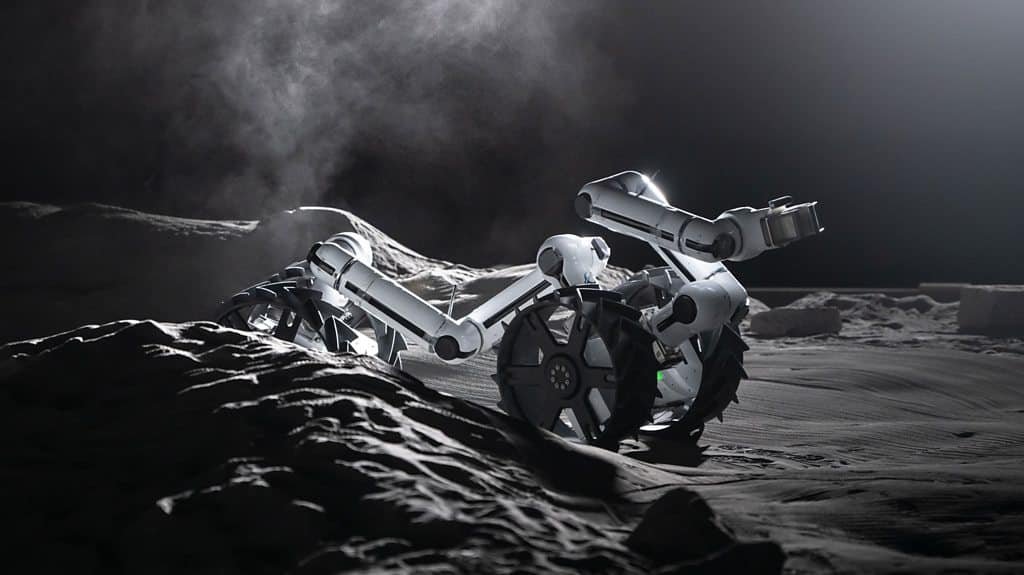
Japan’s lunar construction research includes ground-based experiments with reconfigurable robots. The Japan Science and Technology Agency’s MoonBot progress report describes verification using a prototype at JAXA’s Space Exploration Test Building.
Development rather than completed deployment
Tohoku University’s Lunar PIONEER announcement describes development of technologies for future lunar infrastructure. These are research milestones; they do not support the earlier headline’s implication that Japan has already deployed robots to build permanent Moon bases.
Why autonomy is useful
A robot that can recognize a misplaced component or pause safely after an unexpected condition can reduce the need for continuous human intervention. Evaluating that capability requires defined tasks, completion rates, and failure recovery, rather than a general claim that construction is autonomous.
A prototype is not a completed lunar base
The Japan Science and Technology Agency describes MoonBot verification experiments using a ground-based prototype at a JAXA test facility. Tohoku University also describes infrastructure technology development. Those milestones do not establish that construction robots have already been deployed to build a permanent base on the Moon.
| Check | What to verify |
|---|---|
| Test environment | Distinguish a simulation or Earth test field from an actual lunar mission. |
| Autonomy | Ask which tasks the robot completes without intervention and how it recovers after a failed grasp or navigation error. |
| Deployment readiness | Look for qualified hardware, transport plans, power requirements, and a named mission before calling a system operational. |
Our technical reading is that the important milestone is reliable task completion under stated conditions. A demonstration video alone cannot establish survival through lunar dust, temperature extremes, or long-duration operation.