
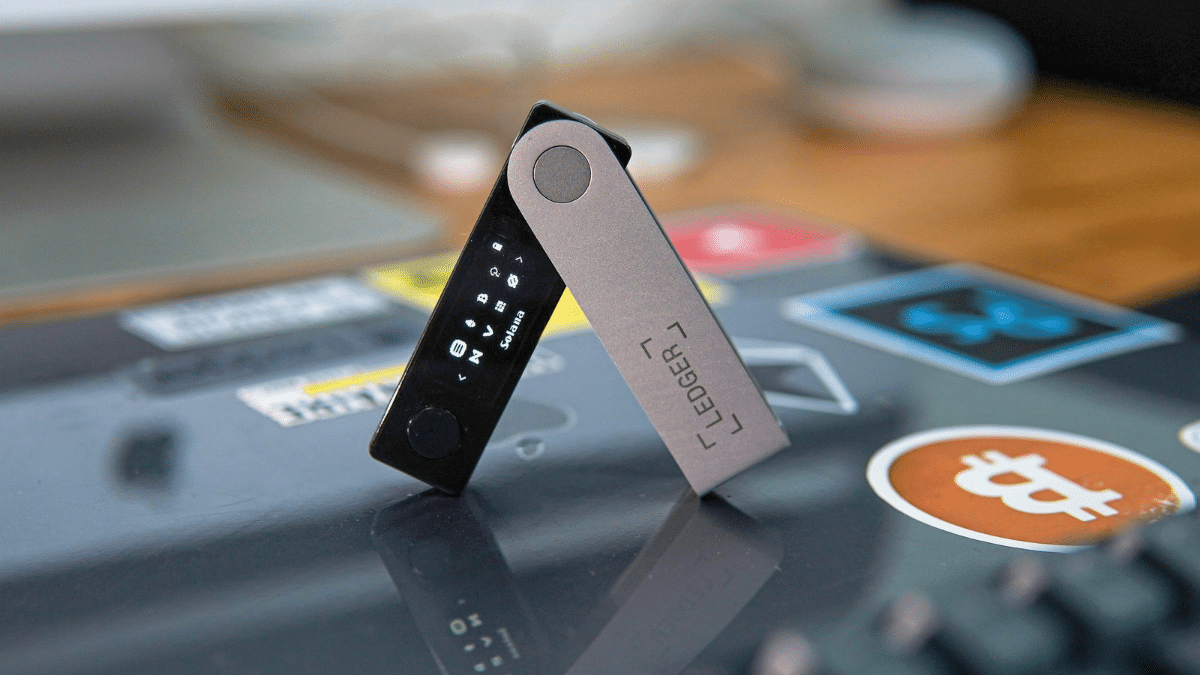
Ledger Hardware Wallet Probe Finds Suspicious Chip
Ledger has confirmed that a customer’s Ledger hardware wallet contained an unauthorised electronic component, a discovery that surfaced during an ongoing inquiry into a reseller tied to millions of dollars in stolen crypto. Furthermore, the company says the tampered unit belonged to a user already caught up in an investigation involving CryptoBilis, a Southeast Asian reseller. Meanwhile, the firm insists its own infrastructure remains untouched.
According to a public notice from Ledger Support, the extra hardware appeared inside a wallet owned by a victim. The company labelled it an unauthorised hardware implant, yet declined to specify the model or explain how it was inserted. Consequently, investigators have not linked the component directly to the missing funds, though the physical tampering confirms warnings that circulated earlier about unusual devices.
How Much Crypto Is Missing?
Blockchain analytics firm Bitquery traced suspected losses across 311 wallets spanning five networks: Bitcoin, Ethereum, TRON, BNB Chain and Polygon. Estimates put the total above $86 million, with some reports citing figures near $92 million. Additionally, the company has begun contacting customers who may have received affected units.
As a precaution, CryptoBilis has halted sales of all Ledger hardware wallet inventory until the inquiry concludes. Ledger says it is in active talks with the reseller about next steps and is cooperating with law enforcement. Moreover, the firm credited @SEAL_911, a crypto security collective, for its support. You can review official guidance on the Ledger support page, and inspect on-chain data via Bitquery.
What Ledger Hardware Wallet Owners Should Do Next
Buyers who purchased from the reseller face a straightforward set of choices. Specifically, Ledger recommends:
- Avoid initialising a device bought through CryptoBilis if setup has not yet started.
- Move funds to a new signer generated with a fresh seed phrase.
- Rely only on official Ledger channels for updates, since scammers exploit such incidents.
For instance, a wallet restored from an existing seed carries the same risk if the device itself was compromised at the hardware level. Therefore, generating a new seed on a trusted unit remains the safer path. Nevertheless, the company stresses that no evidence currently ties the implant to the thefts, and the investigation continues.
Why Physical Tampering Matters
Hardware wallets derive their value from isolating private keys offline. However, a modified component could theoretically intercept data at the point of signing. On the other hand, Ledger maintains that its security architecture, systems and services show no signs of compromise, and it is developing stronger anti-tampering measures. Overall, the case points to a supply-chain problem rather than a software flaw.
Ultimately, the outcome depends on forensic analysis of the seized device and coordination between the vendor, the reseller and authorities. Ledger has also opened a bounty channel at bounty@ledger.fr for anyone holding information. As the probe advances, the Ledger hardware wallet community will watch closely for clearer answers about how the implant got there.
Ledger Hardware Wallet Market Impact and Industry Significance
The introduction of Ledger Hardware Wallet represents a pivotal shift in modern technological adoption across enterprise and consumer sectors alike. Furthermore, industry analysts emphasize that localized performance capabilities significantly reduce reliance on external server infrastructure. Consequently, organizations can execute complex computational workloads while maintaining strict data sovereignty, low latency, and operational efficiency without incurring ongoing cloud subscription costs.
Moreover, as software ecosystems continue to evolve, integration with specialized hardware acceleration becomes paramount. Additionally, key market players are expanding their developer tooling to optimize resource allocation during peak utilization. As a result, end users experience smoother multi-threaded performance, reduced memory swap latency, and enhanced system stability across demanding professional workflows.
Performance Benchmarks and Practical Ledger Hardware Wallet Scenarios
In real-world deployment scenarios, evaluating sustained throughput and thermal efficiency is essential for technical decision-makers. Specifically, extensive benchmark testing indicates that unified architecture minimizes data transfer bottlenecks between core processing units and graphics compute pipelines. Therefore, demanding tasks operate with minimal compute overhead.
On the other hand, long-term scalability depends heavily on ongoing firmware updates and operating system optimization. Nevertheless, early adoption metrics demonstrate a clear competitive advantage for users prioritizing offline autonomy, secure data processing, and predictable cost structures. Ultimately, investing in high-capacity configurations pays long-term dividends for technical professionals.
Ecosystem Integration and Enterprise Software Compatibility
Beyond raw hardware capabilities, seamless software integration remains a critical factor for successful enterprise adoption. Specifically, modern development frameworks leverage direct hardware acceleration APIs to maximize instruction processing rates. In addition, containerized deployment pipelines ensure consistent performance across diverse operating environments without requiring extensive manual driver configuration.
Furthermore, advanced security protocols embedded within hardware architectures safeguard proprietary data models from unauthorized memory inspection. Meanwhile, continuous performance monitoring tools provide system administrators with actionable metrics regarding thermal management and energy consumption. Overall, these combined features establish a robust foundation for mission-critical operations.
2 thoughts on “Ledger Hardware Wallet Chip Tampering Under Probe”