
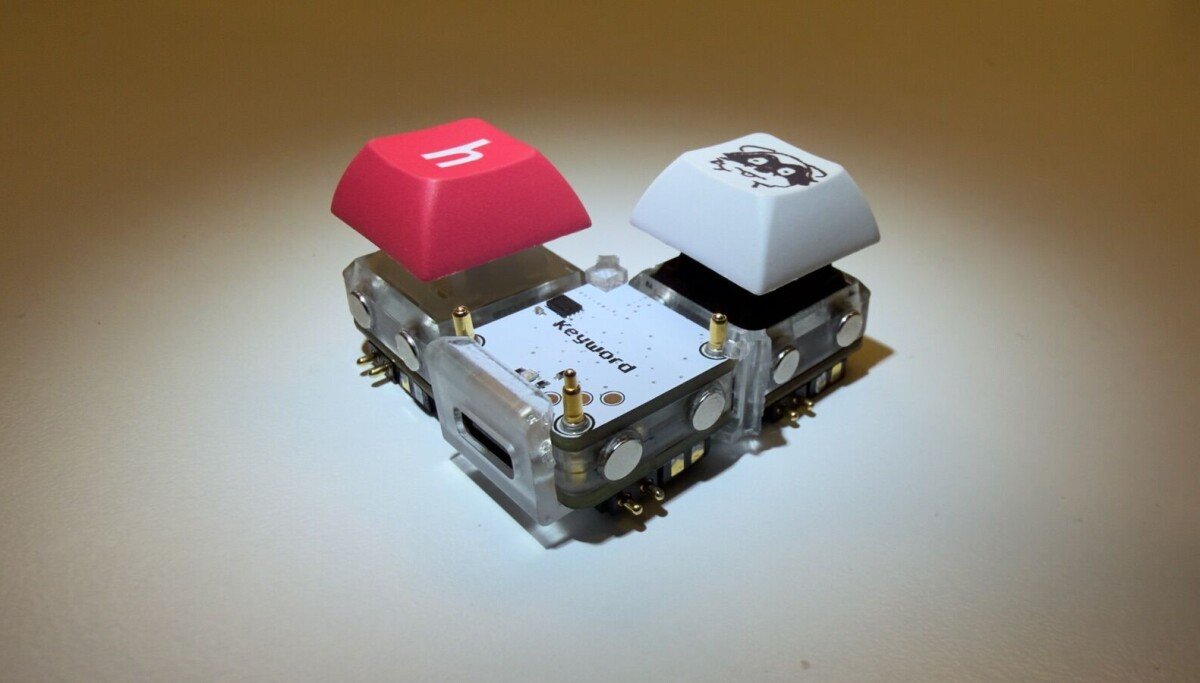
In the landscape of modern peripheral design, the mechanical keyboard has evolved from a simple input device into a focal point of enthusiast culture. Yet, for all the talk of “custom” boards, the vast majority of mechanical keyboards rely on a static printed circuit board (PCB) that dictates a fixed physical layout. If you want to move a key, you are often limited to software remapping rather than physical relocation. Nathan Alspaugh, an aerospace engineering student at the Massachusetts Institute of Technology, has bypassed these constraints entirely. His recent development of an open source keyboard—a project that treats every individual key as an independent, modular computing node—represents a departure from traditional manufacturing paradigms, offering a glimpse into a future where hardware is as fluid as software.
Technical Specifications and Architectural Breakdown
The core philosophy of Alspaugh’s project is the decentralization of the keyboard’s logic. In a standard mechanical keyboard, a central microcontroller scans a matrix of switches to determine which key is pressed. Alspaugh’s architecture replaces this matrix with a distributed network. Each individual key module is equipped with its own RISC-V microcontroller, effectively turning the keyboard into a cluster of tiny, interconnected computers.
The physical connectivity is achieved through a magnetic pogo pin system, which allows for the “Lego-like” modularity mentioned in his design logs. Pogo pins provide a reliable, spring-loaded electrical connection that can withstand the frequent reconfigurations inherent in a modular design. By utilizing magnets to seat these modules, Alspaugh ensures that the mechanical connection is both tactile and secure, preventing signal jitter or accidental disconnection during operation.
From a hardware perspective, the project is divided into two primary components: the “Keybit” (the individual switch module) and the “Keyword” (the controller module). The use of RISC-V is particularly significant; as an open-source instruction set architecture, it aligns with the project’s ethos of transparency and accessibility. Each Keybit communicates its state to the Keyword controller, which then aggregates the data to transmit input signals to the host computer. This decentralized approach eliminates the need for a rigid PCB, allowing the user to physically rearrange the board’s layout—or even build a non-standard shape—without needing to solder new traces or design a custom, fixed-layout circuit board.
Industry Landscape and Competitive Comparison
To understand the significance of Alspaugh’s work, one must compare it against the current market leaders. Mainstream mechanical keyboards from manufacturers like Corsair or Keychron prioritize durability, RGB integration, and mass-market appeal. They are designed for a “set it and forget it” user experience. Enthusiast-grade boards, such as those from the custom mechanical keyboard community, offer better materials and acoustics but remain tethered to the constraints of a single, non-modular PCB.
The following table outlines how this modular approach compares to traditional market offerings:
| Feature | Traditional Mechanical (e.g., Keychron) | Alspaugh Modular Keyboard |
|---|---|---|
| Layout Flexibility | Fixed (PCB-dependent) | Infinite (Physical modularity) |
| Architecture | Centralized Matrix | Distributed RISC-V Nodes |
| Assembly Complexity | Low (Plug and play) | High (DIY assembly/soldering) |
| Customization | Software-based | Hardware and Software-based |
While the traditional boards are clearly superior for the average consumer due to their cost-effectiveness and ease of use, they cannot compete with the freedom offered by the Alspaugh prototype. The trade-off is clear: the user gains absolute control over the physical topology of their input device at the expense of assembly time, financial investment, and the requirement for technical expertise.
Practical Consumer & Enterprise Takeaways
For the average user, this project is not yet a viable replacement for a daily driver. The cost of individual assembly, combined with the 100-plus hours of design and refinement, places this firmly in the realm of high-end hobbyist engineering. However, the implications for enterprise applications and accessibility are profound.
In specialized industrial environments or for users with specific motor control requirements, the ability to physically rearrange keys to match ergonomic needs is a massive advantage. Currently, these users must rely on expensive, custom-built medical-grade peripherals. Alspaugh’s project provides an open-source blueprint that could eventually lower the barrier to entry for custom, accessible hardware. If you are an enthusiast looking to replicate this, be prepared for a steep learning curve. The project requires proficiency in 3D printing—specifically resin printing for the tight tolerances of the cases—and a willingness to troubleshoot PCB errors. Financially, expect to spend significantly more per unit than a retail board, as professional assembly of small-batch components does not benefit from the economies of scale that drive down prices for mainstream brands.
Frequently Asked Questions
Is this project suitable for a beginner in hardware engineering?
No. While the project is open source and well-documented, it requires experience with surface-mount soldering, firmware flashing, and 3D printing. It is best suited for those who have already completed simpler DIY electronics projects.
Can I buy a pre-assembled version of this keyboard?
Currently, no. The project is a research and development initiative by a student. It is intended for those who wish to build, iterate, and contribute to the documentation. There is no commercial retail path at this time.
What are the main risks of using magnetic pogo pins?
The primary risks include signal degradation over time due to oxidation or debris accumulation on the pins, and the potential for accidental disconnection if the magnets are not strong enough to hold the modules in place during aggressive typing.
The Bottom Line
Nathan Alspaugh’s modular keyboard project is a testament to the ingenuity found within the open-source hardware community. By treating the keyboard not as a single device, but as a distributed network of independent modules, he has successfully challenged the rigid manufacturing standards that have dominated the industry for decades. While the project remains a complex, high-effort endeavor that is not yet ready for the mainstream consumer, it serves as a proof of concept that will likely influence future designs in the custom peripheral space. As we see more integration of RISC-V and modular architectures, the line between “building” and “buying” a keyboard will continue to blur, ultimately benefiting the end user who demands a device tailored to their specific needs rather than a one-size-fits-all solution.