
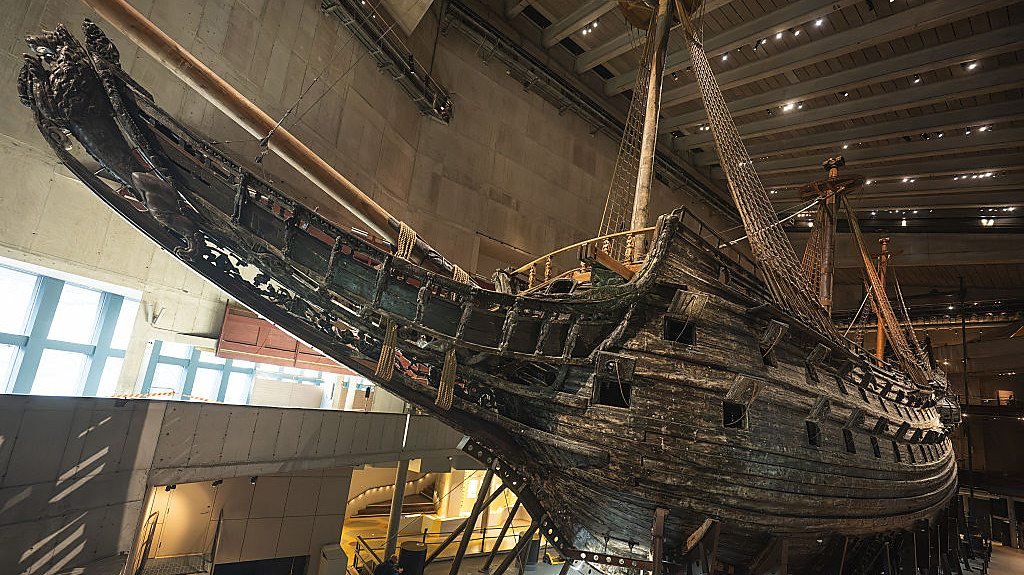
In the heart of Stockholm, the Vasa Museum serves as a sanctuary for one of the most improbable survival stories in maritime history. The 17th-century warship, which famously foundered in 1628 just minutes into its maiden voyage, spent over three centuries submerged in the brackish, oxygen-deprived depths of Stockholm harbor. Since its recovery in 1961, the vessel has transitioned from a sunken relic to a centerpiece of global heritage, yet its existence remains precarious. Today, the Vasa shipwreck is the subject of a sophisticated technological intervention, where cutting-edge digital monitoring and chemical engineering converge to prevent the slow-motion collapse of its waterlogged oak timbers.
The preservation of such a massive structure—composed of over 900 tons of timber—presents a unique engineering challenge. Unlike smaller artifacts that can be stabilized in controlled chemical baths, the Vasa occupies a vast, semi-open environment. The intersection of modern sensor networks and predictive analytics now allows conservators to move from reactive maintenance to proactive preservation, setting a new benchmark for how institutions manage fragile, large-scale archaeological assets.
Technical Specifications and Architectural Breakdown
The current preservation strategy relies on a multi-layered digital architecture designed to monitor the ship’s structural integrity at a microscopic level. At the core of this system is a dense grid of environmental sensors distributed throughout the ship’s hull and the surrounding exhibition hall. These sensors provide continuous telemetry on ambient temperature, relative humidity, and the chemical composition of the wood itself.
The technical backbone involves:
- High-Resolution Laser Scanning: Periodic 3D laser mapping creates a digital twin of the vessel. By comparing these scans over time, algorithms can detect structural deformations as small as a few millimeters, identifying stress points before they manifest as visible cracks.
- Chemical Monitoring Arrays: The wood is saturated with polyethylene glycol (PEG), a compound used during the initial conservation process to replace water and prevent shrinkage. Sensors now track the oxidation of sulfur compounds within the wood, which can produce sulfuric acid that threatens to destabilize the timber from the inside out.
- Automated Climate Control: The museum’s HVAC system is integrated directly with the sensor network. If humidity levels fluctuate beyond narrow, pre-defined thresholds, the system automatically adjusts airflow and cooling to maintain the equilibrium required to prevent the timber from drying out too quickly or absorbing excess moisture.
- Predictive Analytics Engines: Data from the physical sensors is fed into machine learning models that simulate how environmental shifts affect the ship’s structural load-bearing capacity. This allows the engineering team to anticipate degradation trends months in advance.
Industry Landscape and Competitive Comparison
For decades, museum conservation relied on manual inspections and static climate control. The shift toward automated, data-driven preservation represents a significant departure from 20th-century methodologies. While traditional methods focused on “set-and-forget” environmental controls, modern systems prioritize dynamic, responsive management. The following table contrasts the evolution of preservation technologies utilized for large-scale maritime artifacts.
| Technology Generation | Monitoring Method | Intervention Strategy | Risk Mitigation |
|---|---|---|---|
| Legacy (1970s-90s) | Manual logbooks/Analog gauges | Reactive (post-damage repair) | Low; prone to human error |
| Intermediate (2000s) | Basic digital data loggers | Periodic inspection cycles | Moderate; delayed response |
| Modern (Current) | IoT sensor networks/AI modeling | Proactive/Predictive maintenance | High; real-time intervention |
Compared to other high-profile maritime projects, such as the preservation of the Mary Rose in the UK or the USS Monitor in the US, the Vasa project stands out due to the sheer scale of the ship and the complexity of its chemical composition. While other museums may utilize similar sensor types, the integration of these sensors into a real-time predictive model is what distinguishes the Stockholm approach.
Practical Consumer & Enterprise Takeaways
The methodologies employed at the Vasa Museum offer clear lessons for enterprise-level asset management and the preservation of sensitive materials. The primary takeaway is that data granularity is the most effective tool against long-term degradation. For enterprises managing physical inventory or sensitive infrastructure, the transition to IoT-based monitoring provides a significant return on investment by reducing the need for emergency repairs and extending the lifecycle of high-value assets.
Organizations looking to adopt similar strategies should prioritize:
- Sensor Redundancy: Deploying multiple sensor types in the same zone to ensure data reliability if one unit fails.
- Interoperability: Ensuring that hardware sensors can communicate with centralized analytics software without proprietary lock-in.
- Predictive Modeling: Moving beyond simple threshold alerts to systems that analyze trends and historical patterns to forecast future maintenance requirements.
Frequently Asked Questions
How do the sensors distinguish between natural aging and structural failure?
The system uses baseline data collected over decades. By comparing real-time structural data against the ship’s known historical deformation patterns, the software can filter out minor, expected shifts caused by seasonal temperature changes and highlight anomalies that indicate genuine structural stress.
Is the technology used on the Vasa applicable to other industries?
Yes. The principles of moisture and chemical monitoring are highly relevant to industries such as aerospace, historical building management, and large-scale manufacturing, where environmental variables impact the longevity of materials like carbon fiber, steel, and treated timber.
What is the biggest ongoing threat to the Vasa?
The primary threat remains the chemical breakdown of the wood. Sulfur compounds trapped within the timber continue to react with oxygen, creating acidic conditions. The current technological focus is on neutralizing these chemical reactions while maintaining the structural stability of the hull.
The Bottom Line
The effort to save the Vasa shipwreck is a testament to the power of integrating engineering with historical stewardship. By moving away from static preservation techniques and embracing a digital-first strategy, the museum has transformed the vessel into a living laboratory. While the costs of maintaining such a complex system are substantial, the result is a sustainable model for heritage conservation that will likely serve as the blueprint for global maritime institutions for decades to come. The Vasa is not merely a relic of a failed 17th-century voyage; it is now a success story of 21st-century technological precision.