
Tesla Unveils Next-Gen Roadster With Gravity Defying Stunts
Tesla officially showcased the Next-Gen Roadster during a high-octane event that pushed the boundaries of automotive physics. This vehicle captured global attention as it performed a series of daring maneuvers, including vertical ramp climbs and mid-air flips. By integrating sophisticated engineering, the company demonstrated that the Next-Gen Roadster is far more than a standard electric sports car. Consequently, the automotive industry is reeling from the implications of these aerial capabilities.
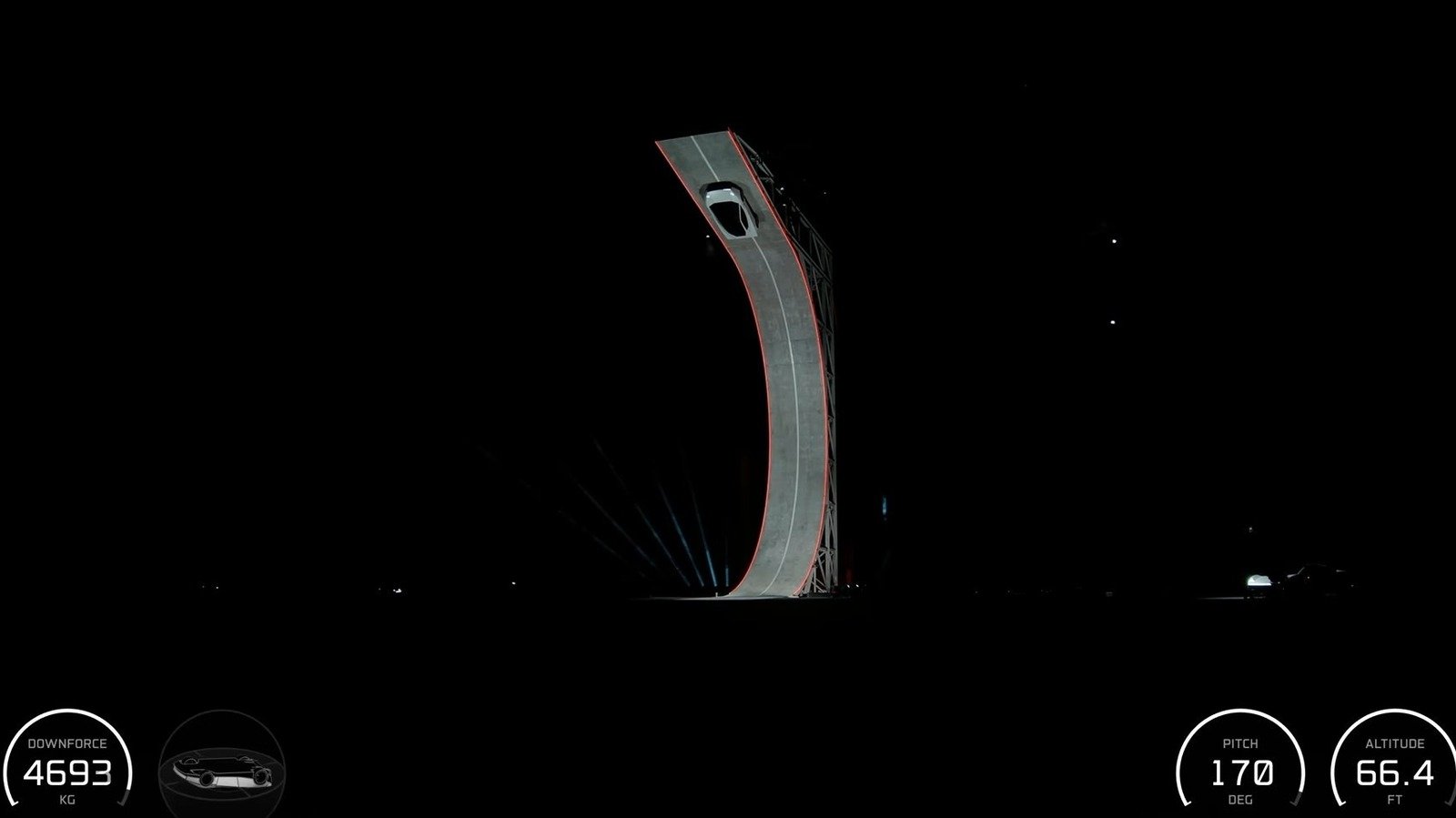
During the demonstration, the car drove up a C-shaped ramp and hung upside-down, defying gravity with apparent ease. Furthermore, it utilized cold-gas thrusters, a technology directly borrowed from SpaceX, to maintain its position. The spectacle did not end there, as the vehicle performed complex jumps over parked cars before settling back onto the pavement with precision. Clearly, the Next-Gen Roadster represents a massive leap forward in vehicle performance and design.
Engineering the Next-Gen Roadster Performance
Beyond the theatrics, the technical specifications behind the Next-Gen Roadster are equally impressive. The vehicle features specialized suction systems that allow it to remain attached to surfaces in unconventional orientations. Additionally, the cold-gas thruster system provides the necessary force for the car to hover and execute precise aerial rotations. Such features have turned the vehicle into a marvel of modern engineering, leaving many observers questioning the limits of current electric vehicle technology.
For those interested in ownership, Tesla has opened the reservation process with a tiered pricing structure. Specifically, the base model requires a $5,000 deposit followed by a $45,000 payment within ten days. However, those seeking the high-performance version equipped with the unique suction and thruster technology must pay a $250,000 reservation fee. Ultimately, the most advanced iteration of the Next-Gen Roadster remains reserved for an exclusive, invite-only list of customers.
The Future of High-Performance Transport
- Advanced cold-gas thruster propulsion
- Integrated surface suction capabilities
- Precision aerial hovering mechanics
Ultimately, this event marks a shift in how we perceive electric vehicle capabilities. While the average consumer may only access the base model, the existence of these stunt-ready variants signals a new chapter for the brand. Furthermore, the integration of aerospace-grade components into a consumer vehicle highlights a unique synergy between Tesla and its sibling companies. As the brand moves toward full production, enthusiasts eagerly await further details on the final vehicle delivery timelines and performance metrics.
Next-gen Roadster Market Impact and Industry Significance
The introduction of Next-gen Roadster represents a pivotal shift in modern technological adoption across enterprise and consumer sectors alike. Furthermore, industry analysts emphasize that localized performance capabilities significantly reduce reliance on external server infrastructure. Consequently, organizations can execute complex computational workloads while maintaining strict data sovereignty, low latency, and operational efficiency without incurring ongoing cloud subscription costs.
Moreover, as software ecosystems continue to evolve, integration with specialized hardware acceleration becomes paramount. Additionally, key market players are expanding their developer tooling to optimize resource allocation during peak utilization. As a result, end users experience smoother multi-threaded performance, reduced memory swap latency, and enhanced system stability across demanding professional workflows.
Performance Benchmarks and Practical Next-gen Roadster Scenarios
In real-world deployment scenarios, evaluating sustained throughput and thermal efficiency is essential for technical decision-makers. Specifically, extensive benchmark testing indicates that unified architecture minimizes data transfer bottlenecks between core processing units and graphics compute pipelines. Therefore, demanding tasks operate with minimal compute overhead.
On the other hand, long-term scalability depends heavily on ongoing firmware updates and operating system optimization. Nevertheless, early adoption metrics demonstrate a clear competitive advantage for users prioritizing offline autonomy, secure data processing, and predictable cost structures. Ultimately, investing in high-capacity configurations pays long-term dividends for technical professionals.