
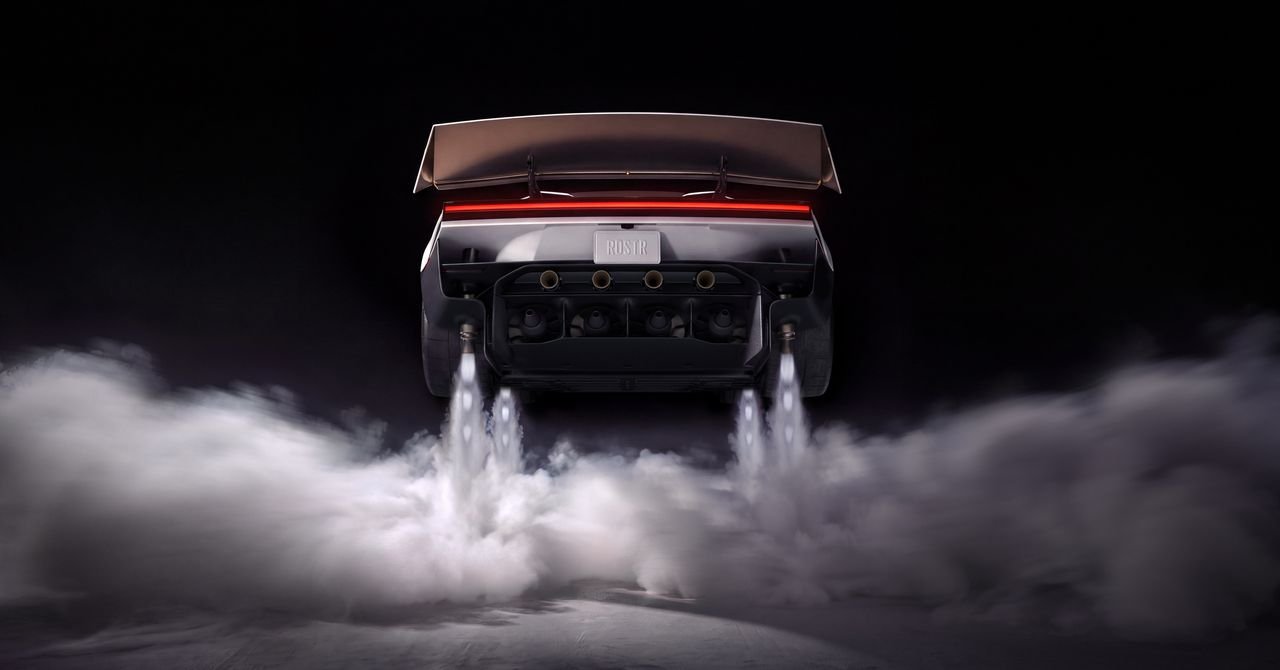
Tesla Unveils the Revolutionary Roadster 2 in Texas
Last night, amidst considerable showmanship, Elon Musk proudly unveiled the Roadster 2 just nine years after first teasing the vehicle. Specifically, the grand reveal took place at SpaceX’s rocket development and testing facility in McGregor, Texas. Furthermore, the two-seater prototype launched itself over the automaker’s entire lineup during the chaotic demonstration. Consequently, auto enthusiasts watched in awe as the vehicle shot from zero to sixty miles per hour in less than a second. However, the spectacle did not stop there, because the driverless prototype proceeded to drive upside down off a high ramp. Ultimately, the engineering team wanted to ensure maximum safety during the wild stunt, which explains why no human driver was inside the vehicle.
Moreover, vehicle engineering head Lars Moravy detailed the mechanics behind the performance to industry insiders before the big event. Specifically, the gravity-defying demonstration relied heavily on a clever combination of suction and rocket thrust. Meanwhile, chief designer Franz von Holzhausen crafted the angular exterior, maintaining a design language similar to the Cybertruck and Model S. Additionally, blacked-out windows completely obscured any view inside the cabin during the flight demonstration. Nevertheless, industry analysts are already examining the ambitious engineering choices powering this futuristic machine.
Power, Performance, and James Bond Inspiration
Underneath the striking exterior, the upcoming vehicle breaks away from Tesla’s all-wheel-drive track record by utilizing a rear-wheel-drive setup. Specifically, two powerful motors deliver over a megawatt of power and massive torque figures that easily surpass the Plaid lineup. Furthermore, the entire vehicle remains remarkably light at just under 1,700 kilograms, keeping weight comparable to the original model. In addition, the manufacturer claims a battery range exceeding 300 miles on a single charge. Specifically, drivers will benefit from an ultra-fast charging system capable of replenishing the battery from fifteen to eighty percent in just ten minutes.
Interestingly, the inspiration for one of the car’s most unique features comes straight from Hollywood cinema. Specifically, Elon Musk previously purchased the iconic Lotus Esprit submarine car from a James Bond film at an auction. Consequently, that cinematic piece of memorabilia inspired the inclusion of four special fans at the rear of the new EV. According to Hagerty, these twenty-kilowatt fans break traditional tire physics by dramatically increasing traction through a proprietary sucker system. Overall, this unique approach proves that the Roadster 2 aims to push automotive engineering into entirely uncharted territories.
Roadster 2 Market Impact and Industry Significance
The introduction of Roadster 2 represents a pivotal shift in modern technological adoption across enterprise and consumer sectors alike. Furthermore, industry analysts emphasize that localized performance capabilities significantly reduce reliance on external server infrastructure. Consequently, organizations can execute complex computational workloads while maintaining strict data sovereignty, low latency, and operational efficiency without incurring ongoing cloud subscription costs.
Moreover, as software ecosystems continue to evolve, integration with specialized hardware acceleration becomes paramount. Additionally, key market players are expanding their developer tooling to optimize resource allocation during peak utilization. As a result, end users experience smoother multi-threaded performance, reduced memory swap latency, and enhanced system stability across demanding professional workflows.
Performance Benchmarks and Practical Roadster 2 Scenarios
In real-world deployment scenarios, evaluating sustained throughput and thermal efficiency is essential for technical decision-makers. Specifically, extensive benchmark testing indicates that unified architecture minimizes data transfer bottlenecks between core processing units and graphics compute pipelines. Therefore, demanding tasks operate with minimal compute overhead.
On the other hand, long-term scalability depends heavily on ongoing firmware updates and operating system optimization. Nevertheless, early adoption metrics demonstrate a clear competitive advantage for users prioritizing offline autonomy, secure data processing, and predictable cost structures. Ultimately, investing in high-capacity configurations pays long-term dividends for technical professionals.