
ViewSonic India Targets New Growth Through Professional AV
For years, consumers recognized ViewSonic India primarily for its reliable computer monitors and projectors. However, the company is shifting its strategic focus to dominate the professional audio-visual market. By moving beyond traditional hardware, ViewSonic India aims to secure a significant footprint in the evolving digital signage and interactive display sectors. This transition is not merely a change in branding but a fundamental shift in their market operations.
The company is currently pursuing an ambitious revenue target of Rs. 500 crore. Management confirms that they remain on track to meet these financial goals across all product categories. Specifically, their LED business has emerged as a primary engine for this success, reporting a staggering 2X year-on-year growth. As a result, ViewSonic India is aggressively scaling its operations to meet the rising demand for large-format displays in corporate offices and educational institutions.
Scaling Up Professional AV Solutions
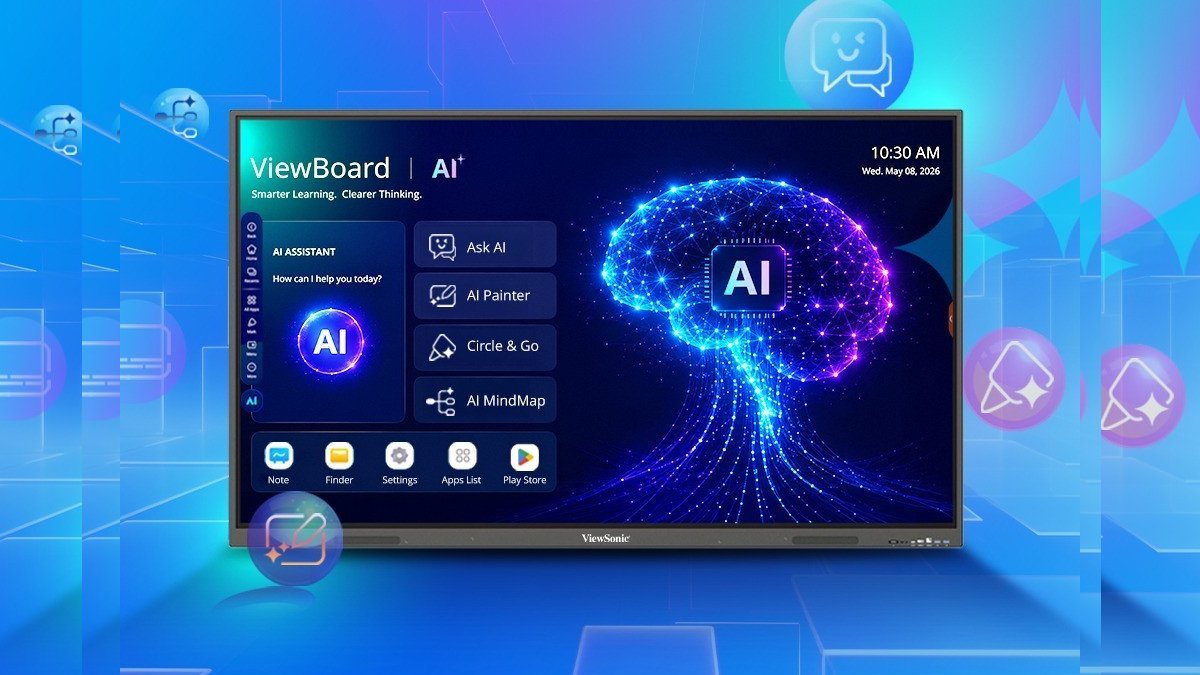
Expanding their reach, the company now offers a massive range of hardware, spanning from compact 8-inch screens to expansive 800-inch LED walls. This diverse catalog ensures that ViewSonic India can cater to specialized requirements across government, corporate, and educational environments. By integrating advanced technology into these large-format panels, the firm differentiates itself from standard monitor manufacturers.
Furthermore, the organization recently introduced a new Google TV range, signaling their intent to capture consumer living rooms alongside professional boardrooms. This diversification strategy is essential for sustaining their current growth trajectory. Ultimately, the company is positioning itself as a comprehensive display solution provider rather than a niche hardware seller. You can learn more about their current product lineup on their official website.
The Future of ViewSonic India
Innovation remains at the core of their expansion. With the professional AV market becoming increasingly crowded, ViewSonic India relies on superior after-sales support and technical reliability to maintain its competitive edge. They have spent the last three years strengthening their lineup to include screens ranging from 86 to 110 inches. Consequently, they are well-prepared to handle the complex needs of modern digital infrastructure. Whether through interactive flat panels or high-end LED displays, the company is clearly betting on a future where large-scale digital communication is ubiquitous. As the market evolves, their ability to adapt will determine their long-term success in the region.
Viewsonic India Market Impact and Industry Significance
The introduction of Viewsonic India represents a pivotal shift in modern technological adoption across enterprise and consumer sectors alike. Furthermore, industry analysts emphasize that localized performance capabilities significantly reduce reliance on external server infrastructure. Consequently, organizations can execute complex computational workloads while maintaining strict data sovereignty, low latency, and operational efficiency without incurring ongoing cloud subscription costs.
Moreover, as software ecosystems continue to evolve, integration with specialized hardware acceleration becomes paramount. Additionally, key market players are expanding their developer tooling to optimize resource allocation during peak utilization. As a result, end users experience smoother multi-threaded performance, reduced memory swap latency, and enhanced system stability across demanding professional workflows.
Performance Benchmarks and Practical Viewsonic India Scenarios
In real-world deployment scenarios, evaluating sustained throughput and thermal efficiency is essential for technical decision-makers. Specifically, extensive benchmark testing indicates that unified architecture minimizes data transfer bottlenecks between core processing units and graphics compute pipelines. Therefore, demanding tasks operate with minimal compute overhead.
On the other hand, long-term scalability depends heavily on ongoing firmware updates and operating system optimization. Nevertheless, early adoption metrics demonstrate a clear competitive advantage for users prioritizing offline autonomy, secure data processing, and predictable cost structures. Ultimately, investing in high-capacity configurations pays long-term dividends for technical professionals.