
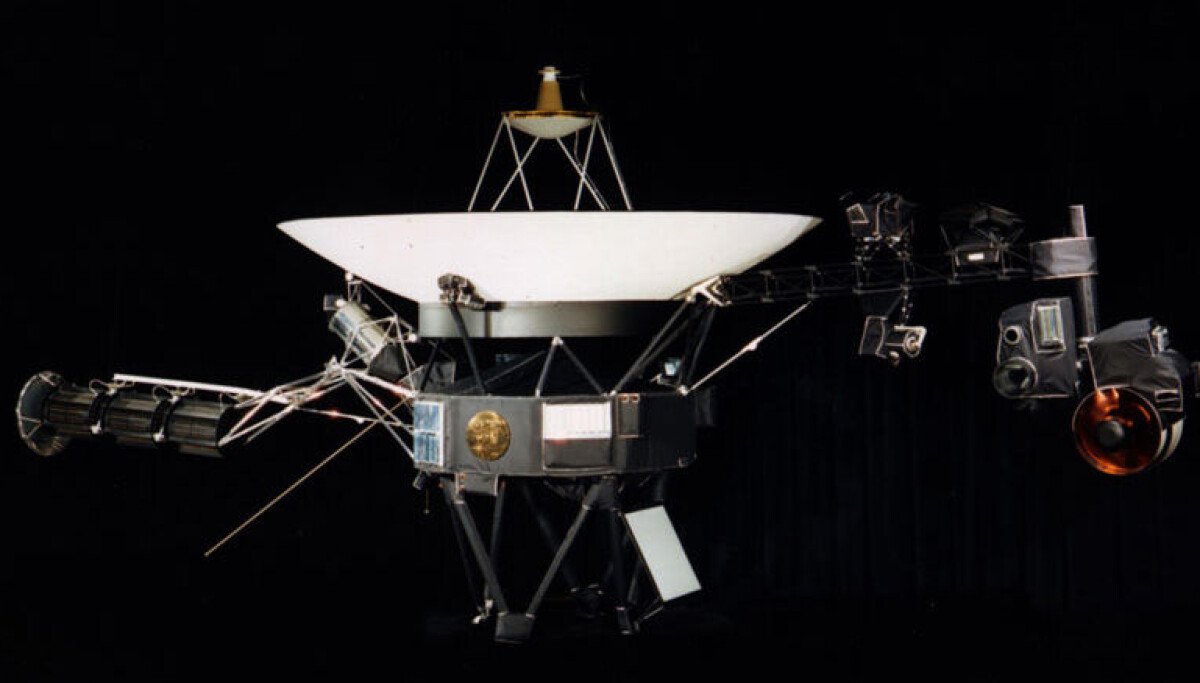
Voyager 1 Restores Signal After Mysterious Interstellar Silence
Voyager 1 recently gave ground controllers a major scare by going completely silent for several days before normal operations resumed. On October 18, NASA’s Deep Space Network failed to detect any signal from the legendary probe, raising urgent fears that its decades-long mission had finally come to an end. However, engineers breathed a sigh of relief when contact was successfully reestablished on October 20.
Operating in deep space is a high-stakes balancing act, especially as both veteran spacecraft approach their half-century milestone next year. Last year, Voyager 2 experienced a temporary antenna pointing issue, while a low power condition previously forced Voyager 1 to shut down one of its primary radio transmitters. That said, this latest silent treatment baffled the team at the Jet Propulsion Laboratory because it was entirely unprecedented.
Voyager 1: Understanding the Thruster Switch and Safe Mode Response
Investigators quickly discovered that the anomaly occurred when a group of onboard thrusters unexpectedly went offline, prompting backup thrusters to activate automatically. Because of this, engineers believe the spacecraft detected an internal glitch and triggered a protective safe mode to preserve critical functions. Meanwhile, the mission team continues analyzing telemetry logs to determine the exact root cause behind the power shift.
To put the extreme distance into perspective, communicating with the probe is remarkably difficult. Within just a few weeks, Voyager 1 will be so far away that it will take a full 24 hours for a command to reach it and another 24 hours for the telemetry response to arrive back on Earth.
- Mission milestone: Nearing its 50th operational year in space.
- Current challenge: Extreme signal delay exceeding 24 hours each way.
- Recent intervention: Successful execution of the power-saving Big Bang procedure.
Before this blackout, controllers completed a crucial power-saving procedure known as the Big Bang across both twin probes. By turning off non-essential onboard devices, NASA extended the operational lifespan of Voyager 1 by a few more years. You can read more about deep space exploration efforts over at NASA Voyager Mission for additional updates.
The Bottom Line for the Historic Interstellar Mission
Although this communication blip was successfully resolved, it serves as a stark reminder that the historic mission must eventually end. Project managers have previously noted that the final goodbye will likely happen when a routine signal simply fails to return, prompting months of verification before declaring the mission concluded. Fortunately, Voyager 1 is back online and remains on track to continue exploring the interstellar frontier.