
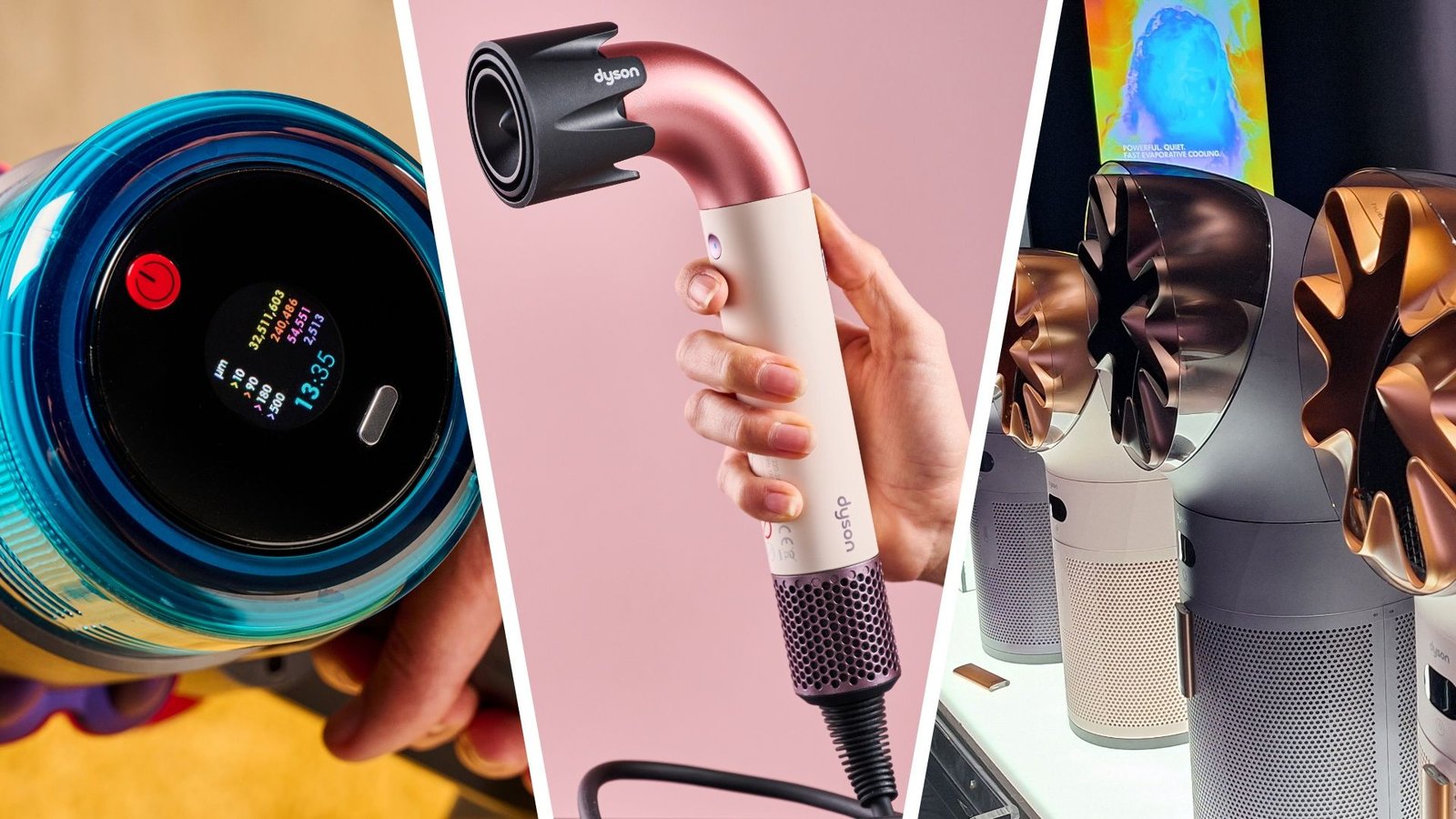
Dyson Product Strategy Centers on Problem Solving
Jake Dyson sat down with TechRadar to explain the Dyson product strategy that guides every category entry. The company’s chief engineer emphasized that each new device must solve a genuine problem ignored by competitors. Consequently, the brand refuses to chase trends without technical justification. This philosophy explains why the Supersonic hair dryer arrived decades after the first vacuum. Engineers spent years studying hair science before building a single prototype.
Furthermore, the development process demands rigorous testing that often exceeds industry standards. For instance, the Corrale straightener underwent thermal cycling tests that simulated years of daily use. Meanwhile, the Zone air-purifying headphones required entirely new motor architectures. Each project begins with a physics-first approach rather than market research. Therefore, timelines stretch far longer than typical consumer electronics cycles.
How Dyson Product Strategy Evaluates New Categories
Entry into oral care illustrates the evaluation framework. The team identified that manual brushing misses plaque along gum lines and between teeth. Additionally, most electric brushes rely on simple rotation rather than fluid dynamics. Dyson engineers applied air multiplier technology to create microbubbles that disrupt biofilm. Specifically, the N1 toothbrush generates 40,000 oscillations per minute while directing fluid into interdental spaces.
Moreover, the category must align with core competencies in motor design and fluid dynamics. Hair care leveraged digital motor V9 development. Vacuums pioneered cyclone separation. Oral care now exploits high-frequency vibration expertise. On the other hand, categories like smart home hubs or wearables remain absent because they lack this technical overlap. Nevertheless, the company monitors adjacent fields for future convergence opportunities.
Engineering Culture Drives Dyson Product Strategy
Internal culture reinforces the selection criteria. Engineers rotate across projects to prevent siloed thinking. As a result, vacuum specialists contribute to hair dryer acoustics. Hair care experts inform toothbrush vibration damping. This cross-pollination creates unexpected breakthroughs. For example, the V15 laser dust detection originated from optical sensing research for robotics.
Additionally, the Malmesbury campus houses 6,000 engineers alongside manufacturing. Proximity enables rapid iteration between design and production. Prototypes move from CAD to CNC machining within hours. Consequently, the team tests hundreds of variations before finalizing geometry. This speed would be impossible with offshore development models. Ultimately, vertical integration protects intellectual property while accelerating learning cycles.
Future Directions for Dyson Product Strategy
Looking ahead, Jake Dyson hinted at robotics and environmental sensing as logical extensions. The 360 Vis Nav robot vacuum demonstrated navigation capabilities applicable beyond floor care. Furthermore, air quality monitoring from purifiers could scale to building-level systems. However, the chief engineer cautioned against timeline speculation. Each category must clear the same physics-first hurdle.
In addition, sustainability pressures now influence early-stage decisions. The company committed to carbon neutrality across operations by 2030. This target shapes material selection and energy efficiency targets from day one. For instance, the N1 toothbrush uses recycled aluminum and modular components for repair. Overall, the Dyson product strategy remains anchored in solving overlooked problems through deep engineering. Read the full interview on TechRadar for additional insights on upcoming categories.
Dyson product strategy Market Impact and Industry Significance
The introduction of Dyson product strategy represents a pivotal shift in modern technological adoption across enterprise and consumer sectors alike. Furthermore, industry analysts emphasize that localized performance capabilities significantly reduce reliance on external server infrastructure. Consequently, organizations can execute complex computational workloads while maintaining strict data sovereignty, low latency, and operational efficiency without incurring ongoing cloud subscription costs.
Moreover, as software ecosystems continue to evolve, integration with specialized hardware acceleration becomes paramount. Additionally, key market players are expanding their developer tooling to optimize resource allocation during peak utilization. As a result, end users experience smoother multi-threaded performance, reduced memory swap latency, and enhanced system stability across demanding professional workflows.
Performance Benchmarks and Practical Dyson product strategy Scenarios
In real-world deployment scenarios, evaluating sustained throughput and thermal efficiency is essential for technical decision-makers. Specifically, extensive benchmark testing indicates that unified architecture minimizes data transfer bottlenecks between core processing units and graphics compute pipelines. Therefore, demanding tasks operate with minimal compute overhead.
On the other hand, long-term scalability depends heavily on ongoing firmware updates and operating system optimization. Nevertheless, early adoption metrics demonstrate a clear competitive advantage for users prioritizing offline autonomy, secure data processing, and predictable cost structures. Ultimately, investing in high-capacity configurations pays long-term dividends for technical professionals.
Ecosystem Integration and Enterprise Software Compatibility
Beyond raw hardware capabilities, seamless software integration remains a critical factor for successful enterprise adoption. Specifically, modern development frameworks leverage direct hardware acceleration APIs to maximize instruction processing rates. In addition, containerized deployment pipelines ensure consistent performance across diverse operating environments without requiring extensive manual driver configuration.
Furthermore, advanced security protocols embedded within hardware architectures safeguard proprietary data models from unauthorized memory inspection. Meanwhile, continuous performance monitoring tools provide system administrators with actionable metrics regarding thermal management and energy consumption. Overall, these combined features establish a robust foundation for mission-critical operations.
