
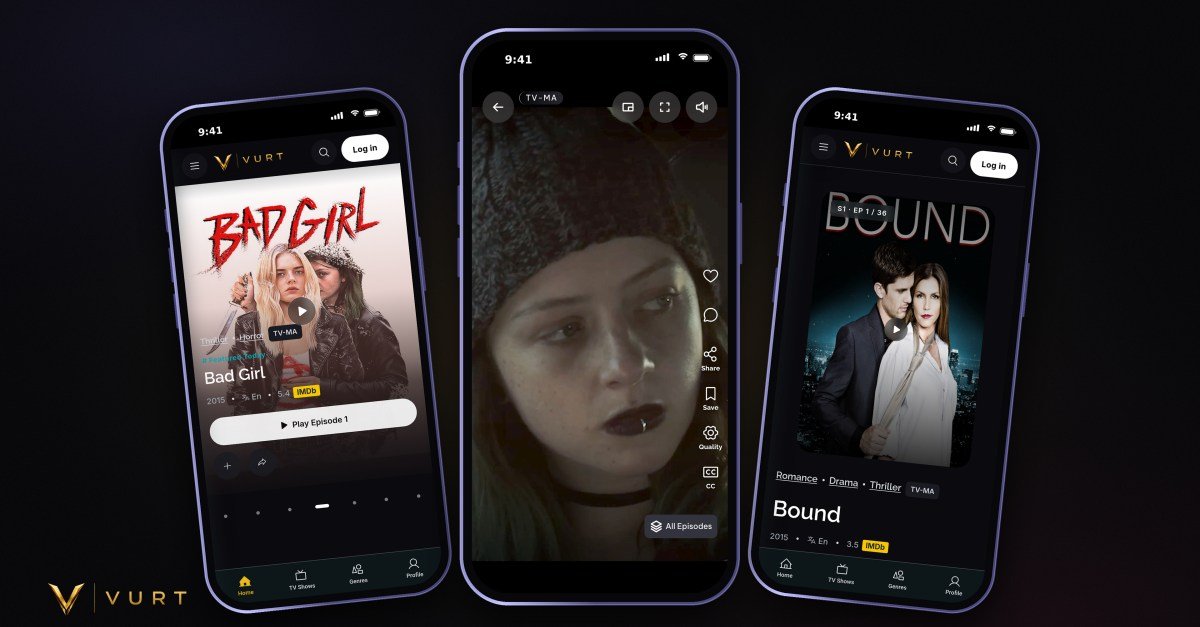
Vertical Videos Move Beyond the Phone
Vertical Videos have become synonymous with smartphones, quick swipes and social media feeds. Vurt, however, believes the format can support a broader entertainment category, including serialized programs watched on wide-screen televisions. The startup is betting that audiences will accept portrait-oriented shows in the living room instead of treating them only as disposable mobile clips.
That idea arrives as established streaming companies search for ways to compete with TikTok, Instagram and other platforms built around short, personalized viewing. Disney Plus and HBO Max have explored mobile-friendly programming as viewers divide their attention among more services. Meanwhile, Vurt is taking the opposite route: it wants to bring a format popularized by phones onto the largest screen in the home.
The proposition may initially appear awkward because television manufacturers have spent decades making screens wider. Nevertheless, viewers already tolerate mixed formats when watching social clips, news footage or phone recordings on TV. Vertical Videos could therefore become recognizable programming rather than improperly framed television, provided creators design productions specifically for the portrait canvas.
A Format Seeking Its Own Visual Language
Vurt’s argument depends on audiences seeing portrait entertainment as a genre with its own conventions. Specifically, creators can use the tall frame for close-ups, direct-to-camera performances, split scenes and stories centered on one person. Those choices differ from simply cropping a conventional movie or television episode, which often removes important action and weakens the composition.
For instance, character-driven drama, comedy and reality programming may suit a narrow frame because facial reactions remain central. Additionally, vertical staging can place two speakers above and below each other, echoing the layouts that audiences already recognize from video calls and social posts. The format also favors intimate performances that can feel immediate on a phone while appearing unusually large on a television.
What Vurt Must Prove
- Viewers will watch portrait programs for longer than a typical social media session.
- Creators can make the unused areas of a wide screen feel intentional.
- Television interfaces can present vertical programs without confusing navigation.
- Advertisers and subscribers will support a separate content category.
However, establishing those habits requires more than distributing familiar clips through a TV application. Vurt needs programming that rewards sustained attention and demonstrates why the taller composition matters. Consequently, its creative strategy may prove more important than the underlying playback technology.
Vertical Videos Meet the Streaming Business
The wider streaming industry has strong reasons to study Vertical Videos. TikTok helped normalize algorithmic discovery, rapid viewing and full-screen portrait playback, while Instagram Reels and YouTube Shorts expanded the behavior across competing networks. According to YouTube’s guidance on Shorts, creators can reach audiences through a dedicated short-form experience, showing how platforms increasingly organize content around format.
Meanwhile, subscription services usually ask viewers to choose a title before playback begins. That model can create friction when users want quick entertainment rather than a full episode or film. Vurt’s concept suggests that television platforms could combine social-style discovery with professionally produced series, creating a middle ground between scrolling and traditional channel surfing.
Furthermore, connected televisions give media companies more room for advertising and commerce than a small phone display. A portrait program could occupy the center while side panels carry episode information, comments, related products or interactive controls. On the other hand, those additions could easily distract viewers or make the screen resemble a crowded website. Strong interface discipline would remain essential.
The largest challenge involves attention. Social platforms continuously recommend another clip, and their momentum comes partly from brevity. Therefore, a television service centered on the same behavior must decide whether it wants passive, continuous viewing or deliberate episode selection. Each approach demands different storytelling, measurement and revenue strategies.
From Experiment to Lasting Category
Vurt enters a market where consumer behavior can shift faster than production practices. First, creators adopted vertical framing because phones encouraged one-handed use. Second, platforms built editing tools, recommendation systems and advertising products around that behavior. Ultimately, television distribution represents a test of whether the format has value beyond the device that made it popular.
There are precedents for unconventional images becoming normal. Widescreen movies once appeared with black bars on older televisions, while archival footage still changes aspect ratios during documentaries and news broadcasts. In addition, viewers regularly mirror phone screens to televisions despite imperfect use of display space. Familiarity may reduce resistance, although it does not guarantee demand for dedicated portrait series.
Vurt must also persuade producers to treat the format as more than a promotional outlet. That means commissioning stories with purposeful framing, consistent episode structures and enough variety to support repeat visits. Moreover, the company will need a clear answer for the empty space surrounding a portrait image on standard TVs.
Overall, the startup’s wager reflects a larger change in entertainment: formats now travel across devices instead of belonging to one screen. Vertical Videos may remain strongest on mobile, but Vurt is testing whether creative intent can outweigh the physical shape of a television. If audiences accept that premise, portrait programming could develop its own grammar, stars and business models rather than serving as a smaller branch of social media.