
Google AI Playground Opens Game Development to Everyone
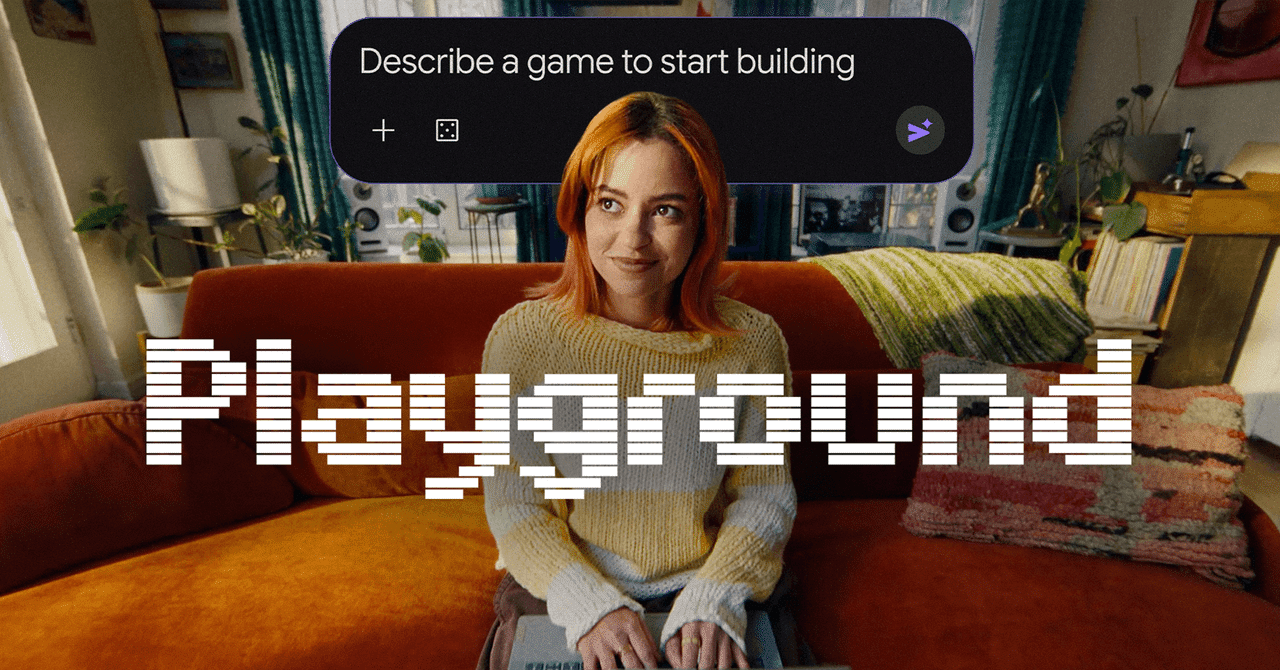
Google AI Playground launched this week as the newest experiment from Google Labs, offering a chatbot-style interface that turns plain-language descriptions into playable browser games. The service arrives months after Meta unveiled Horizon Create, signaling growing competition in AI-assisted game development. Users simply type what they want, then iterate through follow-up prompts to refine mechanics, visuals, and pacing. No code knowledge is necessary, and the entire workflow runs in the browser.
Furthermore, the platform accepts reference assets such as photos, videos, or 3D models to guide the visual style. Otherwise, every sprite, background, and character emerges from the generative models powering the backend. Early testers report that the loop from prompt to playable build often takes under a minute, making rapid prototyping genuinely practical for hobbyists and educators alike.
Testing the Google AI Playground With Three Experiments
One reporter spent a day prompting the system with three distinct concepts. The first, “Tetris but with cute pigs instead of blocks,” yielded a farm-themed clone titled Piggy Stacker. Initial output merely pasted pig faces onto standard tetrominoes, but a follow-up instruction—”Each block is a pig, contorted into the shape of the Tetris blocks”—produced distorted yet recognizable swine shapes, complete with occasional T-posed anomalies.
Meanwhile, a colleague’s suggestion of “gay dinner party” generated Dinner Darling, a 2D time-management game starring a stressed host named Julian. Guests resemble Bitmoji avatars and demand artisanal bruschetta and espresso martinis before patience meters expire. Controls proved unintuitive on the first run, leading to quick failure and a scramble for a second prompt to clarify input mapping.
Consequently, the third experiment leaned into narrative absurdity. A cyberpunk top-down shooter emerged featuring Neon Don, a pixelated antihero who shouts grievances about his ex-wife’s lawyer while shotgunning enemies. Dialogue lines repeat frequently, yet the core loop—move, shoot, survive—functions without crashes.
Vibe Coding Changes How Games Get Made
Industry observers describe this paradigm as vibe coding: high-level intent replaces syntax, and the model handles implementation details. For non-programmers, the barrier to entry collapses entirely. However, creative control remains coarse; fine-tuning a jump arc or adjusting enemy AI requires re-prompting rather than editing variables directly.
Additionally, the current build lacks export options, so projects stay locked inside the Playground sandbox. Google has not announced a timeline for standalone deployment or monetization features. For now, the service serves best as a sketchpad—useful for validating mechanics before committing to a full engine like Unity or Godot. Google Labs continues to iterate, and Meta’s Horizon Create pursues a similar vision, suggesting the category will mature quickly.
Ultimately, the technology demonstrates that generative AI can translate vague ideas into functional interactive experiences within minutes. Whether that translates into lasting creative tools or remains a novelty depends on how deeply future updates integrate version control, asset pipelines, and collaborative editing.
Google AI Playground Market Impact and Industry Significance
The introduction of Google AI Playground represents a pivotal shift in modern technological adoption across enterprise and consumer sectors alike. Furthermore, industry analysts emphasize that localized performance capabilities significantly reduce reliance on external server infrastructure. Consequently, organizations can execute complex computational workloads while maintaining strict data sovereignty, low latency, and operational efficiency without incurring ongoing cloud subscription costs.
Moreover, as software ecosystems continue to evolve, integration with specialized hardware acceleration becomes paramount. Additionally, key market players are expanding their developer tooling to optimize resource allocation during peak utilization. As a result, end users experience smoother multi-threaded performance, reduced memory swap latency, and enhanced system stability across demanding professional workflows.
Performance Benchmarks and Practical Google AI Playground Scenarios
In real-world deployment scenarios, evaluating sustained throughput and thermal efficiency is essential for technical decision-makers. Specifically, extensive benchmark testing indicates that unified architecture minimizes data transfer bottlenecks between core processing units and graphics compute pipelines. Therefore, demanding tasks operate with minimal compute overhead.
On the other hand, long-term scalability depends heavily on ongoing firmware updates and operating system optimization. Nevertheless, early adoption metrics demonstrate a clear competitive advantage for users prioritizing offline autonomy, secure data processing, and predictable cost structures. Ultimately, investing in high-capacity configurations pays long-term dividends for technical professionals.
Ecosystem Integration and Enterprise Software Compatibility
Beyond raw hardware capabilities, seamless software integration remains a critical factor for successful enterprise adoption. Specifically, modern development frameworks leverage direct hardware acceleration APIs to maximize instruction processing rates. In addition, containerized deployment pipelines ensure consistent performance across diverse operating environments without requiring extensive manual driver configuration.
Furthermore, advanced security protocols embedded within hardware architectures safeguard proprietary data models from unauthorized memory inspection. Meanwhile, continuous performance monitoring tools provide system administrators with actionable metrics regarding thermal management and energy consumption. Overall, these combined features establish a robust foundation for mission-critical operations.