
Technical Specifications and Architectural Breakdown
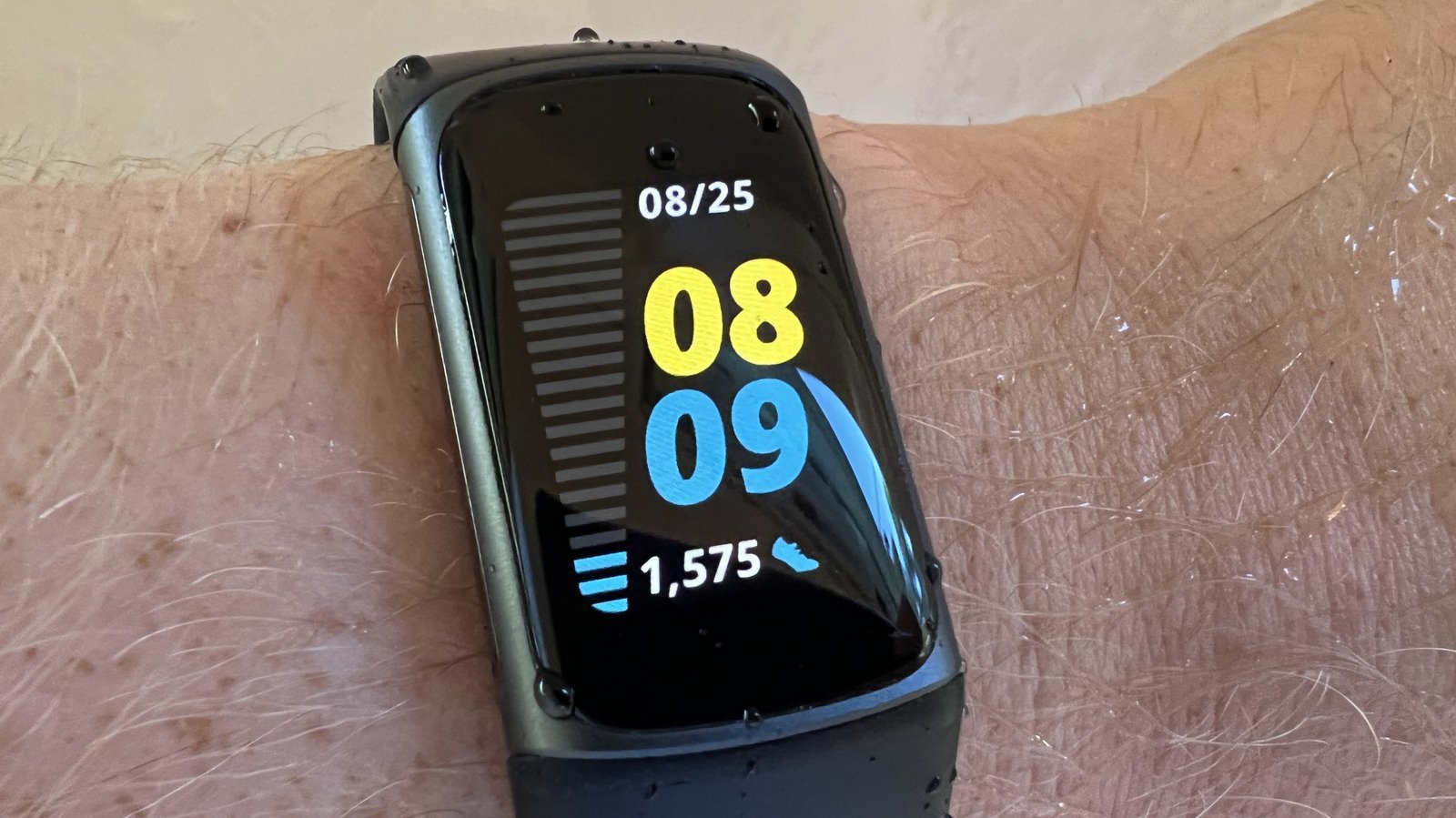
To understand the constraints of Fitbit battery life, one must examine the hardware architecture. Most modern Fitbit devices operate on a low-power microcontroller unit (MCU) architecture designed for efficiency rather than raw processing power. The primary power drain is not the sensor array, but the display and the radio frequency (RF) components. High-resolution AMOLED panels, such as those found on the Sense 2 and Versa 4, require significant current to maintain pixel illumination. When the “Always-On Display” (AOD) feature is enabled, the display controller bypasses standard sleep states, which can reduce the device’s standby time by as much as 60 percent.
Beyond the display, the integration of GPS remains the most aggressive consumer of stored energy. Built-in GPS requires the device to maintain a constant signal lock with satellite constellations, a process that demands high-frequency polling from the onboard GNSS (Global Navigation Satellite System) chip. In high-performance modes, this can draw power at a rate ten times higher than standard heart-rate monitoring. Furthermore, the Bluetooth Low Energy (BLE) radio, while optimized for power efficiency, experiences increased overhead when frequent data synchronization occurs. Users who sync their data every few minutes rather than allowing the device to batch-process uploads will notice a measurable decline in total runtime.
Battery chemistry also plays a critical role. Like all lithium-based cells, Fitbit batteries have a finite cycle life, typically rated for 300 to 500 full charge cycles before capacity degrades to 80 percent of its original factory specification. Rapid charging—a convenience feature in newer models—generates heat, which is the primary catalyst for chemical degradation. Consequently, the way a user manages their charging habits directly dictates whether their device will maintain its advertised longevity after two years of ownership.
Industry Landscape and Competitive Comparison
The wearable market is currently bifurcated between high-functionality smartwatches and specialized fitness trackers. While Fitbit occupies a middle ground, it faces stiff competition from Garmin’s specialized sports watches and Apple’s integrated ecosystem. Garmin, for instance, utilizes Memory-in-Pixel (MIP) displays that are inherently more power-efficient than AMOLED screens, allowing for multi-week battery life at the cost of color vibrancy and touch-responsiveness. The following table illustrates the variance in power profiles across common device categories.
| Device Series | Display Type | Typical Battery Life (Smart Mode) | GPS Runtime (Max) |
|---|---|---|---|
| Fitbit Charge 6 | AMOLED | Up to 7 Days | 5 Hours |
| Garmin Vivosmart 5 | OLED (Monochrome) | Up to 7 Days | Connected GPS Only |
| Apple Watch Series 9 | LTPO OLED | Up to 18 Hours | 7 Hours |
The data highlights a clear trade-off: devices that prioritize a rich, high-resolution interface inevitably sacrifice endurance. Users must weigh the benefit of a vibrant screen against the frequency with which they are tethered to a proprietary charging cable.
Practical Consumer & Enterprise Takeaways
For the average consumer, extending the life of a Fitbit device is less about hardware modification and more about tactical software configuration. The most effective strategy is the aggressive management of background notifications. Every time the screen illuminates to display a notification, the device consumes energy to drive the display driver and activate the haptic motor. By filtering notifications to only the most critical alerts, users can preserve significant capacity.
For enterprise users, particularly those participating in corporate wellness programs, the trade-off is often between data granularity and device maintenance. Programs requiring high-frequency heart-rate tracking must account for the increased charging burden on employees. If a device requires daily charging, the likelihood of “data gaps”—periods where the device is off-wrist—increases. Organizations should prioritize devices with longer base runtimes if they intend to capture consistent longitudinal health data.
When considering an upgrade, users should look beyond the marketing claims of “multi-day battery life.” These figures are typically based on laboratory conditions with features like AOD and SpO2 monitoring disabled. If a user requires 24/7 health tracking, they should assume the real-world battery life will be 30 to 40 percent lower than the manufacturer’s advertised maximum.
Frequently Asked Questions
Does using third-party watch faces negatively impact battery life?
Yes. Many third-party watch faces are not optimized for the device’s power-saving states. Faces with complex animations, second-hand sweep movements, or constant data-refresh requirements force the processor to remain active, which can drain a battery up to 20 percent faster than a first-party, static design.
Is it harmful to leave the Fitbit on the charger overnight?
Modern Fitbit devices utilize sophisticated power management integrated circuits (PMICs) that prevent overcharging. Once the battery reaches 100 percent, the charging circuit terminates the current. However, keeping a battery at 100 percent state-of-charge for extended periods can accelerate chemical aging. It is generally healthier for the cell to maintain a charge between 20 and 80 percent.
Can I extend battery life by disabling Bluetooth when not syncing?
While disabling Bluetooth will technically save power, it renders the device a standalone tracker. Most Fitbit functionality relies on the smartphone for GPS assistance and data logging. For the majority of users, the marginal power savings are outweighed by the loss of seamless data synchronization and smart features.
The Bottom Line
Fitbit battery life is a function of intentional usage. While the hardware engineering of these devices is impressive, they remain constrained by the physics of compact energy storage. Users who prioritize a high-performance experience—utilizing AOD, continuous SpO2 tracking, and built-in GPS—must accept a more frequent charging cadence. Conversely, those who treat their Fitbit as a passive data-collection tool can easily achieve the advertised multi-day runtimes by disabling non-essential features. Ultimately, the most efficient Fitbit is one configured to match the user’s specific health goals, rather than one running every available feature by default.