
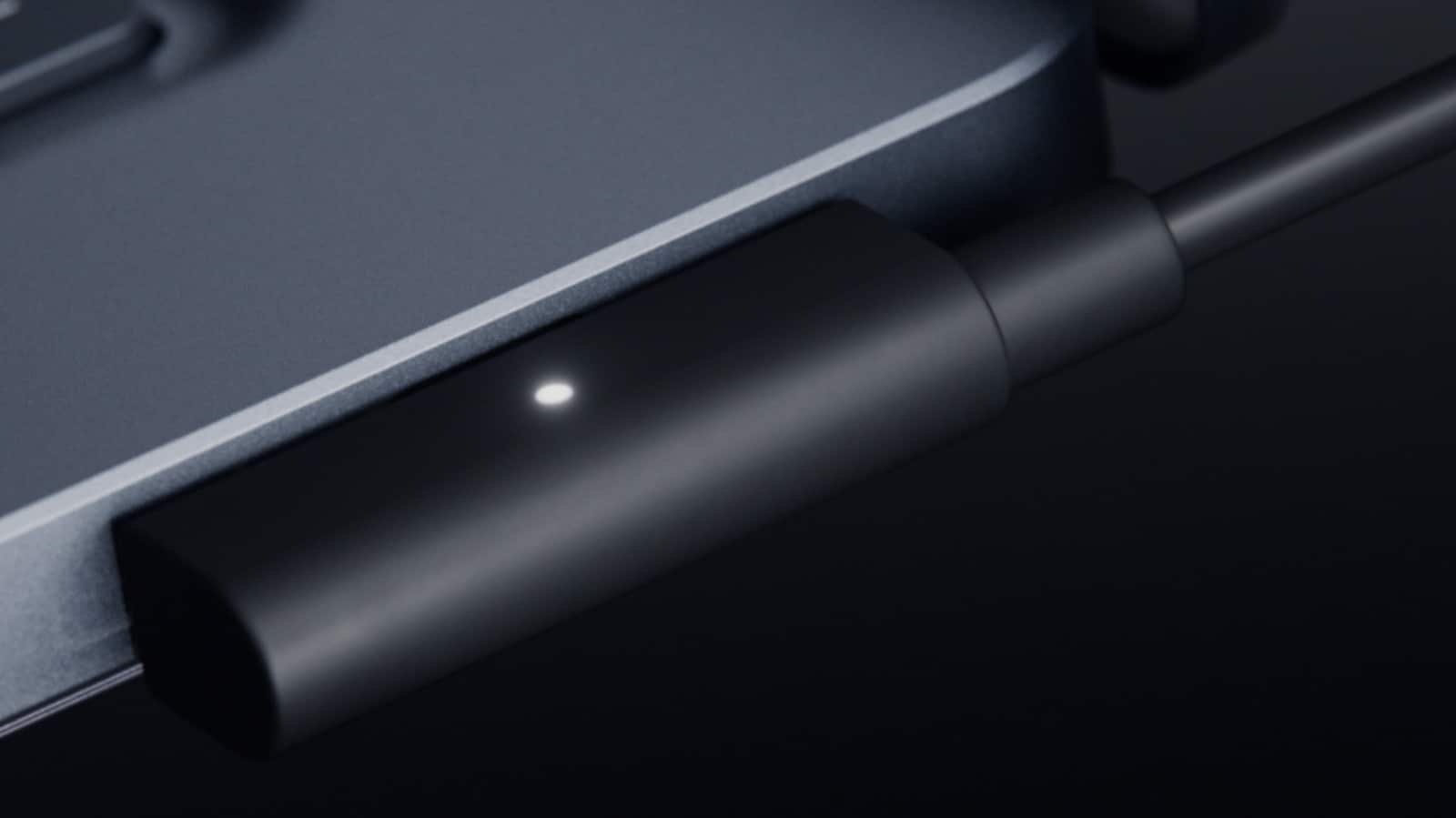
Microsoft Magnetic Connect Arrives With Surface Laptop Ultra
Microsoft Magnetic Connect debuted alongside the Surface Laptop Ultra during the company’s October hardware showcase, marking a deliberate shift away from proprietary charging solutions. The new port combines standard USB-C Power Delivery with a magnetic cable attachment, letting the connector snap into place through a funnel-shaped tip. Engineers designed the system to preserve full USB-C functionality when the charger isn’t connected, addressing a longstanding frustration with dedicated charging ports that sit idle most of the day.
During the presentation, executives emphasized that the Surface Laptop Ultra retains two additional USB-C ports, HDMI, USB-A, an SD card reader, and a 3.5 mm headphone jack. Consequently, users gain magnetic convenience without sacrificing connectivity density. The RTX Spark platform inside the Ultra delivers up to 128 GB of shared memory, enabling workloads like DaVinci Resolve and Gears of War: E-Day to run simultaneously.
How Magnetic Connect Differs From MagSafe Architecture
Apple’s MagSafe relies on a proprietary connector that occupies a dedicated port, limiting expansion options on already port-constrained MacBooks. By contrast, Magnetic Connect uses an industry-standard USB-C receptacle enhanced with magnetic alignment. Third-party cables should function reliably because the underlying protocol remains USB Power Delivery, eliminating the licensing fees that keep official MagSafe adapters at $49 each.
Furthermore, Microsoft signaled openness to broader adoption across the Windows ecosystem. While no formal licensing program was announced, the company described its goal as leading an open standard rather than locking customers into Surface-exclusive accessories. That approach could spur accessory makers to produce affordable alternatives, benefiting consumers who currently face limited choices for magnetic laptop chargers.
Practical Benefits For Daily Workflows
Magnetic connectors excel at preventing damage from tripping hazards, a common cause of port failure on traditional barrel-jack or tight-fit USB-C designs. The quick-release mechanism protects both the laptop and the cable, reducing repair costs over a device’s lifespan. Additionally, the funnel-shaped tip guides insertion in low-light conditions, a subtle but meaningful usability improvement for travelers and late-night workers.
However, magnetic charging alone doesn’t transform productivity. The real value emerges when combined with the Ultra’s comprehensive port selection, allowing professionals to drive external displays, transfer footage from SD cards, and charge simultaneously. For context, the USB Implementers Forum maintains the USB-C and Power Delivery specifications that make this interoperability possible.
Industry Implications And Competitive Response
If Magnetic Connect gains traction, Apple may face pressure to adopt a similar open approach for future MacBooks. Historically, Cupertino has resisted open standards in charging, preferring controlled ecosystems that generate accessory revenue. Nevertheless, regulatory scrutiny in the EU and growing enterprise demand for interoperability could accelerate change.
Ultimately, Microsoft’s strategy bets on ecosystem leadership through openness rather than exclusivity. Whether rivals follow suit will determine if Magnetic Connect becomes a universal laptop charging standard or remains a Surface differentiator. Either way, the days of single-purpose charging ports appear numbered.
For official technical specifications and hardware documentation, visit AMD Official Specifications or MSI Technical Specs.
Magnetic Connect Market Impact and Industry Significance
The introduction of Magnetic Connect represents a pivotal shift in modern technological adoption across enterprise and consumer sectors alike. Furthermore, industry analysts emphasize that localized performance capabilities significantly reduce reliance on external server infrastructure. Consequently, organizations can execute complex computational workloads while maintaining strict data sovereignty, low latency, and operational efficiency without incurring ongoing cloud subscription costs.
Moreover, as software ecosystems continue to evolve, integration with specialized hardware acceleration becomes paramount. Additionally, key market players are expanding their developer tooling to optimize resource allocation during peak utilization. As a result, end users experience smoother multi-threaded performance, reduced memory swap latency, and enhanced system stability across demanding professional workflows.
Performance Benchmarks and Practical Magnetic Connect Scenarios
In real-world deployment scenarios, evaluating sustained throughput and thermal efficiency is essential for technical decision-makers. Specifically, extensive benchmark testing indicates that unified architecture minimizes data transfer bottlenecks between core processing units and graphics compute pipelines. Therefore, demanding tasks operate with minimal compute overhead.
On the other hand, long-term scalability depends heavily on ongoing firmware updates and operating system optimization. Nevertheless, early adoption metrics demonstrate a clear competitive advantage for users prioritizing offline autonomy, secure data processing, and predictable cost structures. Ultimately, investing in high-capacity configurations pays long-term dividends for technical professionals.
Ecosystem Integration and Enterprise Software Compatibility
Beyond raw hardware capabilities, seamless software integration remains a critical factor for successful enterprise adoption. Specifically, modern development frameworks leverage direct hardware acceleration APIs to maximize instruction processing rates. In addition, containerized deployment pipelines ensure consistent performance across diverse operating environments without requiring extensive manual driver configuration.
Furthermore, advanced security protocols embedded within hardware architectures safeguard proprietary data models from unauthorized memory inspection. Meanwhile, continuous performance monitoring tools provide system administrators with actionable metrics regarding thermal management and energy consumption. Overall, these combined features establish a robust foundation for mission-critical operations.