
The Core Sensors Behind Adaptive Cruise Control
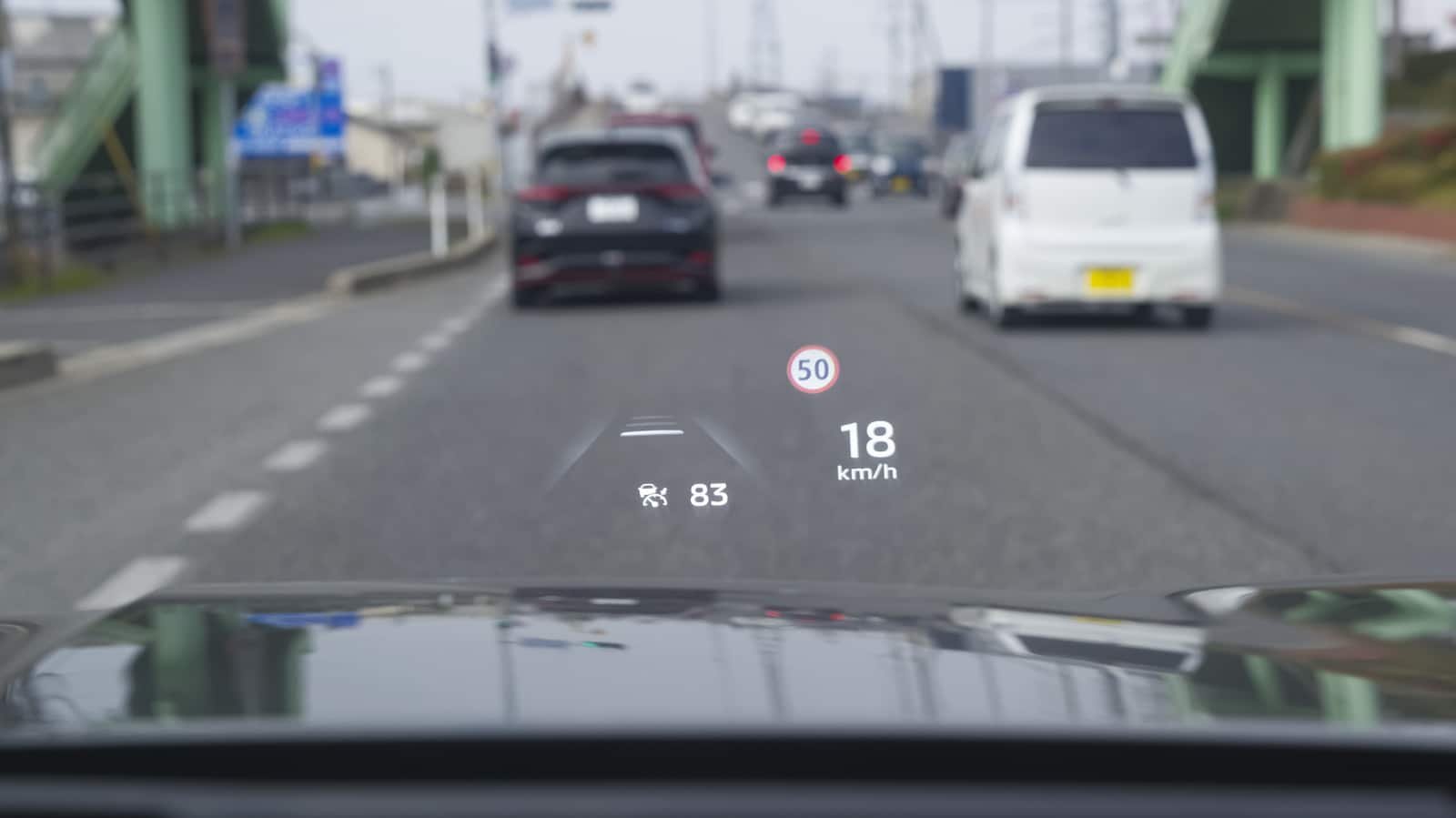
Adaptive cruise control relies on just two primary sensors working in tandem. A millimeter-wave radar unit sits low in the front fascia, typically hidden behind the grille or badge, while a forward-facing camera mounts near the rearview mirror. The radar emits radio waves that bounce off vehicles ahead, measuring both distance and closing speed with precision even in darkness or fog. Meanwhile, the camera reads lane markings to confirm which vehicle the system should track, preventing confusion when another driver cuts into your lane.
Honda’s implementation illustrates the typical approach: the radar and camera feed data to a control module that manages throttle and braking to maintain one of four driver-selected following distances. However, owners often undermine their adaptive cruise control by adding license plate frames or bumper stickers that obstruct the radar’s view, or by sustaining minor parking impacts that misalign the sensor.
Software Evolution in Adaptive Cruise Control Systems
While hardware capabilities matured years ago — Bosch’s long-range radar reached 250 meters in 2014 and now exceeds 530 meters — the real progress lies in software intelligence. Ford’s BlueCruise leverages high-definition GPS map data to slow the vehicle proactively before curves, rather than reacting only to the car ahead. Hyundai’s Smart Cruise Control takes a different tack, analyzing the driver’s personal habits so the adaptive cruise control mimics their natural acceleration and braking style.
Furthermore, Honda’s Low Speed Follow feature taught these systems to handle stop-and-go traffic by bringing the car to a complete halt behind a queue and resuming motion with a tap of the accelerator or a steering wheel button. This advancement transformed adaptive cruise control from a highway-only convenience into a genuinely useful tool for daily commuting.
Current Limitations of Adaptive Cruise Control Technology
Despite these gains, manufacturers impose strict operational boundaries. Toyota explicitly warns against using its radar cruise control in rain, fog, snow, on slippery surfaces, in heavy traffic, on sharp bends, or down steep grades. The slippery-surface restriction exists because a computer-maintained throttle cannot anticipate hydroplaning risks the way a human driver would. Additionally, Volvo acknowledges that heavy downpours significantly degrade the radar’s ability to detect leading vehicles, while camera-based lane tracking fails when markings disappear under water or snow.
Consequently, adaptive cruise control remains a fair-weather assistant rather than a true all-conditions automation. Drivers must stay alert and ready to intervene, particularly when visibility drops or traffic patterns become unpredictable. The technology continues to improve, but the gap between current capabilities and full autonomy remains substantial.
Bosch and NHTSA provide detailed technical specifications and safety guidelines for these systems.
Adaptive Cruise Control Market Impact and Industry Significance
The introduction of Adaptive Cruise Control represents a pivotal shift in modern technological adoption across enterprise and consumer sectors alike. Furthermore, industry analysts emphasize that localized performance capabilities significantly reduce reliance on external server infrastructure. Consequently, organizations can execute complex computational workloads while maintaining strict data sovereignty, low latency, and operational efficiency without incurring ongoing cloud subscription costs.
Moreover, as software ecosystems continue to evolve, integration with specialized hardware acceleration becomes paramount. Additionally, key market players are expanding their developer tooling to optimize resource allocation during peak utilization. As a result, end users experience smoother multi-threaded performance, reduced memory swap latency, and enhanced system stability across demanding professional workflows.
Performance Benchmarks and Practical Adaptive Cruise Control Scenarios
In real-world deployment scenarios, evaluating sustained throughput and thermal efficiency is essential for technical decision-makers. Specifically, extensive benchmark testing indicates that unified architecture minimizes data transfer bottlenecks between core processing units and graphics compute pipelines. Therefore, demanding tasks operate with minimal compute overhead.
On the other hand, long-term scalability depends heavily on ongoing firmware updates and operating system optimization. Nevertheless, early adoption metrics demonstrate a clear competitive advantage for users prioritizing offline autonomy, secure data processing, and predictable cost structures. Ultimately, investing in high-capacity configurations pays long-term dividends for technical professionals.
Ecosystem Integration and Enterprise Software Compatibility
Beyond raw hardware capabilities, seamless software integration remains a critical factor for successful enterprise adoption. Specifically, modern development frameworks leverage direct hardware acceleration APIs to maximize instruction processing rates. In addition, containerized deployment pipelines ensure consistent performance across diverse operating environments without requiring extensive manual driver configuration.
Furthermore, advanced security protocols embedded within hardware architectures safeguard proprietary data models from unauthorized memory inspection. Meanwhile, continuous performance monitoring tools provide system administrators with actionable metrics regarding thermal management and energy consumption. Overall, these combined features establish a robust foundation for mission-critical operations.