
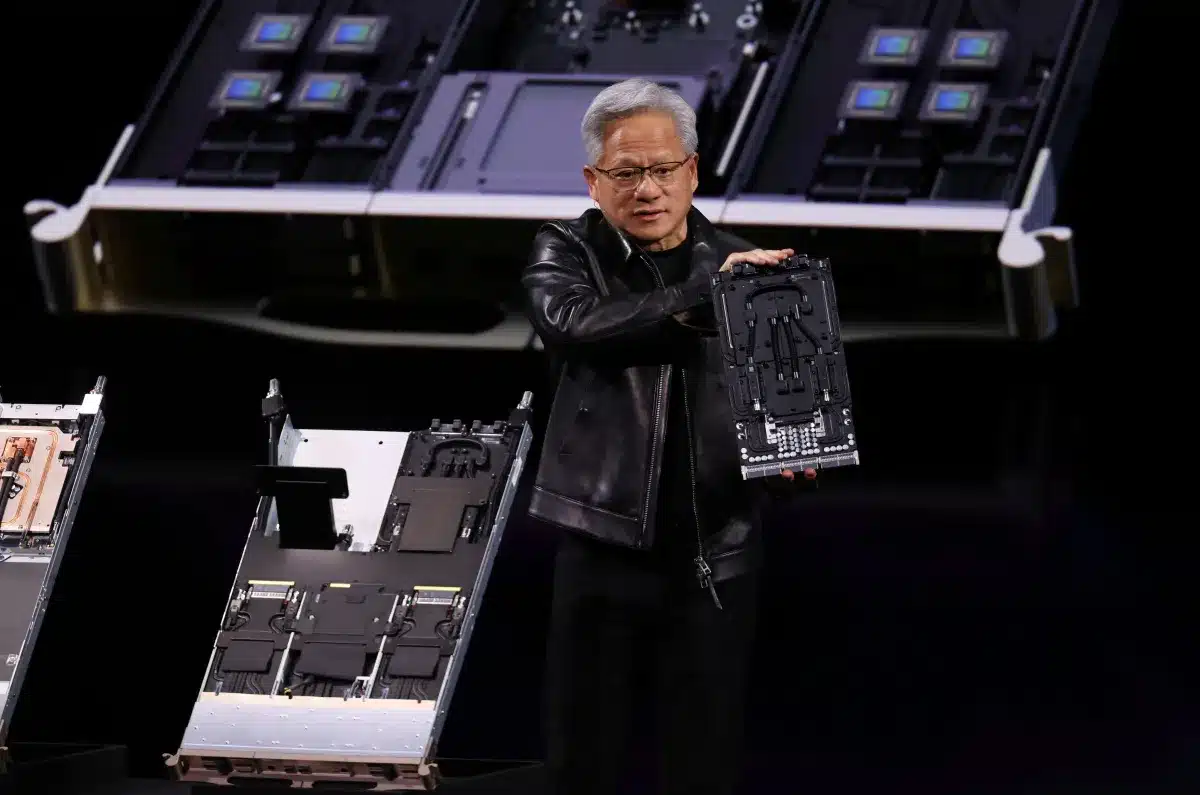
The geopolitical architecture of the global artificial intelligence race is currently undergoing a stress test that Washington’s export control regime appears to be failing. Despite rigorous efforts by the U.S. Department of Commerce to restrict the flow of high-end silicon to China, the Nvidia Blackwell GPU has emerged as the clandestine engine driving the latest generation of Chinese frontier models. Forensic analysis of model weights from entities like DeepSeek and Moonshot AI reveals structural signatures that indicate these systems were trained on the very hardware intended to be kept out of reach. This development underscores a fundamental reality of the modern tech landscape: the demand for compute is so pervasive and the supply chains so intricate that traditional trade barriers are increasingly porous, if not entirely circumvented.
Technical Specifications and Architectural Breakdown
The Blackwell architecture represents a generational shift in how data centers handle the massive parallel processing requirements of Transformer-based models. At its core, the Blackwell GPU utilizes a 4nm process technology, integrating 208 billion transistors into a dual-die package connected by a 10TB/s chip-to-chip link. This interconnect is the linchpin of its performance, allowing the two dies to function as a single, unified processor.
From an engineering perspective, the Blackwell GPU introduces the second-generation Transformer Engine. This feature utilizes dynamic range management to optimize precision, specifically targeting FP4 (4-bit floating point) arithmetic. By reducing the bit-depth of weights and activations without sacrificing model accuracy, the Blackwell architecture effectively doubles the throughput for inference and training compared to the previous Hopper (H100) architecture. Furthermore, the integration of the fifth-generation NVLink switch system allows for massive scaling, connecting thousands of GPUs into a single, cohesive compute fabric. This capability is precisely what allows Chinese labs to train large language models that rival those developed in Silicon Valley, as the ability to coordinate thousands of chips is the primary bottleneck in modern AI development.
Industry Landscape and Competitive Comparison
The strategic importance of the Blackwell GPU lies in its efficiency-per-watt and its ability to minimize communication overhead between nodes. While the U.S. government has attempted to restrict China to “downgraded” versions of Nvidia silicon—such as the H20 series—the forensic evidence suggests that the full-performance Blackwell units are finding their way into the hands of Chinese researchers. This creates a competitive imbalance where the intended “compute ceiling” is effectively non-existent.
| Feature | Nvidia H100 (Hopper) | Nvidia Blackwell (B200) | Chinese H20 (Export-Limited) |
|---|---|---|---|
| Transistor Count | 80 Billion | 208 Billion | ~80 Billion (Reduced) |
| FP8 Throughput | 2 PFLOPS | 10 PFLOPS | ~0.5 PFLOPS |
| Memory Bandwidth | 3.35 TB/s | 8 TB/s | 4 TB/s |
| Primary Use Case | Large Scale LLM Training | Massive Scale Frontier AI | Inference/Smaller Models |
Practical Consumer & Enterprise Takeaways
For enterprise leaders, the situation surrounding the Blackwell GPU serves as a stark reminder of supply chain volatility. Companies relying on Nvidia hardware for their AI infrastructure face a dual threat: the potential for further tightening of export controls and the resulting market instability. When hardware becomes a geopolitical pawn, the cost of acquisition fluctuates wildly, and lead times become unpredictable.
Organizations should prioritize “compute agnosticism” in their software stacks. By utilizing frameworks that can abstract the underlying hardware—such as PyTorch or JAX—firms can mitigate the risk of being locked into a single chip architecture that may face sudden regulatory or availability issues. Furthermore, the cost-benefit analysis of upgrading to Blackwell must account for the infrastructure overhead. The power requirements for a full Blackwell rack are significantly higher than those of the Hopper generation, necessitating substantial investment in data center cooling and power delivery systems. For most enterprises, the marginal gain of Blackwell over Hopper may not justify the capital expenditure unless they are involved in training models of unprecedented scale.
Frequently Asked Questions
How are these chips bypassing U.S. export controls?
The primary mechanisms involve circuitous shipping routes through third-party nations and the utilization of offshore data centers. By leasing compute power from cloud providers located in jurisdictions with less stringent monitoring, Chinese labs can access high-end hardware remotely, effectively bypassing physical import restrictions.
Can forensic analysis definitively prove which hardware was used?
Yes. By analyzing the mathematical structure of model weights and the specific optimization patterns used during the training phase, researchers can identify “hardware fingerprints.” Certain architectural features of the Blackwell GPU, such as its specific floating-point precision handling, leave distinct traces in the resulting model parameters.
What is the impact on global AI competitiveness?
The failure to contain the Blackwell GPU suggests that the “compute gap” between the U.S. and China is narrowing faster than regulators anticipated. If Chinese labs can achieve parity in hardware access, the race for AGI will be determined by talent and data availability rather than access to silicon, fundamentally shifting the strategic focus of the U.S. government.
The Bottom Line
The narrative of the Nvidia Blackwell GPU is a case study in the limitations of protectionist trade policy in the digital age. While Washington seeks to maintain a technological moat, the global demand for advanced compute is creating a black market and a gray-market ecosystem that is impossible to fully police. The forensic evidence confirming the presence of Blackwell chips in Chinese labs is not merely a technical finding; it is a clear signal that the era of unilateral control over frontier silicon has ended. For the industry, the path forward requires an acknowledgment that hardware scarcity is a temporary hurdle that will be overcome by capital and ingenuity, regardless of the regulatory environment.