
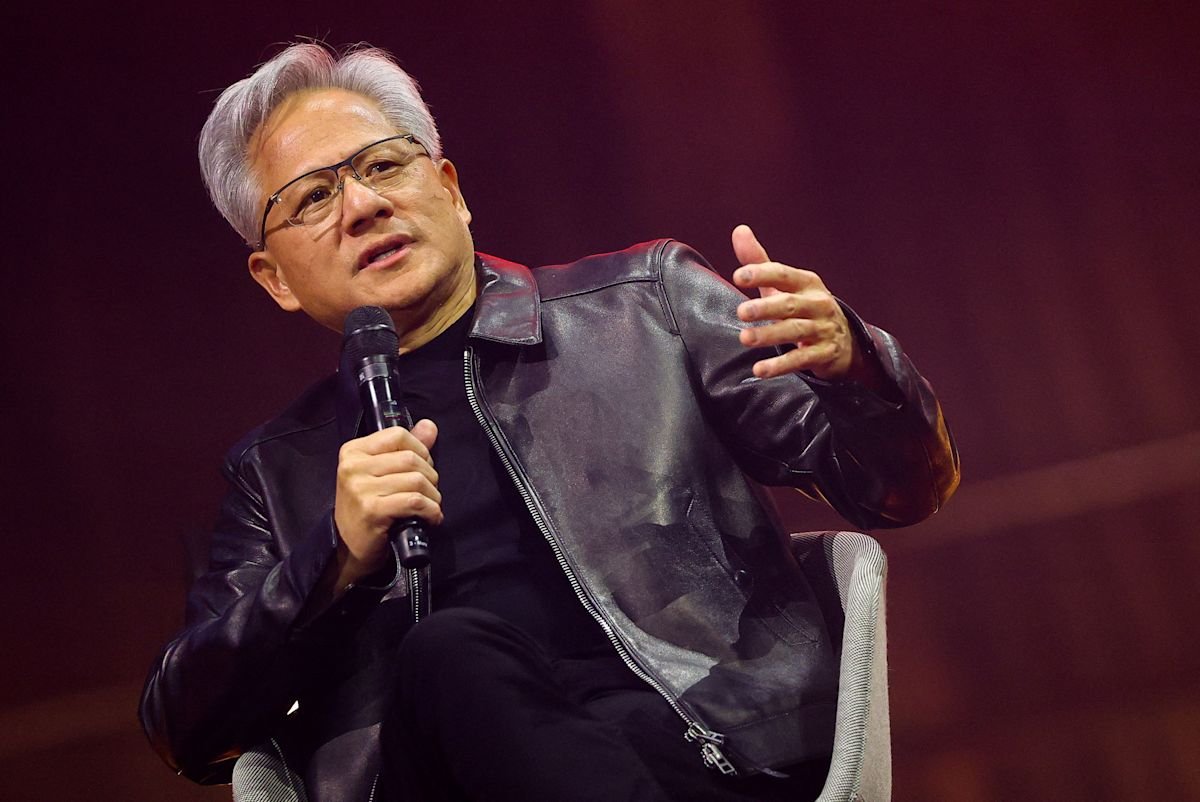
The global technology sector is reeling following the sudden resignation of Jensen Huang, the visionary leader who transformed Nvidia from a niche graphics card manufacturer into the primary engine of the artificial intelligence revolution. This leadership vacuum arrives at a critical juncture for the industry, specifically regarding the deployment of the Nvidia Blackwell GPU, the architecture currently serving as the bedrock for U.S. AI dominance. The resignation, precipitated by revelations regarding personal conduct and potential national security compromises, has triggered a seismic shift in market confidence and ignited an urgent congressional inquiry into the integrity of the company’s intellectual property pipeline.
As the House Foreign Affairs Committee prepares to scrutinize the potential for design leaks to foreign intelligence operatives, the focus remains on the proprietary nature of the Blackwell platform. With Colette Kress stepping in as interim CEO, the company must now navigate a dual crisis: maintaining the continuity of its complex supply chain while addressing the profound security concerns that have turned the Nvidia Blackwell GPU from a symbol of technological progress into a focal point of geopolitical tension.
Technical Specifications and Architectural Breakdown
The Nvidia Blackwell GPU represents a departure from traditional monolithic chip design, utilizing a multi-die architecture that prioritizes massive parallel processing throughput. At its core, the Blackwell architecture employs two reticle-limited dies connected via a 10 TB/s chip-to-chip link, effectively functioning as a single, unified GPU. This design is specifically engineered to address the memory wall that has historically constrained large language model (LLM) training.
Key technical components include the second-generation Transformer Engine, which supports FP4 precision. This allows for a significant increase in model size and performance efficiency without a proportional increase in power consumption. The architecture also integrates the fifth-generation NVLink interconnect, facilitating high-speed communication between up to 576 GPUs in a single domain. From a benchmarking perspective, the Blackwell platform offers up to a 30x performance increase in inference workloads compared to the previous Hopper architecture, particularly when managing models with trillions of parameters. The thermal design power (TDP) remains high, requiring sophisticated liquid cooling infrastructure, which has necessitated a complete redesign of data center rack layouts for enterprise adopters.
Industry Landscape and Competitive Comparison
Nvidia’s dominance in the AI accelerator market has been absolute, yet the current leadership turmoil provides an opening for competitors to challenge its market share. AMD’s Instinct MI300 series and Intel’s Gaudi 3 are the primary alternatives, each offering different trade-offs in terms of software ecosystem support and raw compute performance. The following table provides a comparison of the current high-performance compute landscape.
| Feature | Nvidia Blackwell (B200) | AMD Instinct MI300X | Intel Gaudi 3 |
|---|---|---|---|
| Architecture | Multi-die (Chiplet) | Multi-die (Chiplet) | Monolithic/Hybrid |
| Memory Capacity | 192GB HBM3e | 192GB HBM3 | 128GB HBM2e |
| Interconnect | NVLink (1.8 TB/s) | Infinity Fabric | Ethernet-based |
| Primary Advantage | CUDA Ecosystem | Memory Bandwidth | Cost-to-Performance |
While Nvidia’s hardware remains the gold standard, the software barrier—specifically the CUDA platform—has historically kept enterprise customers locked into the Nvidia ecosystem. The current security investigation, however, may force government agencies and hyperscalers to re-evaluate their reliance on a single architecture, potentially accelerating the adoption of open-source alternatives like the Unified Acceleration Foundation (UXL).
Practical Consumer & Enterprise Takeaways
For enterprise IT directors and data center architects, the immediate priority is supply chain stability. The Blackwell rollout was already hampered by production bottlenecks; the current leadership transition adds a layer of uncertainty regarding delivery timelines. Organizations currently dependent on Blackwell-based clusters should conduct a risk assessment regarding their hardware roadmap. If your infrastructure relies exclusively on Nvidia, diversifying your compute strategy—or at least ensuring compatibility with non-Nvidia frameworks—is now a prudent risk management step.
For smaller firms or research institutions, the high barrier to entry for Blackwell hardware remains a significant hurdle. Given the potential for increased regulatory oversight, procurement processes for high-end AI hardware are likely to become more rigorous, involving deeper background checks on vendors and secondary suppliers. Buyers should prepare for longer lead times and potentially higher costs as Nvidia adjusts its pricing strategy to account for the increased compliance burden.
Frequently Asked Questions
Is the Nvidia Blackwell GPU still the recommended choice for large-scale AI training?
Technically, the Blackwell architecture remains the most performant option for large-scale training and inference. However, the decision to invest must now account for the political and security risks surrounding the company’s internal stability and the potential for federal export restrictions.
Will the leadership change affect the CUDA software ecosystem?
Colette Kress is a veteran of the company and is highly regarded for her financial and operational oversight. While the departure of Jensen Huang is a significant cultural loss, the technical roadmap for CUDA is managed by a large, decentralized engineering team. Immediate disruption to software support is unlikely, but long-term strategic direction may shift.
Should companies wait for the next generation of hardware rather than upgrading to Blackwell?
For organizations with immediate, mission-critical AI requirements, waiting is rarely an option. However, if your current Hopper-based infrastructure is meeting your throughput needs, postponing a Blackwell migration allows for a clearer view of how the congressional investigation and subsequent regulatory changes will impact the semiconductor market.
The Bottom Line
The resignation of Jensen Huang marks the end of an era for Nvidia and serves as a stark reminder of the vulnerability inherent in modern tech giants. The Nvidia Blackwell GPU remains a marvel of engineering, setting the pace for the global AI race. Yet, the intersection of proprietary technology and national security is a volatile space. While the company possesses the technical depth to survive this transition, its future hinges on its ability to prove that its crown jewel, the Blackwell architecture, remains secure and that its leadership can regain the trust of both investors and regulators. For now, the industry must watch closely as the company attempts to reconcile its technical dominance with its newfound institutional instability.