
Technical Specifications and Architectural Breakdown
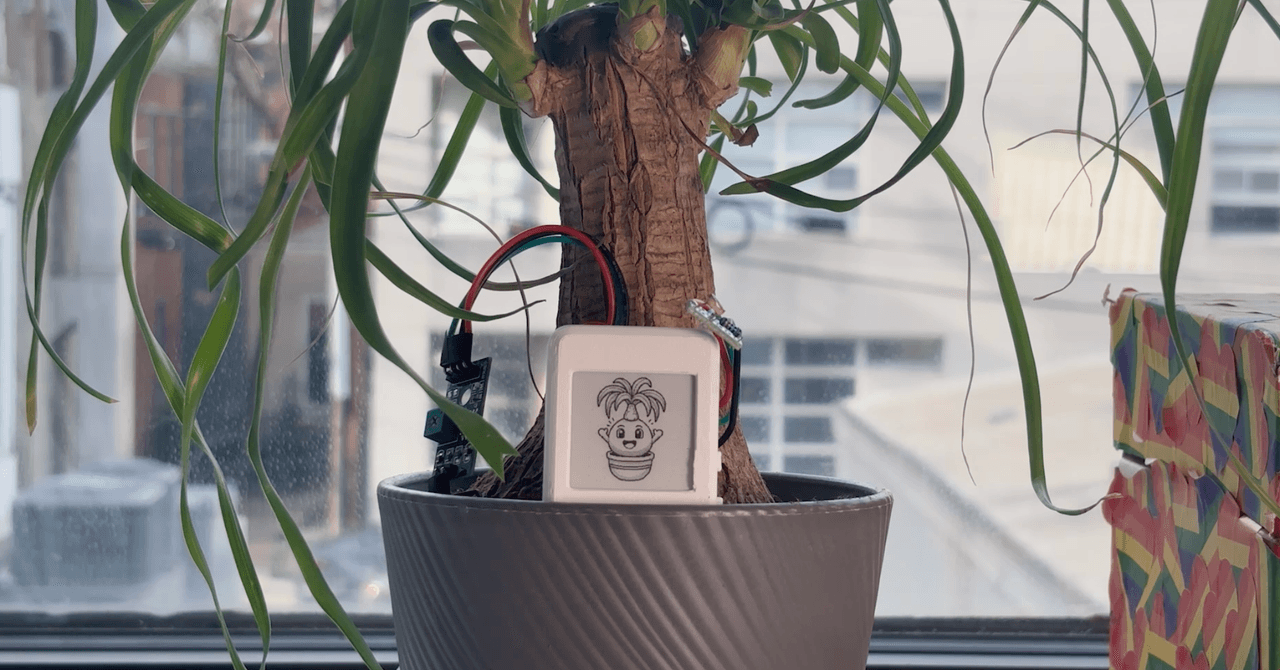
The engineering philosophy behind the OATs Project centers on accessibility and unobtrusiveness. At its core, the system utilizes a modular hardware unit that costs approximately $20 to manufacture. This affordability is critical, as it allows for the potential deployment of agents across a wide spectrum of household goods, from coffee makers to houseplants. The module acts as a sensory bridge, housing a suite of internal and external sensors designed to monitor the immediate environment. These include, but are not limited to, sensors for ambient light, humidity, temperature, and motion.
Data processing is handled through a localized architecture that prioritizes efficiency. Rather than relying on constant, high-bandwidth cloud communication, the system synthesizes environmental inputs to generate visual feedback. The visual interface is an E Ink display, chosen specifically for its ultra-low power consumption and its ability to remain visible without a constant backlight, mimicking the aesthetic of traditional paper. The “personality” of the object—its emotive state—is synthesized using Google’s Gemini Nano model. This allows the object to translate raw data, such as a drop in soil moisture for a plant or a buildup of dust on a surface, into a recognizable, animated expression. By mapping physical states to emotive visual cues, the OATs Project creates a high-fidelity feedback loop that is intuitive for the user to interpret at a glance.
Industry Landscape and Competitive Comparison
The OATs Project does not exist in a vacuum. It represents a burgeoning field of “ambient computing,” where the goal is to move intelligence out of the cloud and into the physical periphery. While companies like Rabbit or Humane have attempted to create standalone AI hardware, their approaches often involve complex, screen-heavy interfaces that demand active user engagement. The OATs Project distinguishes itself by focusing on passive, object-specific interaction. Below is a comparison of how this research aligns with current industry trends in AI-integrated hardware.
| Device/Concept | Primary Interface | Interaction Paradigm | Core Focus |
|---|---|---|---|
| OATs Project | E Ink Display | Passive/Emotive | Object-specific maintenance |
| Rabbit R1 | LCD Touchscreen | Active/Command | App-based task automation |
| Smart Home Hubs (e.g., Echo Show) | LCD/Voice | Active/Reactive | Centralized system control |
The primary difference here is the “cognitive load.” While a smart speaker requires a verbal prompt and a hub requires a menu navigation, the OATs Project functions through peripheral awareness. If a kitchen appliance looks “sad” or “tired” on its E Ink screen, the user intuitively understands that maintenance is required, without needing to open an app or listen to a notification chime.
Practical Consumer & Enterprise Takeaways
For the average consumer, the OATs Project offers a glimpse into a future where “smart” does not necessarily mean “complex.” Currently, the barrier to entry for smart home technology is high; it requires Wi-Fi configuration, software updates, and constant troubleshooting. The OATs module, by contrast, suggests a plug-and-play future where objects provide their own diagnostics. For enterprise applications, this technology could revolutionize asset management. Imagine industrial machinery that signals its own need for lubrication or calibration through a simple, emotive display, reducing the need for expensive, centralized sensor networks.
However, potential adopters should weigh the trade-offs. The reliance on E Ink, while energy-efficient, limits the refresh rate and color depth of the interface. This is not a device for streaming media or complex data visualization; it is a tool for status communication. Furthermore, the cost-benefit analysis will depend heavily on the longevity of the modules. If the hardware can outlast the object it is attached to, the value proposition is high. If the module requires frequent replacement, it may become an electronic waste liability rather than a utility.
Frequently Asked Questions
Does the OATs Project require a constant internet connection to function?
No. While the initial setup and the generation of personality traits through Gemini Nano may involve cloud-based training or updates, the day-to-day operation is designed to function locally. The system processes environmental data on-device to ensure that the object remains responsive even if the home network is offline.
Can I retroactively install OATs modules on existing household items?
The research is designed with modularity in mind. The $20 price point suggests that the hardware is intended to be an add-on or an integrated component for manufacturers. While DIY enthusiasts could theoretically retrofit older devices, the project is primarily aimed at manufacturers who might integrate these sensors at the point of production.
How does this differ from standard smart home notifications?
Standard notifications are designed to interrupt the user, often leading to “notification fatigue.” The OATs Project is designed to be ambient. It provides information only when the user chooses to look at the object, effectively moving the intelligence from an intrusive push-model to a passive pull-model.
The Bottom Line
The OATs Project is a compelling exploration of how we might humanize our relationship with the inanimate world. By stripping away the complexity of modern interfaces and returning to the simple, emotive logic of the Tamagotchi, Daehwa Kim and the CMU team have highlighted a significant gap in current technology: the need for ambient, low-friction communication. While the project is currently in the research phase, it provides a viable blueprint for a future where our tools are not just smart, but socially aware. Whether this leads to a new wave of consumer hardware or remains a niche academic curiosity depends on the willingness of manufacturers to prioritize long-term object maintenance over short-term digital engagement. Regardless, it is a necessary corrective to our current, screen-obsessed trajectory.