
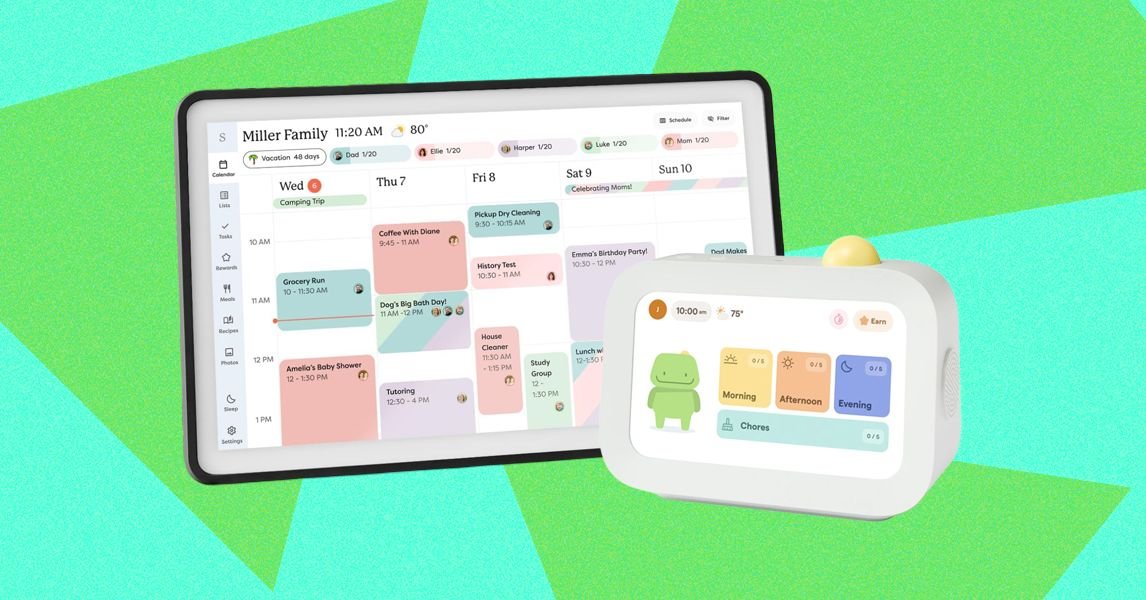
The Rise of the Digital Wall Calendar
The digital wall calendar has evolved significantly from the bulky, slow devices of the past. Initially, I found these gadgets to be nothing more than overpriced clutter that failed to update reliably. However, recent testing reveals that modern iterations are far more capable, offering seamless integration with Google, Apple, and Microsoft platforms. By mounting a digital wall calendar in your kitchen or main living area, you eliminate the need to constantly check your phone for upcoming tasks or appointments. This shift away from AI-powered smart displays toward dedicated scheduling hardware provides a refreshing, focused experience for families.
How a Digital Wall Calendar Functions
These devices operate by mirroring your existing online calendar accounts onto a clean, dedicated screen. Specifically, the digital wall calendar acts as a central hub where every family member can view shared events, chores, and meal plans without needing a separate app account. Furthermore, these units often support additional features like photo frame modes or custom chore charts. For instance, my family uses these to manage daily routines, which has proven far more effective than relying on voice-activated assistants that often misinterpret simple requests. Consequently, these displays have become a cornerstone of our household management.
Is a Digital Wall Calendar Worth the Investment?
Ultimately, the decision to purchase a digital wall calendar depends on your reliance on digital scheduling tools. If you already live by your Google Calendar, having it permanently visible on a wall-mounted screen is an absolute game-changer. You no longer have to worry about unreadable handwriting or missed events that occur with traditional paper planners. Moreover, current models like the Skylight or Greenlight Family Hub offer enough versatility to justify the price point. As these devices continue to integrate more deeply with daily life, they are quickly replacing the fragmented approach of using multiple smart displays. Therefore, if you seek to streamline your family’s coordination, this hardware is a worthwhile upgrade.
Final Thoughts on Smart Organization
In addition to standard scheduling, these tools bridge the gap between technology and traditional home life. Whether you are managing teenage schedules or coordinating a busy household, a digital wall calendar offers the clarity that mobile apps simply cannot match. You can find more information on current smart home trends at Wired to see how these devices fit into the broader tech ecosystem.
Digital Wall Calendar Market Impact and Industry Significance
The introduction of Digital Wall Calendar represents a pivotal shift in modern technological adoption across enterprise and consumer sectors alike. Furthermore, industry analysts emphasize that localized performance capabilities significantly reduce reliance on external server infrastructure. Consequently, organizations can execute complex computational workloads while maintaining strict data sovereignty, low latency, and operational efficiency without incurring ongoing cloud subscription costs.
Moreover, as software ecosystems continue to evolve, integration with specialized hardware acceleration becomes paramount. Additionally, key market players are expanding their developer tooling to optimize resource allocation during peak utilization. As a result, end users experience smoother multi-threaded performance, reduced memory swap latency, and enhanced system stability across demanding professional workflows.
Performance Benchmarks and Practical Digital Wall Calendar Scenarios
In real-world deployment scenarios, evaluating sustained throughput and thermal efficiency is essential for technical decision-makers. Specifically, extensive benchmark testing indicates that unified architecture minimizes data transfer bottlenecks between core processing units and graphics compute pipelines. Therefore, demanding tasks operate with minimal compute overhead.
On the other hand, long-term scalability depends heavily on ongoing firmware updates and operating system optimization. Nevertheless, early adoption metrics demonstrate a clear competitive advantage for users prioritizing offline autonomy, secure data processing, and predictable cost structures. Ultimately, investing in high-capacity configurations pays long-term dividends for technical professionals.
7 thoughts on “Digital Wall Calendar Replaces Clutter With Smart Tools”