
Tensions Rise as Albania PM Faces Campus Protests
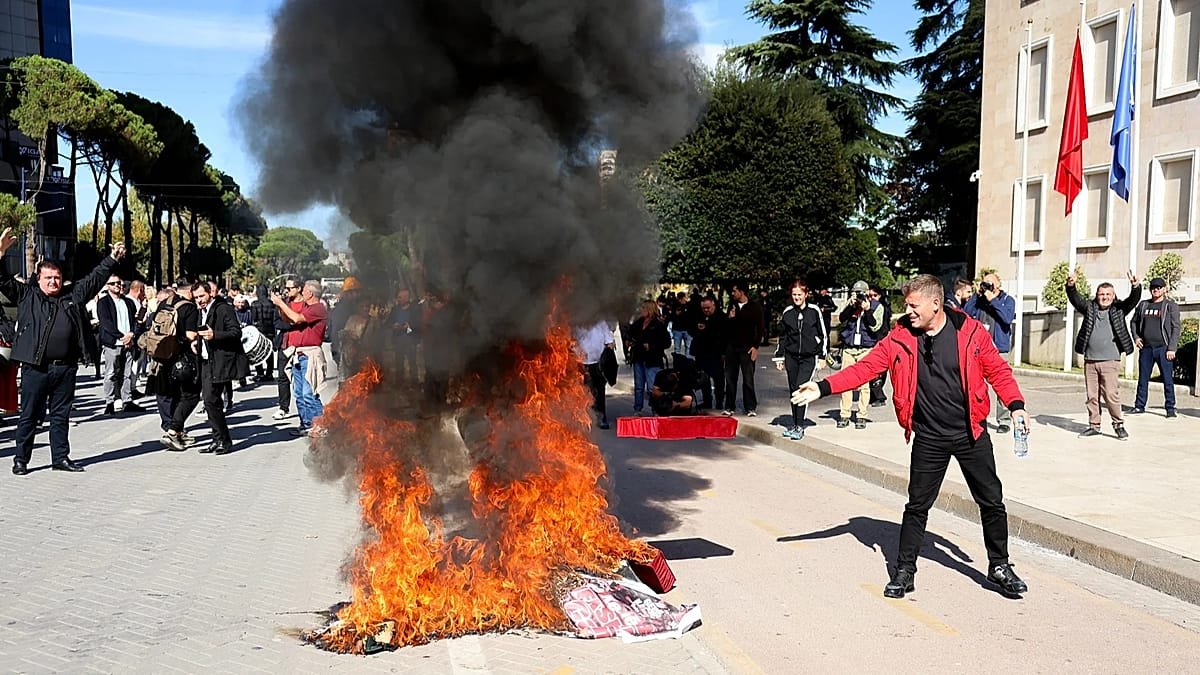
As demonstrators gather in Tirana, the Albania PM finds himself at the center of intense public scrutiny regarding higher education standards. On Saturday, opposition supporters and university students converged on the capital, creating a volatile security situation outside official government buildings. Protesters burned symbolic pillows that Prime Minister Edi Rama had previously placed outside his office as an invitation to dialogue. Instead of a peaceful discussion, the gesture sparked widespread outrage, leading crowds to march directly toward the Ministry of Education.
Albania Pm: Clashes Erupt Outside Ministry of Education
Security forces quickly escalated their presence as the crowd swelled near government facilities. Police deployed heavy riot units and water cannons near the Ministry of Education after social media calls mobilized hundreds of students. Meanwhile, some demonstrators began hurling rocks at the historic building and incoming officers. Because of this escalation, authorities remain on high alert, bracing for further confrontations across the city as the unrest enters its sixth consecutive day of intense public mobilization.
- Protesters gathered outside the prime minister’s office for over an hour.
- Symbolic dialogue pillows were burned during the demonstrations.
- Police deployed water cannons and Rapid Intervention Forces (FNSH) near the Ministry of Education.
Government Response and Accusations of Hybrid War
Responding to the growing crisis, the Albania PM acknowledged widespread societal discontent and promised a government reflection period within days. However, Rama also issued a stern warning against escalating violence, drawing a hard line against property destruction. He previously accused anti-government actors of fueling a calculated ‘hybrid war’ designed to destabilize the country. While civil society groups demand immediate financial relief for decaying campus facilities, the state insists that unlawful tactics will face persistent, coordinated countermeasures.
What This Means for the Future of Higher Education
The ongoing demonstrations highlight a deep disconnect between state leadership and student expectations regarding campus infrastructure. For years, higher education in the region has suffered from underfunding, outdated facilities, and high tuition costs relative to local wages. Although the Albania PM has promised imminent policy updates, skeptics argue that symbolic gestures fall short of addressing systemic institutional failure. Ultimately, how the administration handles these protests will define the political landscape and shape the future of student advocacy in the region for years to come.