
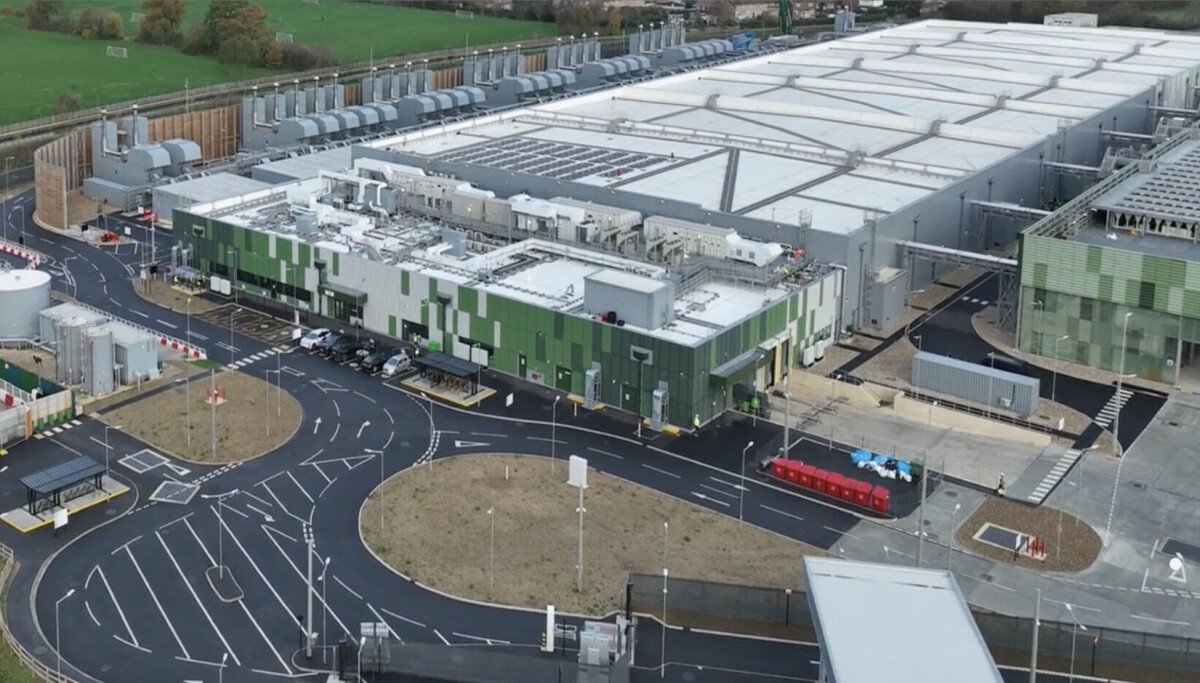
The race to dominate the artificial intelligence era relies on a physical foundation that few consumers ever see: the modern hyperscale datacenter. Yet, as developers and cloud giants attempt to construct the next generation of computational fortresses in the United Kingdom, they are running headfirst into a wall of fragmented governance. Building a UK datacenter is no longer just an engineering challenge; it is an endurance test across multiple Whitehall jurisdictions. Navigating the overlapping authorities of three separate government departments turns what should be a straightforward infrastructure rollout into a bureaucratic maze, threatening to stall the nation’s digital ambitions.
Technical Specifications and Architectural Breakdown
To understand the friction plaguing the sector, one must examine the immense resource demands of a modern UK datacenter. Today’s facility dedicated to large language model (LLM) training and inference requires a staggering amount of electrical power—often ranging from 50 megawatts to well over 300 megawatts for a single campus. This power requirement approaches the consumption levels of small towns, necessitating dedicated high-voltage substations, complex liquid-cooling loops, and advanced uninterrupted power supply (UPS) systems designed to maintain sub-millisecond uptime.
Architecturally, these facilities depend on dense server racks populated with specialized accelerators, such as enterprise-grade GPUs, interconnected via low-latency InfiniBand or specialized Ethernet fabrics running at 400Gbps and 800Gbps per port. The internal power distribution unit (PDU) architecture must handle massive amperage step-downs from transmission voltages safely and efficiently. Maintaining a Power Usage Effectiveness (PUE) ratio close to the theoretical ideal of 1.0 requires sophisticated thermal management, including direct-to-chip liquid cooling and rear-door heat exchangers.
However, none of these advanced hardware components can be deployed without guaranteed, uninterrupted megawatt-scale grid connections. The engineering bottleneck has shifted entirely from silicon manufacturing to grid infrastructure and regulatory sign-offs.
Industry Landscape and Competitive Comparison
The administrative friction facing the UK datacenter market is not merely a theoretical inconvenience; it has concrete financial and strategic consequences. High-profile international investors are beginning to recalculate their capital allocation strategies, weighing the UK’s historical stability against its modern administrative paralysis. For instance, the high-profile decision by Microsoft to pivot away from plans for Britain’s largest AI supercomputer due to prolonged grid-connection delays highlights how vulnerability in energy allocation can torpedo multi-billion-dollar investments.
When high-tech investments stall, the broader digital economy suffers a competitive disadvantage relative to regional peers in Northern Europe and North America, where fast-track permitting for digital infrastructure is increasingly common.
| Region / Market | Primary Bureaucratic Hurdle | Average Grid Allocation Timeline | Risk Level for AI Infrastructure |
|---|---|---|---|
| United Kingdom | Fragmented across three distinct departments (BIST, DCMS, DESNZ) | 18 to 36 months | High |
| Northern Europe (Nordics) | Environmental zoning and local community consultation | 6 to 12 months | Low to Moderate |
| United States (Primary Hubs) | State-level utility board approvals and local transmission caps | 12 to 24 months | Moderate |
As the table illustrates, the UK’s multi-departmental oversight model creates a structural delay in securing power allocations, pushing infrastructure deployment timelines past the fast-moving hardware refresh cycles typical of the semiconductor industry.
Practical Consumer & Enterprise Takeaways
For enterprise architects, CTOs, and infrastructure planners operating within the UK market, these systemic delays demand a proactive strategic shift. Organizations can no longer assume that local planning permission guarantees operational readiness. When planning long-term cloud migrations, hybrid deployments, or private AI infrastructure builds, technical leadership must account for extended lead times regarding utility connections.
Key considerations for enterprise technology leaders include:
- Extended Lead Times: Budget an additional 12 to 18 months for power allocation negotiations alongside standard structural construction timelines.
- Geographic Diversification: Consider secondary and tertiary UK regions where local grid capacity may offer less contention than the congested London and M4 corridor markets.
- On-Site Power Generation: Evaluate the feasibility of localized microgrids, fuel cells, or co-located renewable energy sources to bypass traditional grid connection bottlenecks.
- Cross-Departmental Liaison: Assign dedicated compliance teams to manage parallel tracks across the Department for Business, Innovation, Science and Trade (BIST), the Department for Digital, Culture, Media and Sport (DCMS), and the Department for Energy and Net Zero (DESNZ).
Frequently Asked Questions
Why does building a UK datacenter involve multiple government departments?
Regulatory oversight is split based on functional domains. BIST manages overall business and industrial policy, DCMS oversees telecoms and digital infrastructure, and DESNZ controls energy policy and grid connections. Because a datacenter relies equally on digital policy and massive electrical power, projects must satisfy all three agencies.
How does this bureaucratic friction impact the cost of AI development?
Delayed timelines increase capital expenditure through extended carrying costs, stalled hardware deployment, and missed market windows. When hyperscalers cannot secure power, compute scarcity drives up rental costs for enterprise users seeking high-performance AI training environments within the UK.
Are local councils involved in this approval process?
Yes. Alongside national departmental oversight, developers must still navigate local planning authorities for zoning, environmental impact assessments, and physical construction permits. This creates a two-tier approval structure where local and national hurdles must be cleared simultaneously.
What changes are industry leaders demanding from Whitehall?
Industry stakeholders are pushing for a unified single point of contact or a dedicated fast-track taskforce for digital infrastructure. Streamlining these overlapping jurisdictions is viewed as an absolute prerequisite if the UK wishes to maintain its status as a global hub for advanced computing and artificial intelligence development.
The Bottom Line
The ambitions of the UK government to position the nation as a global scientific and artificial intelligence superpower rely entirely on physical infrastructure that is currently choked by administrative red tape. While fiscal estimates suggest that modernizing public sector technology and expanding digital capacity could unlock billions in long-term productivity, these theoretical gains mean little if the basic building blocks of the digital economy cannot be plugged into the wall. Unless Whitehall establishes a streamlined, unified agency framework for tech infrastructure, foreign capital and critical computing workloads will continue to migrate toward more agile international markets.