
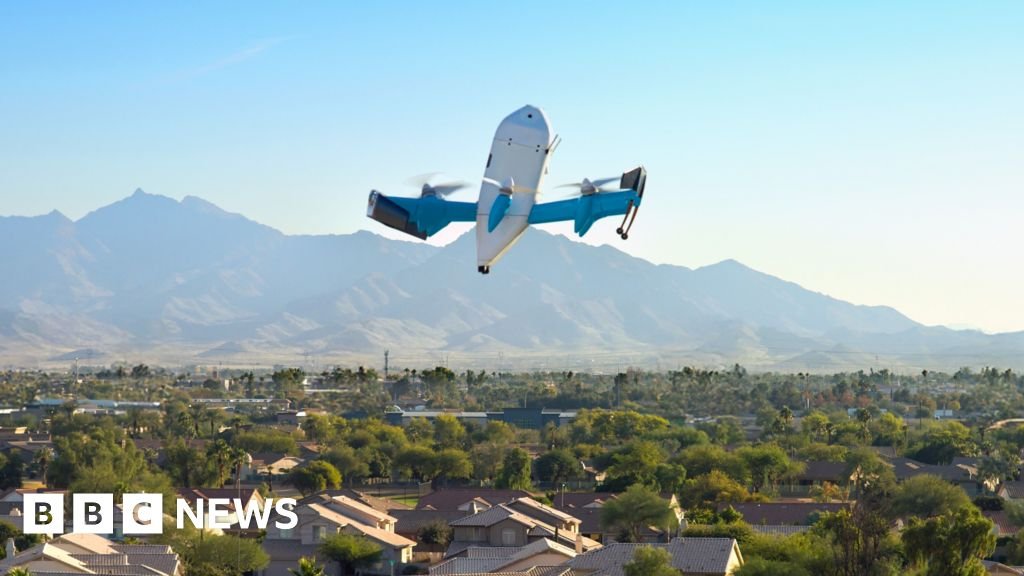
The promise of near-instant gratification has long been the primary engine driving e-commerce innovation. For years, the industry focused on optimizing warehouse robotics and last-mile logistics via traditional delivery vans. However, the paradigm has shifted upward. Amazon’s recent announcement to deploy delivery drones across 500 urban and suburban neighborhoods worldwide marks a definitive transition from experimental pilot programs to full-scale commercial utility. While the convenience of receiving a package in under an hour is undeniable, the physical reality of this shift—a persistent, mechanical hum over residential rooftops—is triggering a complex debate regarding the intersection of technological progress, urban planning, and the right to quiet enjoyment of one’s home.
Technical Specifications and Architectural Breakdown
The current generation of delivery drones, such as the Amazon MK30, represents a significant departure from the hobbyist quadcopters that populated the consumer market a decade ago. These systems are engineered for high-frequency, short-range logistical sorties. At their core, these units utilize a hexacopter or octocopter configuration, providing the necessary redundancy to ensure that a single motor failure does not result in a catastrophic crash over a populated area.
Propulsion is managed through high-torque, brushless DC motors paired with custom-designed carbon-fiber propellers. The aerodynamic profile of these blades is optimized not just for lift, but for acoustic signature management. By manipulating the tip speed and the pitch distribution, engineers attempt to shift the sound profile away from the high-frequency “whine” that the human ear finds most irritating, moving it toward a lower-frequency “thrum” that blends more effectively into ambient urban noise.
Navigation relies on a sophisticated fusion of sensors: LiDAR for obstacle avoidance, downward-facing optical flow cameras for precision landing, and redundant GPS/GNSS modules for pathfinding. The onboard flight controller processes telemetry data in real-time, adjusting rotor speeds hundreds of times per second to compensate for wind gusts. Unlike commercial aircraft, which follow established air corridors, these drones utilize low-altitude flight paths that require dynamic path planning to avoid trees, power lines, and residential structures. The constraint of “shoe-box-sized” cargo limits the payload capacity to approximately five pounds, a threshold that covers the vast majority of small-format e-commerce parcels.
Industry Landscape and Competitive Comparison
The delivery drone market is no longer a monopoly held by industry giants. While Amazon Prime Air leads in sheer scale, smaller startups and specialized logistics firms are carving out niches in food delivery and medical supply transport. The competitive landscape is currently defined by battery density, noise reduction, and regulatory compliance.
| Feature | Amazon MK30 | Wing (Alphabet) | Zipline Platform 2 |
|---|---|---|---|
| Configuration | Hexacopter | VTOL Fixed-Wing | Drogue-based Droid |
| Primary Use | Standard Retail | Food & Pharmacy | Medical & Retail |
| Acoustic Profile | Moderate | Low (Glide mode) | Low (High altitude hover) |
| Max Payload | 5 lbs | 2.6 lbs | 8 lbs |
The primary differentiator among these platforms is the flight mechanism. Wing, an Alphabet subsidiary, utilizes a hybrid vertical take-off and landing (VTOL) system that transitions into a fixed-wing flight mode. This is significantly more energy-efficient and quieter than the multi-rotor approach used by Amazon, as fixed-wing flight allows the drone to glide for portions of its journey. Zipline, conversely, has pioneered a “drogue” system, where the drone remains at a higher altitude and lowers the package via a tether, effectively removing the drone’s rotors from the immediate vicinity of the delivery site.
Practical Consumer & Enterprise Takeaways
For the average consumer, the arrival of delivery drones necessitates a shift in expectations regarding home security and property privacy. As these systems become ubiquitous, homeowners should evaluate their outdoor spaces. While the drones are equipped with cameras for navigation, they are generally programmed to avoid recording high-resolution imagery of private property to comply with privacy regulations. However, the sound profile remains a persistent issue.
For those living in neighborhoods designated as drone corridors, the “noise tax” is a reality. If you are a frequent user of the service, the trade-off is clear: speed and convenience. If you are a non-user, the disruption is an externalized cost of someone else’s convenience. Practical mitigation strategies for residents include installing thicker window glazing or utilizing white-noise machines, which have proven effective at masking the specific frequencies of rotor-based propulsion. From an enterprise perspective, businesses looking to integrate drone delivery into their supply chain must account for the “last 50 feet” challenge. Ensuring that a delivery location is free of overhead obstructions like dense tree canopies or low-hanging power lines is essential for successful integration.
Frequently Asked Questions
Are delivery drones subject to the same noise ordinances as leaf blowers or construction equipment?
Currently, no. Most local noise ordinances were drafted long before low-altitude commercial aviation became a reality. Because the Federal Aviation Administration (FAA) holds primary jurisdiction over the national airspace, many local municipalities find their hands tied when attempting to enforce traditional noise standards against flight operations.
What safety protocols prevent these drones from falling onto homes or pedestrians?
These systems utilize multiple layers of redundancy. Beyond the multi-motor configuration, they are equipped with emergency ballistic parachutes and automated collision-avoidance logic. If the system detects a critical failure, it is programmed to navigate to a pre-mapped “safe landing zone,” typically an empty street or a vacant lot, rather than hovering over high-density residential areas.
Is there a way for residents to opt-out of having delivery drones fly over their property?
Under current FAA guidelines, property owners do not own the air rights above their homes beyond a certain height, which varies by jurisdiction. Consequently, there is currently no legal mechanism for a resident to “opt-out” of drone flight paths, provided the operator is following federal flight regulations. This remains the most contentious aspect of the current rollout.
The Bottom Line
The expansion of delivery drones into 500 cities is a watershed moment for logistics, signaling that aerial delivery is no longer a futuristic concept but a commercial reality. The engineering behind these platforms is impressive, reflecting significant strides in battery efficiency and obstacle detection. However, the industry’s rapid scaling has outpaced the development of a social contract regarding the use of low-altitude airspace. While manufacturers are making progress in reducing the acoustic footprint of their fleets, the mechanical reality of rotor-based propulsion remains a disruption to residential tranquility. Until regulators establish clear, enforceable acoustic thresholds and communities are granted a voice in flight-path planning, the deployment of delivery drones will remain a friction point between technological ambition and the quality of life in our neighborhoods.