
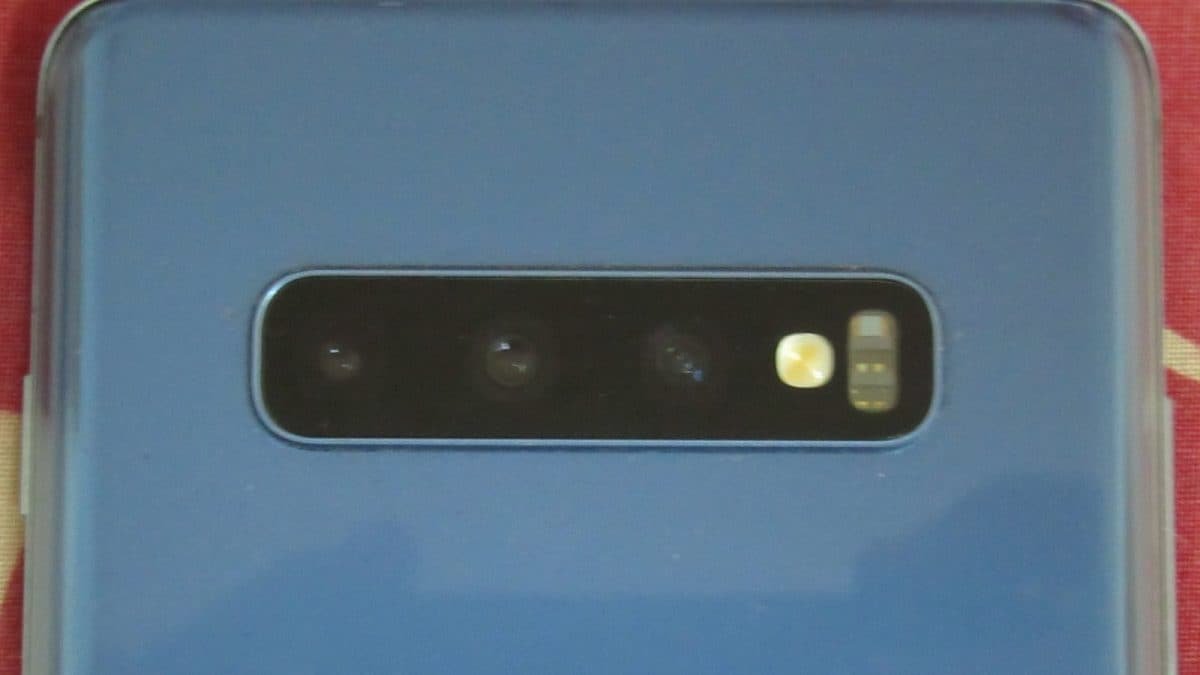
Technical Specifications and Architectural Breakdown
The fundamental misunderstanding in mobile photography stems from the relationship between pixel count and sensor surface area. A camera sensor is essentially a grid of light-sensitive buckets. When a manufacturer crams 200 million pixels onto a sensor the size of a fingernail, those individual pixels—the photosites—must be physically tiny. Smaller photosites have a reduced capacity to collect photons, which is the primary driver of high-quality imagery. When light is scarce, these diminutive pixels struggle to capture sufficient signal, forcing the device to amplify the gain, which introduces digital noise and sacrifices dynamic range.
Engineering a high-resolution sensor requires a delicate balance. To mitigate the drawbacks of pixel density, many modern sensors employ “pixel binning,” a process where data from adjacent pixels is grouped together to simulate a larger pixel. While this improves low-light sensitivity, it effectively negates the resolution advantage that the marketing department promised. True image quality is dictated by the physical size of the sensor—measured in fractions of an inch, such as 1/1.33″ or 1-inch—and the quality of the lens optics. Furthermore, Optical Image Stabilization (OIS) remains the unsung hero of the hardware stack. By physically shifting the lens or sensor elements to counteract hand tremors, OIS allows for longer shutter speeds, which is far more beneficial for night photography than a high megapixel count that serves only to capture more noise.
Industry Landscape and Competitive Comparison
The industry is currently split between two philosophies: the “brute force” hardware approach and the “computational intelligence” approach. Companies like Samsung and Xiaomi have pushed the megapixel ceiling, while Google and Apple have focused heavily on the software pipeline. The Google Pixel series, for instance, has repeatedly proven that a 50-megapixel sensor managed by superior machine learning algorithms can produce more pleasing, accurate, and usable images than a 200-megapixel sensor hampered by aggressive, artifact-prone processing.
The following table illustrates the divergence in design philosophy across several representative mobile imaging systems:
| Device | Primary Sensor Size | Megapixel Count | Primary Focus |
|---|---|---|---|
| Flagship A (High-Res) | 1/1.33″ | 200MP | Resolution & Digital Zoom |
| Flagship B (Balanced) | 1-inch type | 50MP | Dynamic Range & Low Light |
| Flagship C (Computational) | 1/1.31″ | 50MP | Software Processing & HDR |
The emergence of the Sony LYTIA sensor line represents a positive shift in industry transparency. By providing clearer documentation regarding physical dimensions and pixel architecture, Sony is forcing OEMs to be more honest about what their hardware can actually achieve. Consumers should look for these specifications rather than the headline megapixel number.
Practical Consumer & Enterprise Takeaways
For the average consumer, the takeaway is clear: stop shopping by the numbers. If your primary use case involves social media sharing, the difference between a 50MP and a 200MP sensor is effectively invisible, as platforms compress images to a fraction of their original resolution. Instead, prioritize devices that emphasize sensor size and software support longevity. A phone that receives regular computational photography updates is significantly more valuable than one that boasts high specs but lacks the software optimization to utilize them.
For enterprise users, the considerations shift toward consistency and file management. High-resolution images create massive storage overheads and can slow down professional workflows. If you are using a mobile device for documentation, scanning, or remote field work, a sensor that provides consistent, balanced output with reliable OIS is preferable to one that requires heavy post-processing to correct color inaccuracies or noise. When evaluating an upgrade, prioritize optical zoom capabilities and sensor size over the megapixel count, as these provide tangible benefits for real-world scenarios.
Frequently Asked Questions
Does a higher megapixel count always mean a sharper image?
No. Sharpness is a result of lens quality, sensor size, and signal processing. A high-megapixel sensor often produces “soft” images because the tiny pixels are diffraction-limited, meaning the lens cannot resolve enough detail to feed every individual pixel, resulting in a loss of clarity.
Why do my night photos look grainy even with a “pro” camera?
Grain, or digital noise, occurs when the sensor lacks sufficient light. If the sensor is physically small, it has to “crank up” the sensitivity (ISO), which amplifies the noise floor. A larger sensor will always outperform a high-megapixel, small-sensor phone in dark environments.
Is computational photography better than physical hardware?
It is not better, but it is necessary. Physics dictates that mobile phones cannot have large lenses. Computational photography—using AI to merge multiple exposures—is the only way to overcome the inherent physical limitations of thin mobile chassis. The best devices combine large sensors with sophisticated software.
The Bottom Line
The marketing machine behind smartphone cameras relies on the assumption that consumers equate quantity with quality. However, the history of mobile imaging shows that the most successful devices are those that respect the laws of physics. As the industry matures, the focus must shift away from the megapixel race and toward sensor dimensions, lens aperture, and the efficacy of computational pipelines. When selecting your next device, look past the bold numbers on the specification sheet. Prioritize the hardware that captures light effectively and the software that renders it naturally. In the world of mobile photography, the most impressive images are rarely the ones with the highest resolution; they are the ones that best capture reality.