
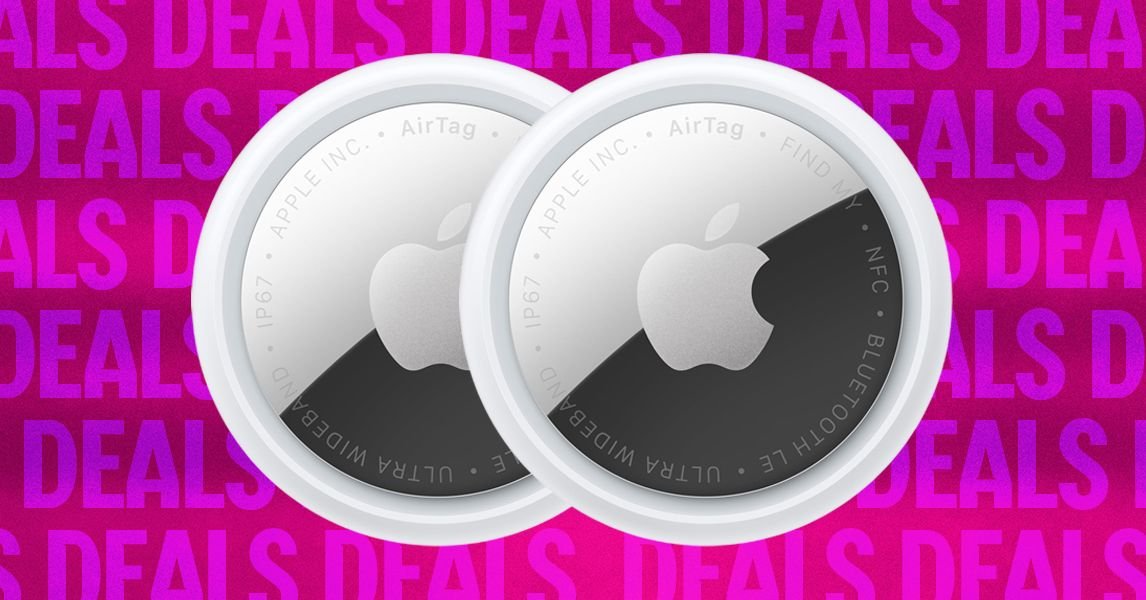
Holiday promotional cycles routinely bring modest price drops on consumer electronics, but discounts on core Apple accessories remain a notable occurrence. Retailers have reduced the standalone price of Apple AirTags to $23—down from their standard $29 MSRP—marking one of the lowest entry points recorded this season. For iPhone owners who have deferred equipping keychains, travel gear, or personal items with location tracking, this promotional adjustment shifts the value proposition significantly. Single-unit discounts of this scale, alongside equivalent price cuts on multi-packs, make broad deployment across multiple belongings far more practical for budget-conscious consumers.
Hardware Specifications and Ultra-Wideband Tracking Architecture
Beneath the compact plastic and stainless-steel housing, Apple AirTags rely on a dual-layer location system incorporating Ultra-Wideband (UWB) radio technology alongside standard Bluetooth Low Energy (BLE). At the core of the hardware architecture sits Apple’s proprietary U1 silicon chip. When an iPhone 11 or newer model operates within close proximity of a tag—typically between 15 to 30 feet depending on line of sight and physical obstacles—the U1 processor enables Precision Finding. This functionality integrates camera inputs, ARKit processing, accelerometer telemetry, and gyroscope data to display real-time directional arrows and precise distance measurements directly on the smartphone display.
For long-range tracking outside local Bluetooth range, Apple AirTags leverage the global Find My network. Rather than relying on an onboard GPS radio or cellular module—which would rapidly drain battery reserves—the tag broadcasts secure, short-range Bluetooth signals. Nearby active iOS and iPadOS devices owned by third parties pick up these signals passively. These intermediate devices securely relay encrypted geographic coordinates back to Apple’s cloud infrastructure, updating the owner’s map interface while preserving user anonymity and minimizing battery overhead.
The device relies on a single, user-replaceable CR2032 coin-cell battery designed to supply more than 12 months of daily operation. Replacing the battery requires no specialized tools; pushing down and rotating the stainless-steel backplate unlocks the compartment. From an environmental protection standpoint, the enclosure carries an IP67 rating under IEC standard 60529. This specification ensures complete dust ingress defense and water resistance when submerged up to one meter for up to 30 minutes.
Market Alternatives and Value Comparison
Although Apple AirTags maintain tight integration within the iOS platform, competing options exist for multi-platform environments and rival mobile ecosystems. Tile continues to maintain a strong presence with the Tile Pro, while Samsung caters specifically to its proprietary hardware base with the Galaxy SmartTag2.
| Device | Tracking Network | Battery Life | Cross-Platform Compatibility | MSRP / Sale Price |
|---|---|---|---|---|
| Apple AirTags | Apple Find My Network (Hundreds of millions of iOS devices) | ~1 Year (CR2032 Replaceable) | iOS Only | $29 / $23 |
| Tile Pro | Tile Community Network (App-dependent base) | ~1 Year (CR2032 Replaceable) | iOS & Android | $35 / $28 |
| Samsung Galaxy SmartTag2 | Samsung SmartThings Find Network | ~500 Days (Up to 700 days in Power Saving) | Samsung Galaxy Devices Only | $30 / $22 |
The primary structural advantage of Apple AirTags lies in network density. Tile relies on users actively maintaining the background Tile application on their mobile devices, creating localized tracking dead zones outside metropolitan areas. Samsung provides strong coverage via its Galaxy device footprint, but restricts setup exclusively to Samsung phones. Apple leverages every active iPhone globally by default, giving AirTags unmatched passive tracking capability across populated environments.
Practical Consumer Buying Advice
At $23 per unit, Apple AirTags sit at an optimal price point for personal gear tracking, yet prospective buyers must consider platform constraints and secondary accessory costs before purchasing.
Platform compatibility is strict. Android smartphones cannot register or actively track an AirTag on the Find My network. Apple offers a basic Android application called “Tracker Detect” via the Google Play Store, but its functional scope is limited entirely to identifying unknown nearby trackers for personal safety, rather than providing device management for your own items.
For iPhone users, utility centers primarily around everyday carry items and travel accessories. Equipping luggage with an AirTag has become standard operating procedure for international travel, offering independent location confirmation when airline bag-tracking systems fail. However, potential buyers should account for total hardware cost. Unlike the Samsung SmartTag2 or Tile Pro, an AirTag lacks a physical lanyard or keyring hole. Securing the tag to keys or luggage requires purchasing third-party mounts, adhesive cases, or keychains, which adds $5 to $15 per unit to the baseline cost.
Safety features also play an important role in daily operation. To deter unwanted tracking, Apple incorporates automatic acoustic alerts. An AirTag separated from its owner for an extended window will emit an audible chime when moved. Furthermore, both iOS and Android platforms trigger automatic anti-stalking notifications if an unrecognized AirTag moves consistently alongside an individual over time.
Frequently Asked Questions
Do Apple AirTags require a monthly subscription fee?
No. Apple AirTags operate without recurring subscription fees or service charges. All location tracking features, Precision Finding capabilities, and Find My network updates are included with the original hardware purchase.
Can multiple family members track the same AirTag?
Yes. Beginning with iOS 17, Apple added item-sharing features to the Find My network. You can share access to an individual AirTag with up to five additional Apple accounts, allowing family members to monitor shared items such as vehicle keys or pets.
What is the maximum tracking distance for an AirTag?
Short-range Precision Finding operates up to approximately 30 feet using Ultra-Wideband signals. Long-range tracking has no fixed distance cap because it depends on the global Find My network; as long as an AirTag comes within Bluetooth range of any active iOS device with internet connectivity, its coordinates update on your map.
The Bottom Line
For current iPhone owners, securing Apple AirTags at $23 represents a clear value upgrade. The combination of comprehensive crowd-sourced tracking via the Find My network, year-long replaceable battery operation, and precise short-range directionals makes the hardware the default recommendation for iOS location tracking. Provided you use an iPhone and account for the cost of a keyring adapter, this promotional price marks an ideal opportunity to secure luggage, wallets, and everyday carry gear prior to peak travel periods.