
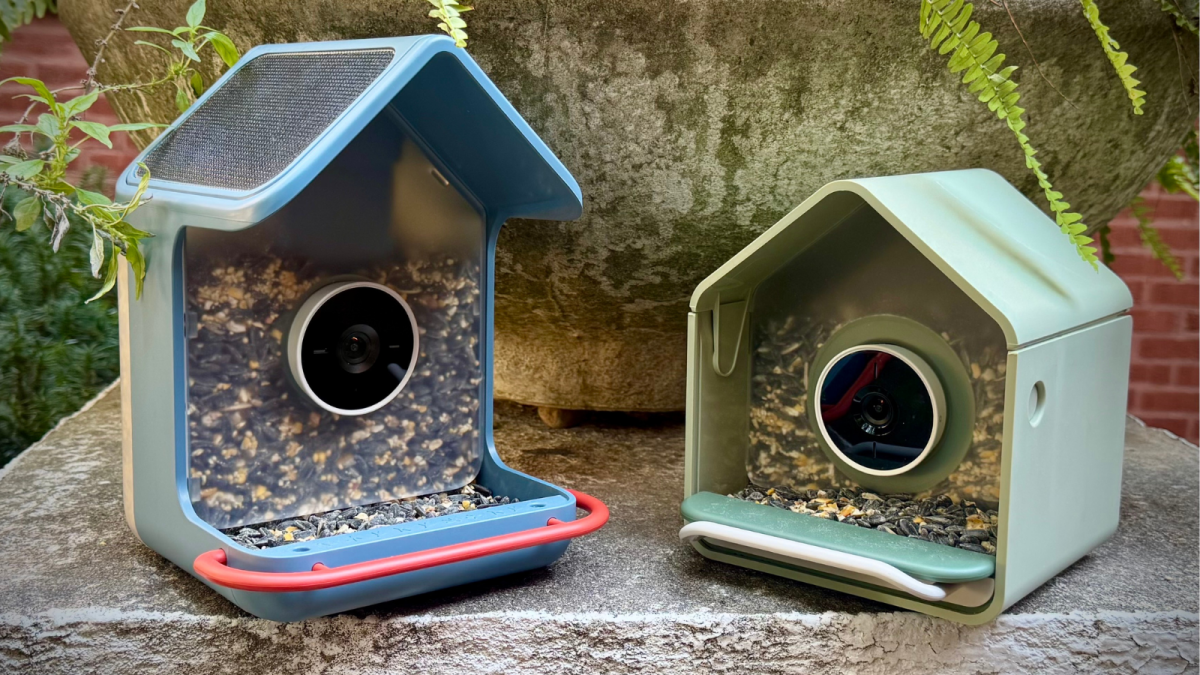
The smart home ecosystem has extended far beyond indoor climate controls and security lighting, establishing a burgeoning sub-category in outdoor wildlife monitoring. Smart bird feeders have evolved from niche novelties into sophisticated internet-of-things (IoT) platforms that integrate camera optics, machine learning algorithms, and solar energy systems. Marking a significant expansion of its hardware portfolio, Birdbuddy has officially launched two second-generation devices: the compact Birdbuddy Nook starting at $99, and the flagship Birdbuddy Home priced at $219. Originally showcased as functional prototypes at CES 2026, these commercial releases reflect a clear strategic effort to address distinct consumer segments—from space-constrained urban apartment dwellers to dedicated suburban ornithology enthusiasts.
Technical Specifications and Architectural Breakdown
Behind the weatherized housing of both the Nook and the Home lies an upgraded optical sensor and AI processing engine engineered to minimize motion-detection latency while maximizing species classification accuracy. The updated camera module features an expanded dynamic range sensor, designed specifically to reduce overexposure in backlit environments—a common issue when outdoor cameras face bright sky backgrounds during morning and afternoon feeding peaks.
The engineering distinctions between the two models center primarily on power delivery, network architecture, and physical ergonomics. The high-end Birdbuddy Home incorporates dual-band Wi-Fi radios (2.4 GHz and 5 GHz). This dual-band capability directly mitigates signal attenuation and congestion issues that frequently impair outdoor hardware attempting to stream high-definition video through exterior residential walls. Power on the Home model is sustained by an integrated dual-panel solar array embedded directly into the roof structure, providing continuous trickle charging to an internal lithium-ion battery reserve. Seed management is equally refined; the Home features a dedicated rear-access hatch that allows users to replenish its 5.5-cup seed reservoir without needing to unmount or realign the optical housing. Furthermore, the unit incorporates an internal speaker setup to provide audible diagnostic feedback during network commissioning, simplifying the initial Bluetooth pairing and Wi-Fi configuration processes.
By contrast, the Birdbuddy Nook prioritizes spatial efficiency and low friction entry. Holding roughly 3.5 cups of seed, the Nook relies on a traditional top-loading hopper format. The baseline $99 configuration eliminates integrated solar elements to lower production costs, relying instead on manual battery recharging via a weather-sealed USB-C port. Depending on bird visit frequency and video recording duration, manual top-ups are required periodically. For users desiring off-grid operation, the $159 Nook Solar package adds a specialized single-panel roof attachment. Both feeders connect to Birdbuddy’s centralized cloud pipeline, where computer vision algorithms process incoming video frames to identify avian species and alert users via mobile push notifications.
Industry Landscape and Competitive Comparison
The automated wildlife capture market has grown increasingly competitive as edge-computer vision hardware becomes cheaper and camera sensors become more efficient. Competitors such as Netvue’s Birdfy series and various white-label alternatives have forced hardware makers to innovate beyond standard 1080p video clips. Birdbuddy’s two-tier product distribution directly targets this market division: the Nook competes with lower-cost entry hardware, while the Home serves as a premium reference device with built-in power autonomy and multi-band connectivity.
The table below provides a detailed structural comparison between the newly introduced Birdbuddy units and the previous first-generation baseline model:
| Hardware Feature | Birdbuddy Nook (Base / Solar) | Birdbuddy Home (Flagship) | First-Gen Birdbuddy |
|---|---|---|---|
| MSRP | $99 (Base) / $159 (Solar) | $219 | $199 (Original Launch) |
| Seed Capacity | 3.5 Cups | 5.5 Cups | 3.8 Cups |
| Wi-Fi Connectivity | Single-band 2.4 GHz | Dual-band (2.4 GHz / 5 GHz) | Single-band 2.4 GHz |
| Power Delivery | Manual USB-C (Modular Roof) | Integrated Dual Solar Panels | Optional Single Add-on Panel |
| Refill Access | Top-Removal Lid | Rear Fast-Access Hatch | Top-Fill Access |
| Audio Feedback | Visual LED Only | Integrated Setup Speaker | Visual LED Only |
Practical Consumer & Enterprise Takeaways
Selecting between these smart bird feeders requires balancing physical space, maintenance bandwidth, and network infrastructure. For users residing in urban environments or apartments with small patio railings, the Nook offers an unobtrusive profile. However, prospective buyers should factor in the maintenance overhead of its smaller 3.5-cup capacity. In high-traffic outdoor locations, a smaller seed reservoir necessitates frequent manual intervention. Choosing the baseline $99 non-solar Nook also introduces routine service cycles to dismount the module for USB-C charging.
For suburban yards, larger gardens, or remote placements, the flagship Birdbuddy Home delivers significantly higher operational autonomy. Dual solar panels substantially mitigate battery maintenance, while the 5.5-cup reservoir extends the time required between seed refills. Additionally, the inclusion of dual-band Wi-Fi makes the Home far better equipped to maintain reliable video bitrates across greater distances from indoor wireless access points. The rear-hatch refill mechanism also simplifies routine replenishment, avoiding the accidental displacement of camera alignment that often occurs with top-loading designs.
Frequently Asked Questions
Do these smart bird feeders require a paid subscription to access species identification?
Basic real-time species recognition and event notifications function out of the box using the standard companion application. However, advanced cloud storage archives, historical wildlife metrics, and higher-tier media playback features may be gated behind Birdbuddy’s optional premium subscription tiers.
Can the entry-level Birdbuddy Nook be upgraded to solar power after purchase?
Yes. The base $99 Birdbuddy Nook uses a modular physical architecture. Users who purchase the non-solar variant can independently acquire and mount the optional solar roof module later if manual USB-C charging becomes impractical for their usage patterns.
Why is dual-band Wi-Fi important for outdoor smart devices?
Outdoor IoT devices often suffer from connection drops caused by physical obstructions like walls, glass, and foliage. The 2.4 GHz band provides extended range through structural barriers, while the 5 GHz band delivers higher data throughput and reduced signal congestion when the device is positioned closer to the router, ensuring stable high-definition video transmission.
The Bottom Line
Birdbuddy’s expanded hardware strategy successfully broadens the accessibility of nature-focused smart home hardware. The compact Nook serves as an affordable entry point for urban residents and casual observers willing to manage manual refills and charging. Meanwhile, the flagship Birdbuddy Home delivers a refined, low-maintenance solution designed for performance and reliability. Both devices illustrate how refined optical engineering and machine learning continue to transform passive yard tools into active, connected data collectors.