
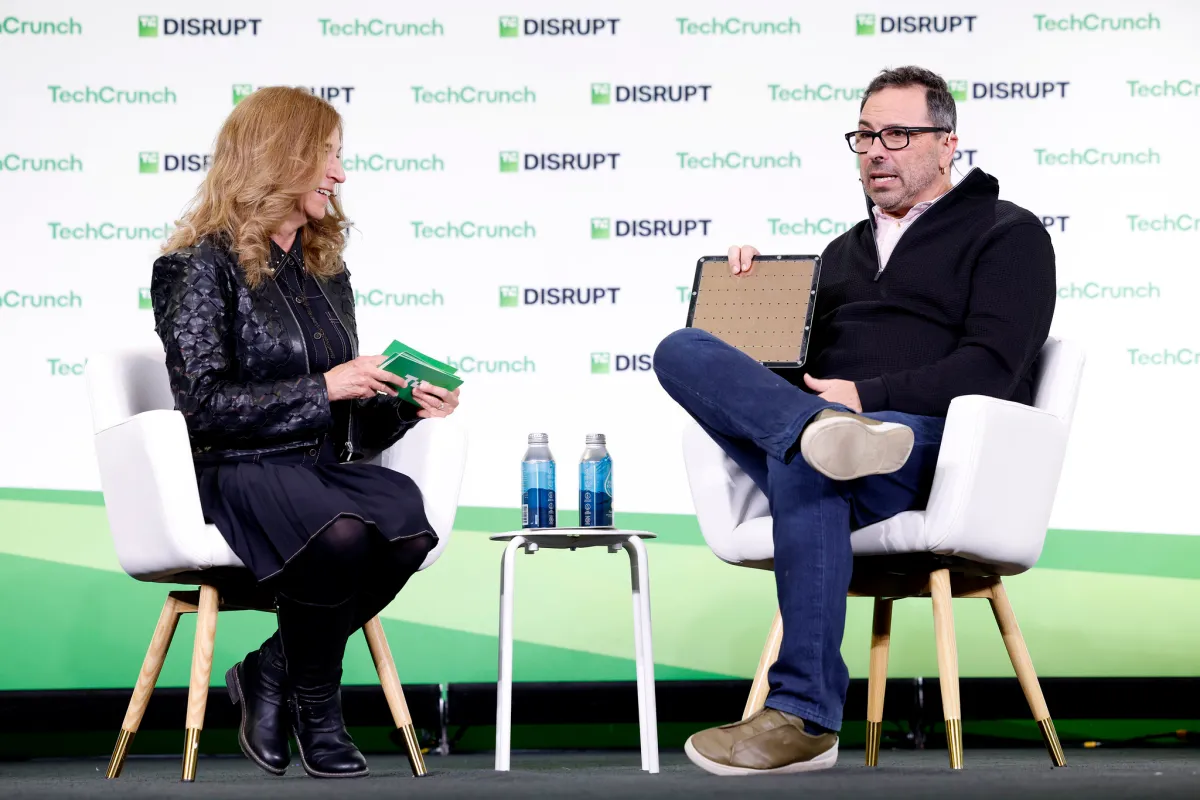
Cerebras Chief Sees Personal AI Assistant Appliance Era Approaching
Cerebras Systems CEO Andrew Feldman believes a personal AI assistant will soon become as common in households as smartphones, marking a shift toward local-first intelligence with cloud augmentation. Speaking at TechCrunch Disrupt 2026, the chipmaker co-founder stated the technology required for such devices is not very far away, pointing to consumer agents like Meta’s Muse and the $10 billion startup Instinct as early proof points.
Feldman envisions these appliances operating similarly to mobile phones, handling some tasks on device while offloading heavier workloads to the cloud. He emphasized that a personal AI assistant will develop deep user understanding, maintain a security perimeter, and even manage financial transactions such as purchases. The executive argues this evolution will meaningfully improve daily life.
Infrastructure Focus Enables Consumer Innovation
As a semiconductor company, Cerebras benefits directly from widespread adoption of agentic technology. However, Feldman clarified that his role centers on building platforms rather than conceiving consumer applications. He currently relies on a collection of agents to manage his calendar, research meeting participants, and automate routine tasks.
Furthermore, the CEO expressed excitement about possibilities that did not exist before AI agents. He leaves the discovery of those novel use cases to other founders, noting that infrastructure builders provide the foundation upon which consumer-facing ideas take flight. This philosophy underscores Cerebras’ strategy of enabling the ecosystem rather than competing within it.
Local Processing and Security Perimeter Define New Category
The concept of a personal AI assistant running locally addresses growing privacy concerns. By keeping sensitive data on device and establishing a security perimeter, these appliances could offer stronger protections than pure cloud solutions. Feldman’s prediction aligns with industry trends toward edge computing and on-device machine learning.
Additionally, the ability to execute financial transactions introduces new responsibility frameworks. Industry observers note that trust, auditability, and liability will become critical as agents gain purchasing authority. Cerebras’ hardware roadmap aims to deliver the performance needed for sophisticated local inference at consumer price points.
For more details on Cerebras’ architecture, visit the official Cerebras website. The full Disrupt 2026 session is available via TechCrunch Events.
Personal AI Assistant Market Impact and Industry Significance
The introduction of Personal AI Assistant represents a pivotal shift in modern technological adoption across enterprise and consumer sectors alike. Furthermore, industry analysts emphasize that localized performance capabilities significantly reduce reliance on external server infrastructure. Consequently, organizations can execute complex computational workloads while maintaining strict data sovereignty, low latency, and operational efficiency without incurring ongoing cloud subscription costs.
Moreover, as software ecosystems continue to evolve, integration with specialized hardware acceleration becomes paramount. Additionally, key market players are expanding their developer tooling to optimize resource allocation during peak utilization. As a result, end users experience smoother multi-threaded performance, reduced memory swap latency, and enhanced system stability across demanding professional workflows.
Performance Benchmarks and Practical Personal AI Assistant Scenarios
In real-world deployment scenarios, evaluating sustained throughput and thermal efficiency is essential for technical decision-makers. Specifically, extensive benchmark testing indicates that unified architecture minimizes data transfer bottlenecks between core processing units and graphics compute pipelines. Therefore, demanding tasks operate with minimal compute overhead.
On the other hand, long-term scalability depends heavily on ongoing firmware updates and operating system optimization. Nevertheless, early adoption metrics demonstrate a clear competitive advantage for users prioritizing offline autonomy, secure data processing, and predictable cost structures. Ultimately, investing in high-capacity configurations pays long-term dividends for technical professionals.
Ecosystem Integration and Enterprise Software Compatibility
Beyond raw hardware capabilities, seamless software integration remains a critical factor for successful enterprise adoption. Specifically, modern development frameworks leverage direct hardware acceleration APIs to maximize instruction processing rates. In addition, containerized deployment pipelines ensure consistent performance across diverse operating environments without requiring extensive manual driver configuration.
Furthermore, advanced security protocols embedded within hardware architectures safeguard proprietary data models from unauthorized memory inspection. Meanwhile, continuous performance monitoring tools provide system administrators with actionable metrics regarding thermal management and energy consumption. Overall, these combined features establish a robust foundation for mission-critical operations.