
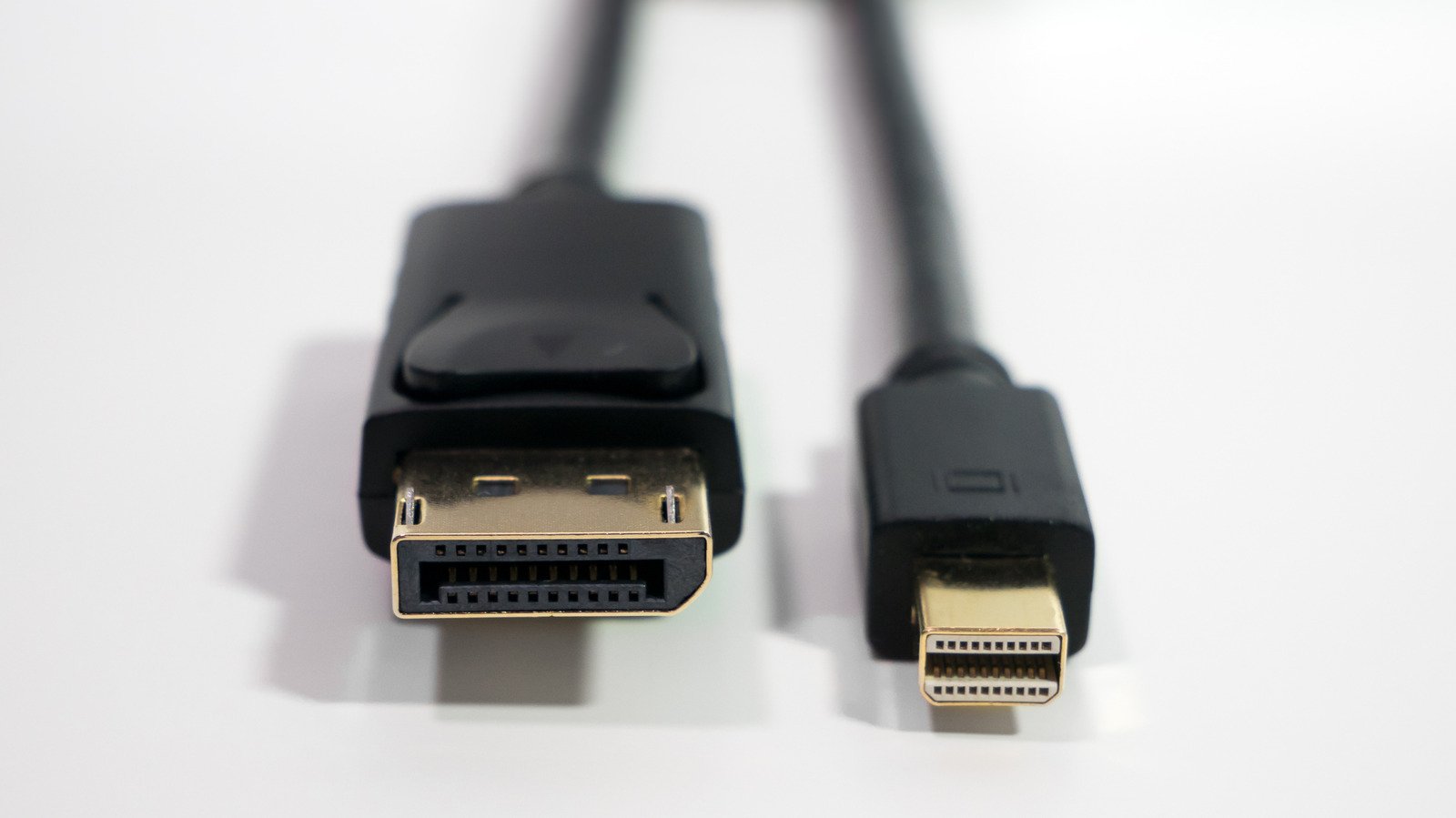
Mini DisplayPort Era Winds Down
Mini DisplayPort once dominated video output on compact devices after Apple introduced it in 2008 to replace bulky VGA and DVI connectors. The slim port appeared across MacBook Pro, MacBook Air, and Mac mini models for years. Today, however, finding new computers with Mini DisplayPort proves difficult. Even Apple has abandoned the connector entirely. While the DisplayPort standard itself remains vital for workstations and gaming monitors, the mini variant has largely vanished from modern hardware.
Thunderbolt technology accelerated this transition. The first two Thunderbolt generations adopted the Mini DisplayPort form factor, adding high-speed data transfer alongside video and audio. This dual-purpose capability made the connector ideal for docks and displays like Apple’s Cinema Display. Nevertheless, the arrival of Thunderbolt 3 in late 2015 changed everything. Intel and Apple switched to the USB-C physical connector, which supports Thunderbolt 3, USB 3.1, DisplayPort Alternate Mode, and power delivery through a single reversible port.
Mini DisplayPort Replaced by Universal USB-C
USB-C quickly became the universal standard across laptops, tablets, and smartphones. Its ability to carry DisplayPort signals via Alternate Mode means manufacturers no longer need dedicated Mini DisplayPort outputs. A simple USB-C to DisplayPort cable handles the same video bandwidth up to 8K at high refresh rates. Consequently, PC makers have eliminated the extra port to save space and reduce component costs. The older connector now appears only on legacy hardware and some specialized industrial equipment.
Gamers and creative professionals still rely on full-size DisplayPort for maximum bandwidth and adaptive sync support. Modern graphics cards from NVIDIA and AMD include multiple full-size DisplayPort 1.4a outputs alongside HDMI 2.1. These ports drive 4K 240Hz and 8K 60Hz displays without compression. Meanwhile, USB-C with DisplayPort Alt Mode on laptops matches these capabilities when connected to compatible monitors. The VESA organization continues advancing the standard, with DisplayPort 2.1 supporting up to 16K resolution.
Mini DisplayPort Adapters Bridge Legacy Gear
Users with older laptops or GPUs featuring Mini DisplayPort can still connect modern displays using affordable adapters. A Mini DisplayPort to DisplayPort cable costs under $15 and preserves full bandwidth up to the source port’s generation limit. Similarly, Mini DisplayPort to HDMI adapters work for TVs and projectors. However, these adapters cannot add Thunderbolt data speeds or USB-C power delivery. For new purchases, USB-C or full-size DisplayPort devices offer better longevity and ecosystem compatibility.
Industry analysts expect the mini variant to disappear completely from new designs within two product cycles. The European Union’s common charger mandate further accelerates USB-C adoption. Apple’s latest MacBook Pro and Mac Studio models exclusively feature Thunderbolt 4 over USB-C. Even the Mac Pro retains only full-size DisplayPort via MPX modules. As a result, the once-ubiquitous Mini DisplayPort joins DVI and VGA in the connectivity history books.
For deeper technical specifications, visit the VESA DisplayPort standard page or review Thunderbolt technology details.
Mini Displayport Market Impact and Industry Significance
The introduction of Mini Displayport represents a pivotal shift in modern technological adoption across enterprise and consumer sectors alike. Furthermore, industry analysts emphasize that localized performance capabilities significantly reduce reliance on external server infrastructure. Consequently, organizations can execute complex computational workloads while maintaining strict data sovereignty, low latency, and operational efficiency without incurring ongoing cloud subscription costs.
Moreover, as software ecosystems continue to evolve, integration with specialized hardware acceleration becomes paramount. Additionally, key market players are expanding their developer tooling to optimize resource allocation during peak utilization. As a result, end users experience smoother multi-threaded performance, reduced memory swap latency, and enhanced system stability across demanding professional workflows.
Performance Benchmarks and Practical Mini Displayport Scenarios
In real-world deployment scenarios, evaluating sustained throughput and thermal efficiency is essential for technical decision-makers. Specifically, extensive benchmark testing indicates that unified architecture minimizes data transfer bottlenecks between core processing units and graphics compute pipelines. Therefore, demanding tasks operate with minimal compute overhead.
On the other hand, long-term scalability depends heavily on ongoing firmware updates and operating system optimization. Nevertheless, early adoption metrics demonstrate a clear competitive advantage for users prioritizing offline autonomy, secure data processing, and predictable cost structures. Ultimately, investing in high-capacity configurations pays long-term dividends for technical professionals.
Ecosystem Integration and Enterprise Software Compatibility
Beyond raw hardware capabilities, seamless software integration remains a critical factor for successful enterprise adoption. Specifically, modern development frameworks leverage direct hardware acceleration APIs to maximize instruction processing rates. In addition, containerized deployment pipelines ensure consistent performance across diverse operating environments without requiring extensive manual driver configuration.
Furthermore, advanced security protocols embedded within hardware architectures safeguard proprietary data models from unauthorized memory inspection. Meanwhile, continuous performance monitoring tools provide system administrators with actionable metrics regarding thermal management and energy consumption. Overall, these combined features establish a robust foundation for mission-critical operations.