
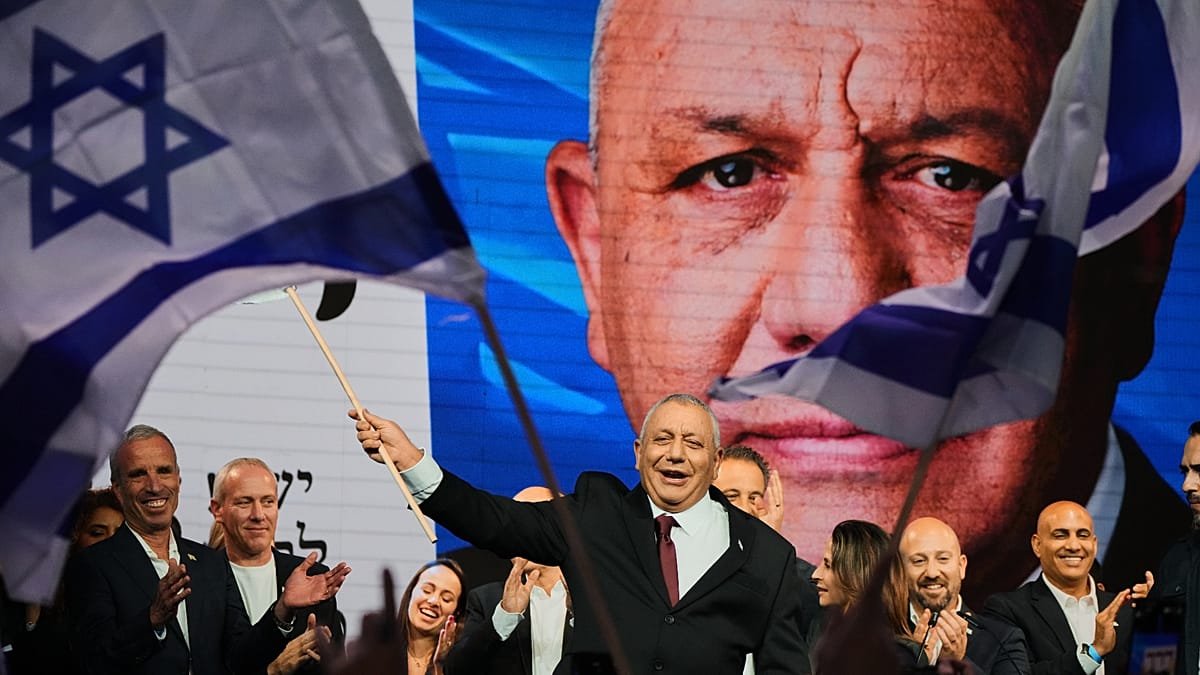
Gadi Eisenkot Faces Major Obstacles Forming New Government
Following a period of intense political uncertainty, President Isaac Herzog has officially tasked Gadi Eisenkot with forming a new government. This mandate follows recent legislative elections that failed to produce a clear winner, leaving the Knesset in a state of gridlock. As Gadi Eisenkot steps into this high-stakes role, the clock begins ticking on a 28-day window to assemble a viable coalition.
Gadi Eisenkot: The Math Behind the Mandate
The path to power for Gadi Eisenkot is fraught with mathematical challenges. Recent consultations reveal that factions totaling 67 members of the Knesset initially expressed support for his leadership bid, while 46 members backed the incumbent, Benjamin Netanyahu. Despite these numbers, the actual process of securing a stable, functioning government is far more complex than simple vote counting. Both the Yashar party and Netanyahu’s Likud camp finished the election well short of an absolute majority in the 120-seat legislature.
The current parliamentary breakdown illustrates the volatility of the situation:
- Likud Party: 27 seats (largest single party)
- Opposition Bloc: 48 total seats
- Arab Parties: 19 record-breaking seats
Because the Knesset is deeply fragmented, the role of smaller factions and the Arab parties has become critical. Netanyahu has already called for a national unity government, a move that signals his awareness of the limited options available to either side.
What the 28-Day Clock Means for Israel
Under Israeli law, the candidate chosen by the president has a strict 28-day timeline to complete the task of forming a government. If Gadi Eisenkot fails to secure a majority within this period, the president holds the authority to grant a one-time extension of 14 days. If that window also closes without success, the mandate may shift to another leader, or potentially lead to the trigger of yet another national election.
For the average citizen, this process represents a period of significant economic and social uncertainty. Political analysts suggest that the inability to form a stable coalition often slows down legislative progress on critical infrastructure and digital economy initiatives. The pressure on Gadi Eisenkot is immense, as he has publicly vowed to do everything in his power to avoid a repeat of previous cycles that resulted in multiple elections within a single year.
The Bottom Line
The stakes for the nation are high as the deadline looms. While Gadi Eisenkot currently holds the mandate, the reality of forming a government in a house where no single party holds a majority is an uphill battle. Whether he can bridge the ideological gaps between the various factions remains the defining question of his political career. The coming weeks will determine if this mandate leads to a functional administration or if the country will once again face the prospect of a return to the ballot box.
2 thoughts on “Gadi Eisenkot Faces Major Obstacles Forming New Government”