
Updated November 13, 2026: This article now links to the specific Google announcements, distinguishes manufacturer performance claims from independent testing, and includes a practical checklist for evaluating search answers.
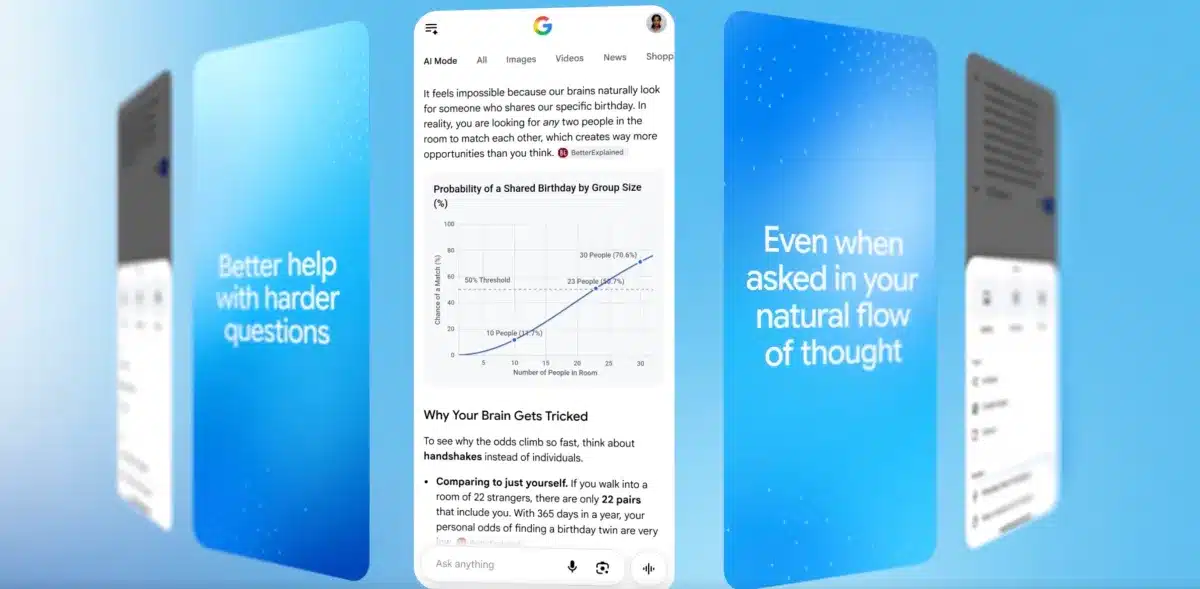
Google announced Gemini 4 Hydrogen for Search on November 12. In its Search announcement, the company describes improved handling of questions with several requirements and more structured responses, including tables and images. These are Google’s stated capabilities; this article is an explanation and evaluation guide, not an independent benchmark.
Search features and model benchmarks measure different things
The model announcement describes Hydrogen as a fast execution model alongside Carbon and Argon. Google reports tasks completing 2.5 times faster than Gemini 3.8 Flash at Hydrogen’s default high thinking setting. That comparison concerns the company’s model evaluation. It does not establish that every Google search will load 2.5 times faster, or that answers will be correct.
A practical way to evaluate a complex search
For a useful comparison, start with a question whose constraints you can check. For example: “Compare three laptops sold in my country that have 32 GB of memory, weigh less than 1.5 kg, and support charging over USB-C.” This is a suggested exercise, not a report of results from a test we performed.
- Write down the constraints first. Keep country, budget, weight, memory, and charging requirements separate so an attractive recommendation cannot obscure a failed requirement.
- Open the cited product pages. Check the exact configuration rather than a product family name. A lighter chassis or lower advertised price may refer to a different configuration.
- Verify time-sensitive details. Stock and prices can change. Record the date and currency of each listing.
- Check omissions. If a table does not say whether a requirement is met, mark it unknown rather than assuming it qualifies.
- Try a follow-up. Ask the system to identify which requirement each option fails, and check that explanation against the original sources.
Use a simple checking table
| Question | Evidence to record |
|---|---|
| Does the result satisfy every constraint? | The exact specification or source passage for each requirement |
| Is the comparison current? | Publication date, price date, region, and availability |
| Can the conclusion be reproduced? | The original query, follow-up query, and source URLs |
What remains uncertain
An announcement is not a substitute for testing on your own task. We have not measured the accuracy, latency, or regional availability of the Search update. When an answer affects a purchase, a security decision, or a technical deployment, follow the links and validate the relevant facts before acting.