
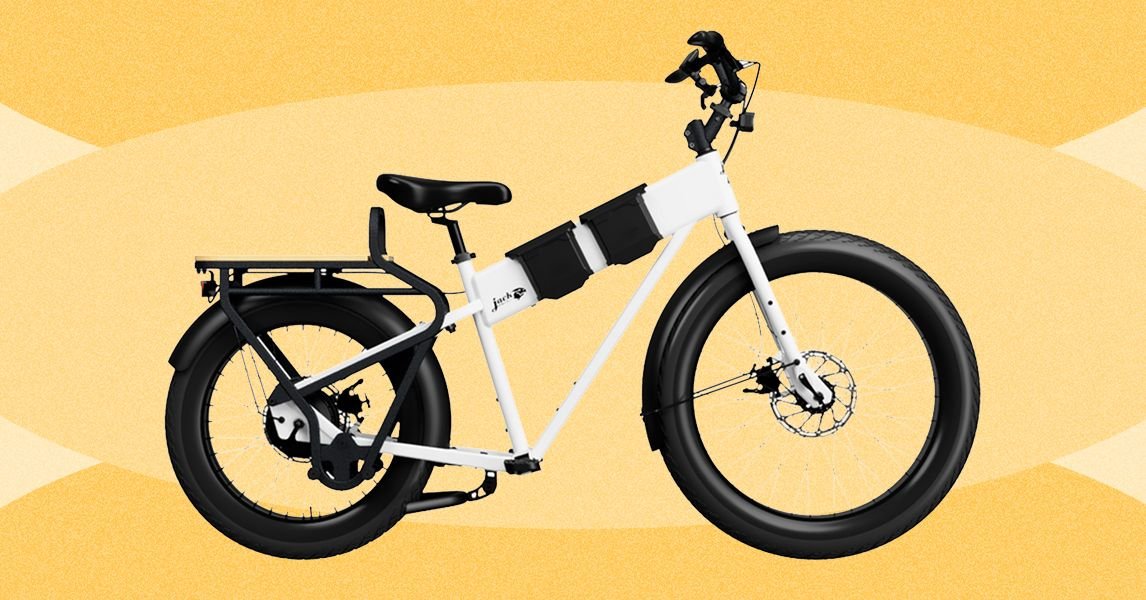
JackRabbit MG Cargo Arrives as Pocket-Sized Hauling Machine
The JackRabbit MG Cargo defies cargo bike conventions with a 55-pound frame that fits inside a sedan back seat. Unlike bulky utility models, this 750-watt e-scooter hybrid uses fat tires and a micro wheelbase to deliver dirt-bike agility on city streets. Furthermore, WIRED testing over several months confirms the platform handles genuine payload demands without sacrificing maneuverability.
JackRabbit MG Cargo Uses Throttle-Only Design With Zero Pedal Backup
JackRabbit builds scooter-bike hybrids rather than traditional ebikes. The MG Cargo continues this philosophy with pedal-shaped footrests and a thumb throttle replacing cranks entirely. Consequently, battery depletion strands the rider completely. Three power modes cap at 20, 15, and 7 mph respectively, with the lowest setting suitable for sidewalk navigation. Additionally, the advertised 48-mile range assumes light riders and gentle throttle use. A 200-pound tester averaging aggressive acceleration achieved roughly 25 miles per charge even with minimal cargo.
Real-World Hauling Proves JackRabbit MG Cargo Nine-Times-Weight Claim
Manufacturer specifications claim the MG Cargo pulls nine times its own weight uphill. Field testing validated this figure when a grill mounted on a trailer climbed steep grades without motor strain. Moreover, weekly grocery runs to discount outlets across Portland’s hilly mid-city ridge replaced car trips entirely. Even a slushie machine transported for weekday margaritas demonstrated the platform’s practical utility. The tester no longer drives for errands requiring substantial cargo capacity.
Compact Dimensions Enable New Storage Solutions
At 18 pounds heavier and nearly one foot longer than the XG Pro model, the MG Cargo initially raised concerns about compromised agility. However, the extended wheelbase actually improves stability under load while preserving the brand’s signature zippy character. When unladen, the bike accelerates to top speed within 50 feet on flat pavement. Meanwhile, the battery indicator remains above half-full for most of the discharge curve, requiring riders to learn their personal range through experience rather than relying on the display.
JackRabbit MG Cargo Gives Urban Commuters Car-Free Flexibility
For apartment dwellers lacking garage space, the MG Cargo solves the storage paradox that plagues conventional cargo bikes. Its dimensions allow indoor storage, trunk transport, and elevator access impossible with full-size alternatives. Ultimately, the platform converts skeptics by functioning as a legitimate car replacement for hyperlocal logistics rather than a recreational novelty. The combination of microscopic footprint and legitimate hauling capability creates a new vehicle category entirely. JackRabbit official site details the full lineup.
Jackrabbit Mg Cargo Market Impact and Industry Significance
The introduction of Jackrabbit Mg Cargo represents a pivotal shift in modern technological adoption across enterprise and consumer sectors alike. Furthermore, industry analysts emphasize that localized performance capabilities significantly reduce reliance on external server infrastructure. Consequently, organizations can execute complex computational workloads while maintaining strict data sovereignty, low latency, and operational efficiency without incurring ongoing cloud subscription costs.
Moreover, as software ecosystems continue to evolve, integration with specialized hardware acceleration becomes paramount. Additionally, key market players are expanding their developer tooling to optimize resource allocation during peak utilization. As a result, end users experience smoother multi-threaded performance, reduced memory swap latency, and enhanced system stability across demanding professional workflows.
Performance Benchmarks and Practical Jackrabbit Mg Cargo Scenarios
In real-world deployment scenarios, evaluating sustained throughput and thermal efficiency is essential for technical decision-makers. Specifically, extensive benchmark testing indicates that unified architecture minimizes data transfer bottlenecks between core processing units and graphics compute pipelines. Therefore, demanding tasks operate with minimal compute overhead.
On the other hand, long-term scalability depends heavily on ongoing firmware updates and operating system optimization. Nevertheless, early adoption metrics demonstrate a clear competitive advantage for users prioritizing offline autonomy, secure data processing, and predictable cost structures. Ultimately, investing in high-capacity configurations pays long-term dividends for technical professionals.
Ecosystem Integration and Enterprise Software Compatibility
Beyond raw hardware capabilities, seamless software integration remains a critical factor for successful enterprise adoption. Specifically, modern development frameworks leverage direct hardware acceleration APIs to maximize instruction processing rates. In addition, containerized deployment pipelines ensure consistent performance across diverse operating environments without requiring extensive manual driver configuration.
Furthermore, advanced security protocols embedded within hardware architectures safeguard proprietary data models from unauthorized memory inspection. Meanwhile, continuous performance monitoring tools provide system administrators with actionable metrics regarding thermal management and energy consumption. Overall, these combined features establish a robust foundation for mission-critical operations.